The snack plate was wiped clean before I even had a chance to sit down. Twice this week. The little one’s friends kept asking for “that veggie thing” after school, and texts started rolling in — “Can you share the recipe?” Honestly, I wasn’t expecting such a fuss over a simple plate of fresh veggies and hummus. But there it was: a quiet victory marked by empty plates and happy, sticky little fingers.
It all started out as a quick attempt to keep snack time fresh and healthy — something that didn’t require me to stand at the stove or pull out a dozen ingredients. I tossed together a handful of crunchy vegetables, sliced just right for tiny hands, paired with a homemade hummus that’s creamy but not overwhelming. The colors alone were enough to get attention: bright carrot sticks, vibrant cucumber slices, and sweet bell pepper strips. Add in a little sprinkle of paprika on the hummus, and suddenly, it became a pretty plate, not just a snack.
I never imagined that a snack like this would turn into a little tradition, but here we are. The best part? It’s not just kid-approved. Adults around here have been sneaking bites when they think no one’s looking. It’s fresh, easy, and honestly, just the kind of little something I trust to keep everyone happy and fueled. The simplicity of the Fresh Kindergarten Snack Plate with Dippable Veggies and Hummus is its charm — no fuss, no mess, just good food that fills the fridge gap between meals.
Every time I prepare this snack, I realize why it’s stuck around: it’s not just about feeding kids, it’s about feeding them well, with something they actually want to eat. And that’s a small win worth repeating.
Why You’ll Love This Recipe
Making snacks that kids actually want to eat can be a challenge, but this Fresh Kindergarten Snack Plate with Dippable Veggies and Hummus hits all the right notes. From my experience juggling picky eaters and busy afternoons, this recipe is one of those rare wins that keeps showing up on repeat.
- Quick & Easy: Ready in under 15 minutes — perfect for those hectic school days when time is tight.
- Simple Ingredients: No need for fancy or hard-to-find items; everything’s usually already in the fridge or pantry.
- Perfect for Snack Time or Lunchboxes: Ideal for kindergarten snacks, but also works great for packed lunches or light afternoon bites.
- Crowd-Pleaser: Kids and adults alike love the crunch and creamy dip combo — it’s surprisingly addictive!
- Unbelievably Delicious: The hummus here is homemade with just the right balance of garlic and lemon, making it a flavor that sticks.
- What Sets This Apart: I blend the chickpeas until ultra-smooth, which my kids swear makes all the difference. Plus, the veggies are cut into fun dippable shapes, making it more engaging than just raw crudités.
This recipe isn’t just another veggie plate — it’s a little moment of joy for both kids and grown-ups. It’s that kind of snack that makes you pause, smile, and maybe even sneak a second handful when no one’s watching. Perfect for those days you want to keep things light but satisfying.
What Ingredients You Will Need
This recipe uses simple, wholesome ingredients to deliver bold flavor and satisfying texture without the fuss. Most are pantry staples or fresh veggies you can grab at the market, and substitutions are easy if needed.
- For the Hummus:
- 1 can (15 oz / 425 g) chickpeas, drained and rinsed (I like Goya brand for consistency)
- 3 tablespoons tahini (sesame paste; you can find it in most grocery stores)
- 2 tablespoons fresh lemon juice
- 1 clove garlic, minced (adjust to taste)
- 2 tablespoons olive oil (plus extra for drizzling)
- 1/2 teaspoon ground cumin
- Salt to taste
- Water, as needed for desired texture
- For the Veggies:
- 2 medium carrots, peeled and cut into sticks (choose firm, bright orange carrots)
- 1 cucumber, sliced into rounds or sticks (English cucumber works great)
- 1 red bell pepper, sliced into strips
- 1 cup cherry tomatoes, halved (optional but adds great color)
- Snap peas or green beans, trimmed (optional for extra crunch)
- Optional Garnishes:
- Smoked paprika (sprinkled on hummus for mild smoky flavor)
- Fresh parsley or cilantro (chopped, for brightness)
If you want to switch things up, you can swap tahini for sunflower seed butter if sesame is an issue. Or use store-bought hummus for a quicker version (though homemade really makes a difference here). In summer, fresh garden veggies like zucchini or radishes can add a nice twist. This plate is all about fresh, simple, and inviting flavors.
Equipment Needed
- Food processor or high-powered blender — essential for smooth, creamy hummus. I’ve tried hand-blending, but it’s just not the same.
- Sharp knife and cutting board — for slicing veggies into dippable pieces. A good, sharp knife really makes prep faster and safer.
- Measuring spoons and cups — to keep the hummus seasoning balanced.
- Serving platter or divided plate — presentation matters, especially for little ones who like to see their food separated.
- Optional: garlic press — handy if you want to mince garlic quickly and evenly.
If you don’t have a food processor, a strong blender like a Vitamix can work, just add water slowly to get the right hummus texture. For budget-friendly options, small choppers or immersion blenders can do the job, though it might take longer to get smooth. Keeping your knives sharp and your cutting board stable makes all the difference when prepping the veggies — safety first, especially with kids around.
Preparation Method
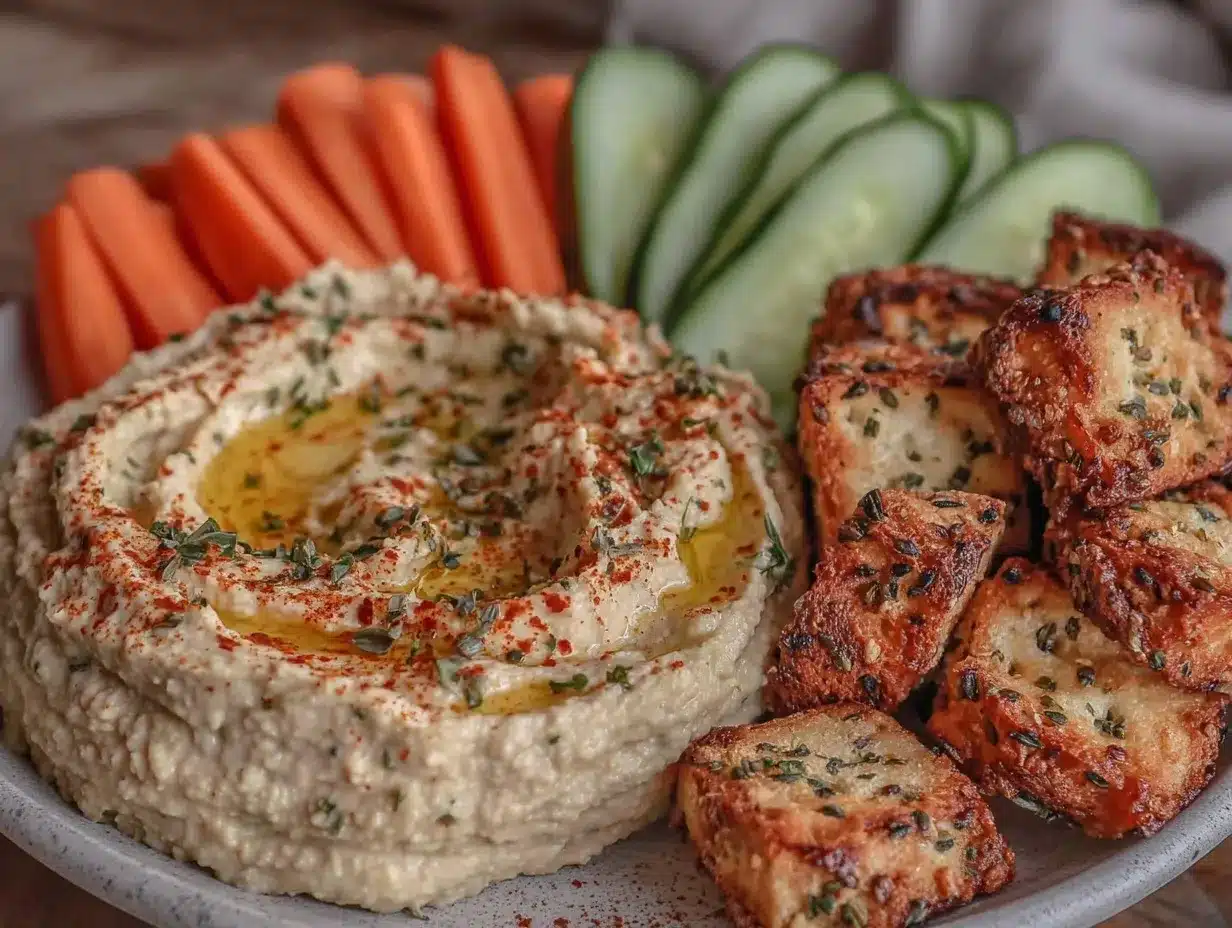
- Prepare the hummus: In your food processor, combine the drained chickpeas, tahini, lemon juice, minced garlic, olive oil, cumin, and a pinch of salt. Blend for about 1-2 minutes until mostly smooth.
- Adjust the texture: Slowly add water, one tablespoon at a time, while the processor runs, until the hummus reaches your desired creaminess. It should be thick but easily dippable, not runny. This usually takes about 3-4 tablespoons of water.
- Taste and season: Check the flavor and add more salt, lemon juice, or garlic if needed. Give it one last blend to mix everything well.
- Prepare the veggies: While the hummus blends, wash and dry all the vegetables. Peel the carrots and cut them into sticks about 3 inches long. Slice the cucumber into either rounds or sticks, depending on your kiddo’s preference. Cut the bell pepper into strips, removing seeds and membranes.
- Arrange the snack plate: On a serving platter or divided plate, neatly arrange the veggies in groups. Place a generous scoop of hummus in a small bowl or right on the plate. Sprinkle a pinch of smoked paprika over the hummus and garnish with chopped parsley if you like.
- Serve immediately: Freshness is key here. The veggies should be crisp and cool, and the hummus creamy and inviting. If making ahead, cover and refrigerate the hummus and veggies separately, but try to serve within 24 hours for best taste and texture.
Quick tip: If the hummus thickens too much after refrigeration, just stir in a splash of water or olive oil before serving to bring back that perfect dip consistency. And don’t rush the veggie cutting — making the sticks uniform not only looks nicer but also makes dipping easier for little fingers.
Cooking Tips & Techniques
Getting the hummus just right is the secret to this snack plate’s success — trust me, I’ve had my share of dry, grainy batches. Here’s what I’ve learned:
- Rinse chickpeas well: This removes excess sodium and the canned flavor, giving you a cleaner taste.
- Blending time matters: Let the processor run long enough to break down the chickpeas to a silky texture — about 2 minutes. Don’t rush; this makes the hummus smooth and creamy.
- Add water slowly: Too much at once can make your hummus watery. Add just enough to loosen it without losing the dip’s body.
- Use fresh lemon juice: Bottled lemon juice just doesn’t have the same bright tang that wakes up the flavors.
- Cut veggies uniformly: This helps with dipping and makes the plate look inviting. Kids notice when things look “just right.”
One lesson I learned the hard way was skipping the tahini once because I thought it would save time. Big mistake — the hummus tasted flat and was way less creamy. A little tahini goes a long way to bring that classic hummus flavor and texture. Also, multitask by prepping the veggies while the hummus blends — saves time and keeps things moving smoothly.
Variations & Adaptations
This snack plate is super flexible, so you can mix it up to fit your family’s tastes or dietary needs:
- Dietary swap: For a nut-free version, use sunflower seed butter instead of tahini in the hummus. It still gets creamy and tasty without the sesame.
- Seasonal veggies: In fall and winter, swap out bell peppers for crunchy jicama sticks or roasted sweet potato wedges for a warm twist. Springtime? Add radishes or snap peas for a fresh bite.
- Flavor twists: Stir in roasted red peppers or a pinch of smoked paprika into the hummus for a smoky kick. Or try a bit of fresh cilantro or basil blended in for a herby note.
- Cooking method: If you want a warm dip, add a sprinkle of shredded cheese and warm the hummus in the oven for a few minutes before serving (though cold is classic and kid-friendly).
- Personal favorite: I once tossed in some cooked, mashed sweet potato into the hummus for extra creaminess and natural sweetness — the kids loved it.
Feel free to customize the veggie lineup too, depending on what’s fresh or on hand. This recipe is all about simple, fresh, and fun eating.
Serving & Storage Suggestions
Serve this snack plate chilled or at room temperature. Kids love dipping the veggies themselves, so a colorful, inviting presentation helps get them excited. Pairing this plate with a cool glass of water or a mild fruit juice works well to keep things light and refreshing.
If you’re packing this for lunchboxes, keep the hummus in a small airtight container to prevent sogginess. Store the veggies separately in a sealed container with a damp paper towel to maintain crunch.
Leftovers (if any!) can be refrigerated for up to 2 days. The hummus might thicken a bit — just stir in a splash of olive oil or water to bring it back. Veggies tend to lose their crispness over time, so it’s best to enjoy them fresh.
Flavors develop subtly when hummus sits overnight; some say it tastes even better the next day, but I prefer it freshly made for that bright lemony punch.
Nutritional Information & Benefits
This Fresh Kindergarten Snack Plate is a wholesome, nutrient-packed option perfect for growing kids and adults alike. A serving provides roughly:
| Nutrition | Amount per Serving |
|---|---|
| Calories | 150-180 |
| Protein | 5-6 grams |
| Fiber | 5-7 grams |
| Fat | 7-9 grams (mostly healthy fats from olive oil and tahini) |
| Carbohydrates | 15-20 grams |
Chickpeas provide plant-based protein and fiber, which help keep little tummies full longer. The veggies are loaded with vitamins A and C, antioxidants, and minerals essential for growth and immune support. Olive oil and tahini contribute healthy fats important for brain development.
This recipe fits well into gluten-free, vegetarian, and dairy-free diets, making it a versatile choice for many families. Just watch for sesame allergies with the tahini — sunflower seed butter is a good swap.
Conclusion
There’s something quietly satisfying about watching those veggies disappear one by one, dipped into creamy hummus, with little hands eagerly reaching for more. This Fresh Kindergarten Snack Plate with Dippable Veggies and Hummus isn’t just a quick snack — it’s a little ritual that brings good food and simple joy to our day.
Feel free to make it your own — swap veggies, tweak the hummus, or add little garnishes that make your family smile. It’s a recipe that’s easy to love and even easier to share. I’m grateful for the way it’s turned snack time into a moment of calm and happiness, and I hope it finds a spot in your kitchen, too.
Frequently Asked Questions
What veggies are best for dipping with hummus?
Crunchy, firm vegetables like carrots, cucumbers, bell peppers, snap peas, and cherry tomatoes work best. They hold up well and provide a nice texture contrast.
Can I make the hummus ahead of time?
Yes! Hummus can be made up to 3 days in advance. Store it in an airtight container in the fridge and stir before serving. Add a splash of water or olive oil if it thickens too much.
Is this recipe suitable for toddlers?
Yes, but cut veggies into smaller, manageable pieces to prevent choking. Also, introduce hummus slowly if they haven’t tried it before.
Can I use store-bought hummus instead?
Absolutely. While homemade hummus has a fresher taste, a good-quality store-bought hummus works well for convenience.
How do I keep the veggies fresh and crisp for longer?
Store cut veggies in a sealed container with a damp paper towel inside the fridge. This helps retain moisture and crunch.
For a fun twist on healthy snacks, you might also enjoy the easy cheesy tater tot breakfast casserole for a hearty start to the day or the fresh Greek 7-layer hummus dip for party-time snacking with a Mediterranean vibe.
Pin This Recipe!
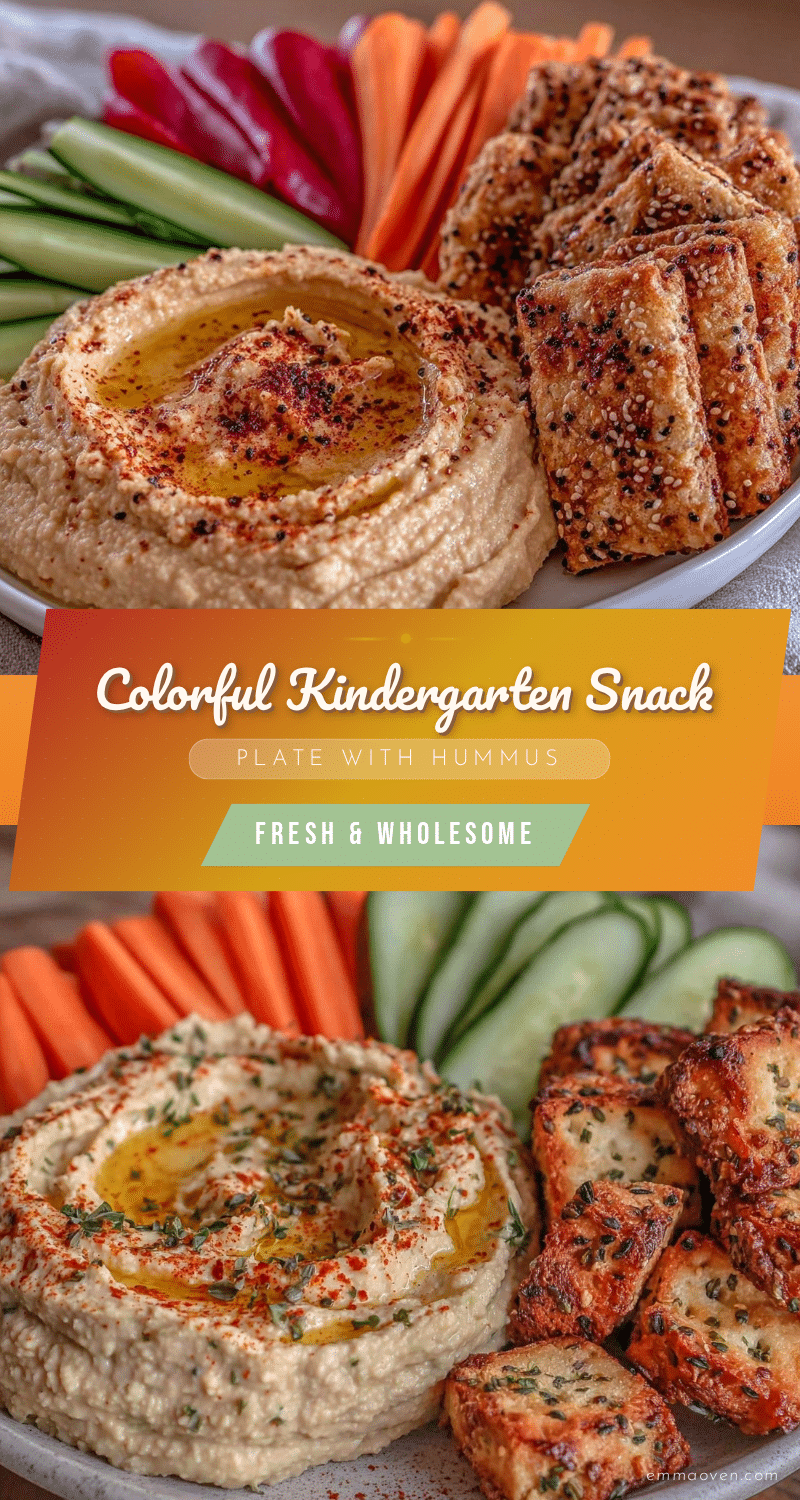
Fresh Kindergarten Snack Plate with Easy Dippable Veggies and Hummus Recipe
A quick and healthy snack plate featuring crunchy fresh veggies paired with creamy homemade hummus, perfect for kids and adults alike.
- Prep Time: 10 minutes
- Cook Time: 0 minutes
- Total Time: 10 minutes
- Yield: 4 servings 1x
- Category: Snack
- Cuisine: Mediterranean
Ingredients
- 1 can (15 oz / 425 g) chickpeas, drained and rinsed
- 3 tablespoons tahini (sesame paste)
- 2 tablespoons fresh lemon juice
- 1 clove garlic, minced
- 2 tablespoons olive oil (plus extra for drizzling)
- 1/2 teaspoon ground cumin
- Salt to taste
- Water, as needed for desired texture
- 2 medium carrots, peeled and cut into sticks
- 1 cucumber, sliced into rounds or sticks
- 1 red bell pepper, sliced into strips
- 1 cup cherry tomatoes, halved (optional)
- Snap peas or green beans, trimmed (optional)
- Smoked paprika (optional, for sprinkling on hummus)
- Fresh parsley or cilantro, chopped (optional garnish)
Instructions
- Prepare the hummus: In your food processor, combine the drained chickpeas, tahini, lemon juice, minced garlic, olive oil, cumin, and a pinch of salt. Blend for about 1-2 minutes until mostly smooth.
- Adjust the texture: Slowly add water, one tablespoon at a time, while the processor runs, until the hummus reaches your desired creaminess. It should be thick but easily dippable, not runny. This usually takes about 3-4 tablespoons of water.
- Taste and season: Check the flavor and add more salt, lemon juice, or garlic if needed. Give it one last blend to mix everything well.
- Prepare the veggies: While the hummus blends, wash and dry all the vegetables. Peel the carrots and cut them into sticks about 3 inches long. Slice the cucumber into either rounds or sticks, depending on preference. Cut the bell pepper into strips, removing seeds and membranes.
- Arrange the snack plate: On a serving platter or divided plate, neatly arrange the veggies in groups. Place a generous scoop of hummus in a small bowl or right on the plate. Sprinkle a pinch of smoked paprika over the hummus and garnish with chopped parsley if desired.
- Serve immediately: Freshness is key. The veggies should be crisp and cool, and the hummus creamy and inviting. If making ahead, cover and refrigerate the hummus and veggies separately, but try to serve within 24 hours for best taste and texture.
Notes
If the hummus thickens after refrigeration, stir in a splash of water or olive oil before serving. Cut veggies uniformly for easier dipping and better presentation. Use fresh lemon juice for best flavor. For nut-free option, substitute tahini with sunflower seed butter.
Nutrition
- Serving Size: 1 snack plate servin
- Calories: 165
- Sugar: 4
- Sodium: 150
- Fat: 8
- Saturated Fat: 1
- Carbohydrates: 18
- Fiber: 6
- Protein: 6
Keywords: hummus, veggie snack, healthy snack, kid-friendly, easy snack, homemade hummus, fresh veggies, gluten-free, vegetarian, dairy-free