“You’ve got to try this stew,” my friend insisted over a crackling phone call as I rummaged through the fridge, staring down a sad collection of leftovers that barely looked like dinner. Honestly, I was skeptical—Ethiopian cooking wasn’t exactly my comfort zone, and the thought of tracking down unfamiliar spices felt like a hassle after a long day. But curiosity got the better of me, and that night I found myself stirring a pot of rich, deeply spiced chicken stew called Doro Wat, paired with the signature tangy injera bread.
The kitchen filled with the warm aroma of berbere spice and slow-cooked onions, and frankly, it was like nothing I’d made before. The stew’s bold flavors and tender chicken felt like a hug in a bowl, grounding me when the day had been all over the place. What surprised me most was how approachable the recipe turned out to be—no exotic equipment, no complicated steps, just a bit of patience and some love.
That first batch turned into several dinners, each time refining the balance of spice and savor, and now I can’t imagine my recipe repertoire without this flavor-packed Ethiopian Doro Wat chicken stew with injera bread. It’s become that quiet, dependable meal that pulls people together around the table, even when life’s hectic. And honestly, it’s a reminder that sometimes the best dishes come from unexpected places and a bit of open-mindedness in the kitchen.
Why You’ll Love This Recipe
This flavorful Ethiopian Doro Wat chicken stew recipe has held a special place in my kitchen, and I’m confident it’ll find a spot in yours too. Here’s why it stands out:
- Quick & Easy: The stew comes together in about 1 hour and 15 minutes, which is pretty decent for a dish that tastes this rich and layered—perfect for busy weeknights or when you want a comforting meal without fuss.
- Simple Ingredients: You probably have most of the staples already—onions, garlic, chicken thighs—and the key Ethiopian spice mix, berbere, you can find at most international markets or online. It’s that one special ingredient that packs a punch.
- Perfect for Gatherings: Whether it’s a casual dinner with friends or a family weekend feast, this stew paired with injera bread invites sharing and conversation. It’s warm, hearty, and communal.
- Crowd-Pleaser: The stew’s rich, spicy, and savory profile wins over kids and adults alike, even those who say they’re “not really into spicy food.” The slow-cooked onions mellow the heat beautifully.
- Authentic Yet Adaptable: Unlike some versions that can feel intimidating, this recipe strikes a great balance between traditional flavors and home cooking practicality. The injera bread adds that authentic touch, but you can also serve with rice or flatbread if needed.
What sets this recipe apart is the layering technique—slow caramelizing of onions and gradual spice blooming—which creates that signature depth of flavor. It’s not just another chicken stew; it’s a vivid, soulful experience that invites you to slow down and savor each bite. Honestly, it’s the kind of dish that makes you close your eyes after the first taste, feeling like you’ve traveled somewhere special without leaving your kitchen.
What Ingredients You Will Need
This Ethiopian Doro Wat chicken stew uses straightforward, wholesome ingredients that come together to create a bold, rich flavor profile. Most are pantry staples, with the star being berbere spice—a fragrant, spicy blend essential to the dish’s character.
- Chicken: 3 pounds (about 1.4 kg) of bone-in, skin-on chicken thighs (preferred for juicy, tender meat)
- Onions: 4 large yellow onions, finely chopped (the slow cooking of these builds the stew’s base)
- Garlic: 4 cloves, minced (for that pungent kick)
- Ginger: 2 tablespoons, freshly grated (adds warmth and freshness)
- Berbere spice: 3 tablespoons (look for a trusted brand like “Mildessa” or “Awaze” for authentic flavor)
- Tomato paste: 2 tablespoons (for richness and slight acidity)
- Chicken broth: 2 cups (480 ml) low sodium, or water as a substitute
- Butter: 3 tablespoons, unsalted (traditional recipes use niter kibbeh—Ethiopian spiced clarified butter—but regular butter works well)
- Salt and pepper: To taste
- Hard-boiled eggs: 6, peeled (a classic addition that absorbs the stew’s flavors)
- Injera bread: 1 large round (available at specialty stores or easily made from teff flour for the authentic experience)
Substitutions: If you can’t find berbere, substitute with a mix of smoked paprika, cayenne, ground fenugreek, and cumin to mimic the flavor. For a dairy-free option, use oil instead of butter. Chicken breasts can replace thighs but will be less juicy.
Equipment Needed
- Large heavy-bottomed pot or Dutch oven: Essential for even heat and slow cooking—my favorite is a 6-quart cast iron Dutch oven.
- Sharp chef’s knife and cutting board: For chopping onions and mincing garlic and ginger.
- Wooden spoon or heat-resistant spatula: To stir the stew without scratching your cookware.
- Measuring spoons and cups: For precise ingredient amounts.
- Small bowl: To hold peeled hard-boiled eggs before adding them to the stew.
If you don’t have a Dutch oven, a heavy saucepan with a tight-fitting lid will do, but be vigilant about stirring to prevent burning. I learned the hard way that cheap non-stick pans can’t handle the long onion-cooking phase—it’s worth investing in good cookware for recipes like this. For peeling eggs efficiently, I like to crack them all and soak them briefly in cold water—it helps the shells slip right off.
Preparation Method
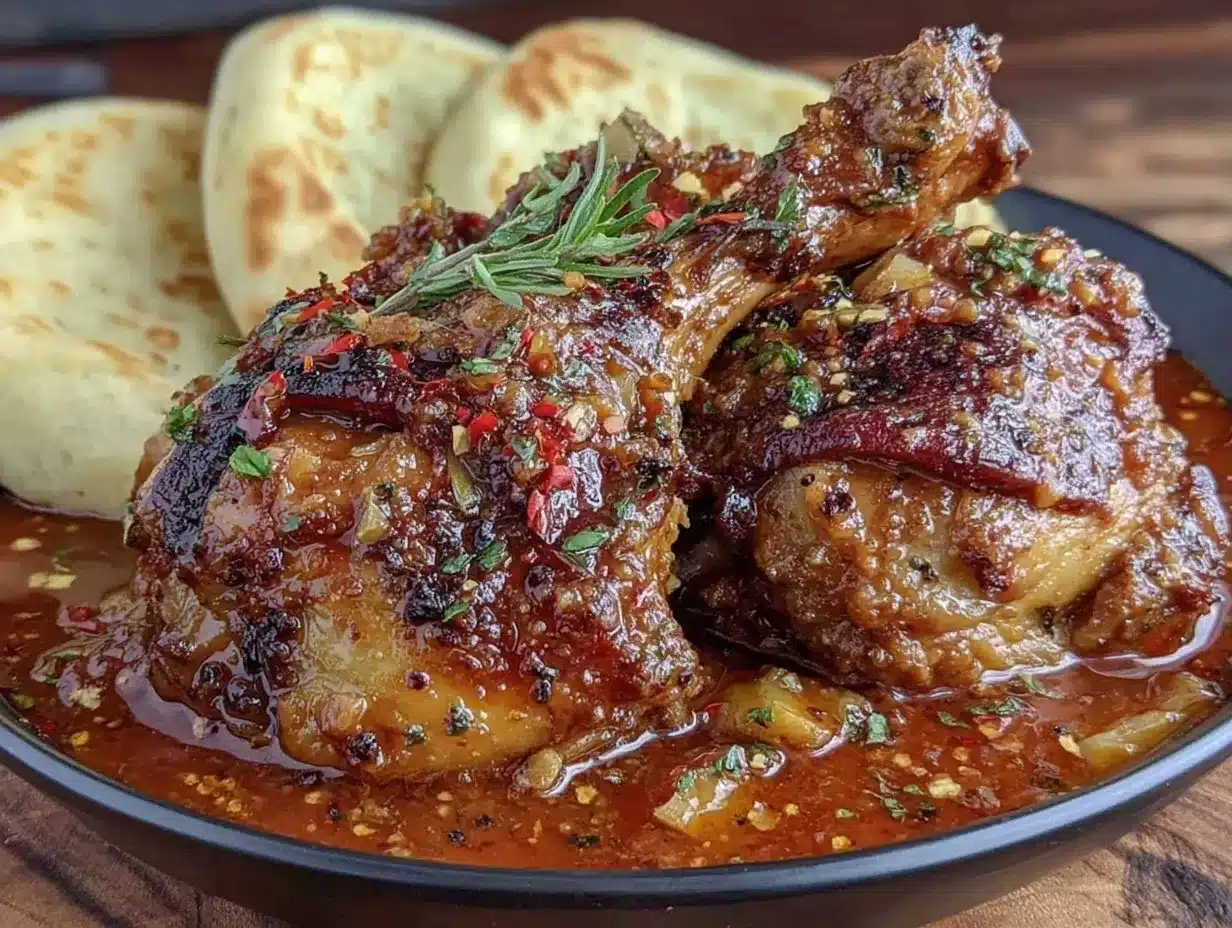
- Prepare the chicken: Rinse and pat dry the chicken thighs. Season generously with salt and pepper. Set aside. (5 minutes)
- Caramelize the onions: In your Dutch oven, melt the butter over medium heat. Add the finely chopped onions and cook, stirring frequently, for about 30-40 minutes until they turn deep golden brown and sweet. This step is crucial—don’t rush it! The onions should smell sweet and look jammy, not burnt. (30-40 minutes)
- Add garlic and ginger: Stir in the minced garlic and grated ginger, cooking for 2-3 minutes until fragrant. (3 minutes)
- Incorporate the berbere and tomato paste: Sprinkle the berbere spice over the onion mixture, stirring to coat evenly. Add the tomato paste and cook for another 5 minutes to develop flavor and reduce acidity. (5 minutes)
- Add chicken pieces: Nestle the chicken thighs into the sauce, turning them to coat well with the spiced onion mixture. The chicken should start to brown slightly. (5 minutes)
- Pour in chicken broth: Add 2 cups (480 ml) of chicken broth. Bring the stew to a gentle simmer, then reduce the heat to low and cover. Let it cook for about 40 minutes, turning the chicken every 10-15 minutes so it cooks evenly and absorbs the sauce. The stew should thicken and deepen in color. (40 minutes)
- Prepare hard-boiled eggs: While the stew simmers, boil eggs for 10 minutes, then peel them. Add the eggs to the stew during the last 10 minutes to soak up flavor. (10 minutes prep + 10 minutes simmer with eggs)
- Final seasoning and rest: Taste the stew and adjust salt and pepper as needed. Let it rest covered off the heat for 5 minutes before serving. (5 minutes)
- Serve with injera bread: Tear off pieces of injera and use them to scoop up the stew and eggs. The bread’s slightly sour tang complements the spicy richness beautifully.
Tip: If the stew seems too thick, add a splash of water or broth. Too thin? Increase heat slightly uncovered to reduce. The aroma should be rich, spicy, and inviting by the end.
Cooking Tips & Techniques
One lesson I learned the hard way is not to rush the onion caramelization. Those 30-40 minutes of slow cooking transform the stew from ordinary to extraordinary. Stir often to prevent burning, and if the onions stick, lower the heat rather than add water—that dilutes flavor.
Berbere spice can pack a punch, so start with a bit less if you’re spice-sensitive and adjust up next time. It’s easier to build heat than to tone it down once in the pot.
Using bone-in chicken thighs keeps the meat juicy and adds depth to the broth. I’ve tried boneless, but it just doesn’t have the same soul.
Multitasking helps—while the stew simmers, hard boil your eggs and prepare your injera or flatbread. This way, everything is ready to serve hot and fresh.
For consistency, try to chop onions uniformly so they cook evenly. Also, taste as you go—seasoning is key to balancing heat, salt, and richness.
Variations & Adaptations
- Vegetarian version: Swap chicken for hearty vegetables like mushrooms, eggplant, or potatoes. Use vegetable broth and add smoked paprika for a similar depth.
- Spice level adjustment: For a milder stew, reduce berbere to 1-2 tablespoons and add a pinch of cinnamon or nutmeg for warmth without heat.
- Alternate serving options: If you can’t find injera, serve the stew over steamed rice or with warm flatbreads like naan or pita. It’s not traditional but just as satisfying.
- Slow cooker adaptation: Brown onions and chicken first, then transfer all ingredients to a slow cooker. Cook on low for 6-7 hours for a hands-off approach.
- Personal twist: Once, I added a splash of red wine during simmering for a deeper flavor note. It wasn’t traditional, but it gave the stew a beautiful complexity that my family loved.
Serving & Storage Suggestions
Serve the Ethiopian Doro Wat chicken stew hot, directly from the pot, with injera bread torn into pieces for scooping. The bread acts as both utensil and side, soaking up the stew’s luscious sauce.
This dish pairs beautifully with simple sides like steamed greens or a fresh salad to balance the richness. For drinks, lightly spiced teas or crisp white wines complement the flavors well.
Store leftover stew in an airtight container in the refrigerator for up to 3 days. The flavors actually deepen overnight, so leftovers might be even better. To reheat, warm gently on the stove over low heat, stirring occasionally.
Injera is best enjoyed fresh but can be wrapped tightly and refrigerated for a day or two. To warm, steam it briefly or microwave covered with a damp paper towel to keep it soft.
Nutritional Information & Benefits
This dish provides a balanced meal packed with protein from chicken and eggs, plus fiber and iron from onions and spices. Berbere spices contain antioxidant-rich ingredients like chili peppers, garlic, and fenugreek, which may support digestion and metabolism.
Using bone-in chicken thighs adds minerals like zinc and iron, essential for immune health. Injera, made from teff flour, offers a gluten-free, high-fiber carbohydrate source, which is great for sustained energy.
This stew fits well into a moderate-carb, nutrient-dense diet. Just be mindful of the spice level if you have digestive sensitivities.
Conclusion
If you’ve been looking for a chicken stew that breaks away from the usual comfort food crowd, this Ethiopian Doro Wat chicken stew with injera bread is a stellar choice. It’s rich, deeply flavorful, and surprisingly approachable, with a balance of spice and warmth that invites you to slow down and savor.
Feel free to tweak the heat, swap ingredients, or adjust the sides to fit your taste and pantry. I love this recipe because it brings a little bit of Ethiopia’s vibrant culinary culture right into my kitchen—and into my family’s hearts.
Give it a try, and I’d love to hear how you made it your own. Cooking is always better when shared, right?
FAQs
What can I use if I can’t find injera bread?
You can serve Doro Wat with flatbreads like pita or naan, or even steamed rice. While not traditional, these options soak up the stew nicely and keep the meal satisfying.
Can I make Doro Wat without berbere spice?
Berbere is key for authentic flavor, but if unavailable, mix smoked paprika, cayenne pepper, ground cumin, and a pinch of cinnamon to mimic its taste.
How do I store and reheat leftovers?
Keep leftovers in an airtight container in the fridge for up to 3 days. Reheat gently on the stove over low heat, stirring occasionally to avoid burning.
Is this recipe gluten-free?
The stew itself is gluten-free, but traditional injera is made from teff flour, which is gluten-free. Just check the injera you buy, as some commercial versions mix flours.
Can I prepare this recipe in advance for a party?
Yes! The stew tastes even better the next day, so you can make it ahead and reheat. Just prepare the injera fresh or warm it shortly before serving.
For a different but equally delicious dinner option, you might enjoy the crispy BBQ bacon tater tot casserole or the savory pulled chicken sliders with tangy Alabama white sauce, both great for casual gatherings and packed with flavor.
Pin This Recipe!
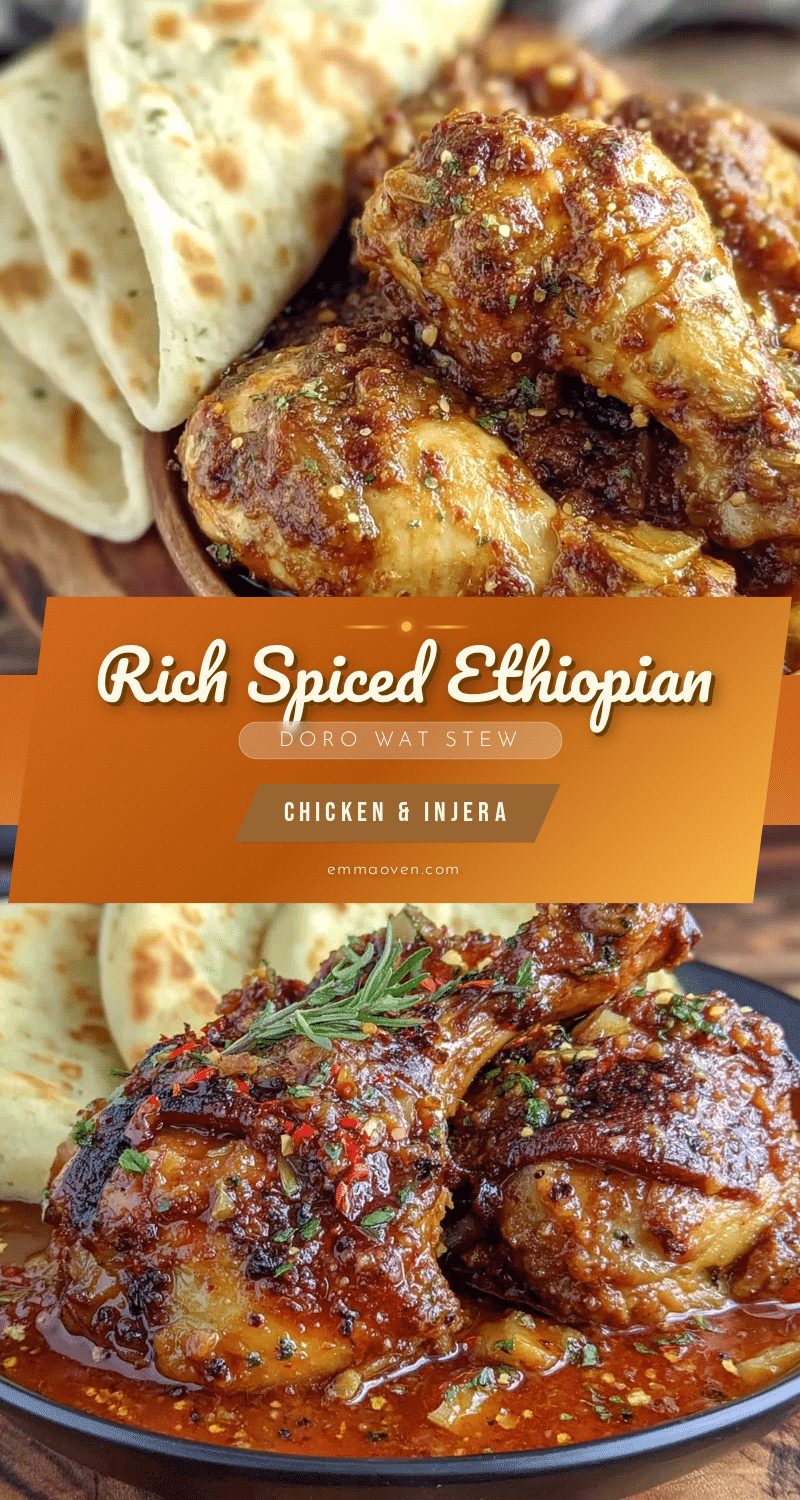
Flavorful Ethiopian Doro Wat Chicken Stew Recipe
A rich and deeply spiced Ethiopian chicken stew made with slow-caramelized onions, berbere spice, and tender bone-in chicken thighs, traditionally served with injera bread.
- Prep Time: 15 minutes
- Cook Time: 1 hour
- Total Time: 1 hour 15 minutes
- Yield: 6 servings 1x
- Category: Main Course
- Cuisine: Ethiopian
Ingredients
- 3 pounds bone-in, skin-on chicken thighs
- 4 large yellow onions, finely chopped
- 4 cloves garlic, minced
- 2 tablespoons freshly grated ginger
- 3 tablespoons berbere spice
- 2 tablespoons tomato paste
- 2 cups low sodium chicken broth
- 3 tablespoons unsalted butter
- Salt and pepper to taste
- 6 hard-boiled eggs, peeled
- 1 large round injera bread
Instructions
- Rinse and pat dry the chicken thighs. Season generously with salt and pepper. Set aside.
- In a large heavy-bottomed pot or Dutch oven, melt the butter over medium heat. Add the finely chopped onions and cook, stirring frequently, for about 30-40 minutes until deep golden brown and sweet.
- Stir in the minced garlic and grated ginger, cooking for 2-3 minutes until fragrant.
- Sprinkle the berbere spice over the onion mixture, stirring to coat evenly. Add the tomato paste and cook for another 5 minutes to develop flavor and reduce acidity.
- Nestle the chicken thighs into the sauce, turning them to coat well with the spiced onion mixture. Let the chicken brown slightly for about 5 minutes.
- Add 2 cups of chicken broth. Bring the stew to a gentle simmer, then reduce heat to low and cover. Cook for about 40 minutes, turning the chicken every 10-15 minutes.
- While the stew simmers, boil eggs for 10 minutes, then peel them. Add the eggs to the stew during the last 10 minutes to soak up flavor.
- Taste the stew and adjust salt and pepper as needed. Let it rest covered off the heat for 5 minutes before serving.
- Serve hot with torn pieces of injera bread to scoop up the stew and eggs.
Notes
Do not rush the onion caramelization; slow cooking for 30-40 minutes is crucial for flavor. Stir often to prevent burning. If stew is too thick, add water or broth; if too thin, increase heat uncovered to reduce. Start with less berbere spice if sensitive to heat and adjust to taste. Bone-in chicken thighs keep the meat juicy and add depth to the broth.
Nutrition
- Serving Size: 1 serving (approxima
- Calories: 450
- Sugar: 6
- Sodium: 550
- Fat: 25
- Saturated Fat: 10
- Carbohydrates: 15
- Fiber: 3
- Protein: 40
Keywords: Ethiopian, Doro Wat, chicken stew, berbere spice, injera, authentic, spicy, slow-cooked, bone-in chicken