“You can’t just pour batter and hope for the best,” my friend laughed one weekend morning as we gathered around my tiny kitchen island. Honestly, I was skeptical when I first tried making thin and fluffy classic French crêpes—it seemed like one of those fussy recipes that only professionals could nail. But after fumbling through a few batches and tweaking my technique, I landed on a version that felt just right: delicate, paper-thin, yet soft and airy. It’s funny how something that started as a casual experiment to use up leftover eggs turned into a ritual I found myself repeating multiple times a week.
That morning, the warmth of the pan mingled with the sweet smell of browned edges, and the crêpes slid effortlessly off the skillet. My friend’s eyes lit up as she tasted the first bite, and I realized this recipe wasn’t just for fancy brunches—it was comfort wrapped in a simple fold. The subtle vanilla and hint of butter made each mouthful feel like a little celebration without the fuss. Plus, it pairs so well with everything from fresh berries to a drizzle of honey or even a sprinkle of cinnamon sugar.
What really sticks with me about these crêpes is how they invite creativity without overwhelming the cook. Whether you’re an early riser or a late weekend bruncher, there’s a quiet satisfaction in flipping that first perfect crepe and knowing the rest will follow. It’s the kind of recipe that’s forgiving enough for beginners but has enough charm to impress guests (or yourself) when you want to make breakfast feel special. That’s why this perfect thin and fluffy classic French crêpes recipe has stayed in my rotation—because it’s simple, satisfying, and somehow just a little bit magical.
Why You’ll Love This Recipe
Having tested this classic French crêpes recipe countless times, I can honestly say it hits the sweet spot between elegance and ease. Crêpes are notoriously tricky, but this version cuts through the fuss with a straightforward batter and a foolproof cooking method.
- Quick & Easy: Ready in under 30 minutes, this recipe fits right into busy mornings or those spontaneous brunch plans.
- Simple Ingredients: No need for specialty items—just pantry staples like flour, eggs, milk, and butter.
- Perfect for Any Occasion: Whether it’s a lazy Sunday breakfast or an impromptu gathering, these crêpes make every meal feel a bit more special.
- Crowd-Pleaser: Kids and adults alike love the light texture and delicate flavor, making it a hit for family meals.
- Unbelievably Delicious: The balance of thinness with fluffiness creates a texture that’s both tender and satisfying.
What sets this apart? The secret is a brief resting period for the batter, which lets the flour hydrate fully, and a small splash of melted butter added right before cooking. These two simple steps make the crêpes incredibly pliable and flavorful without being greasy. Plus, the gentle fold technique I use keeps them from tearing—trust me, I’ve learned the hard way!
This recipe isn’t just another crêpe—it’s the kind that has you closing your eyes after the first bite and thinking, “Yeah, I want this on repeat.” It brings a little Parisian café charm to your kitchen, without any stress or special equipment. And if you’re into mixing savory and sweet, these crêpes pair beautifully with dishes like crispy cheesy tater tot ranch bake or even a fresh fruit topping.
What Ingredients You Will Need
This recipe uses simple, wholesome ingredients to deliver that classic crêpe taste and that perfect thin yet fluffy texture. Most are pantry staples you probably have on hand, making it easy to whip up crêpes any day of the week.
- All-purpose flour (1 cup / 120 g) – The base of the batter, provides structure.
- Large eggs (2, room temperature) – For richness and binding.
- Whole milk (1 1/4 cups / 300 ml) – Adds moisture and tenderness; can swap with almond or oat milk for dairy-free.
- Unsalted butter (3 tbsp, melted + extra for the pan) – Adds flavor and helps with the delicate texture.
- Granulated sugar (1 tbsp) – Just a touch for subtle sweetness.
- Vanilla extract (1 tsp) – Optional, but gives a lovely fragrant note.
- Pinch of salt – Balances the sweetness and enhances flavors.
For toppings or fillings, the sky’s the limit. I often reach for fresh berries, a dollop of whipped cream, or a drizzle of maple syrup. If you want to get fancy, a smear of Nutella or some sautéed apples works wonders. In summer, swapping out milk for a splash of fresh fruit juice or adding lemon zest to the batter brings a bright twist. For gluten-free options, try a 1:1 gluten-free flour replacement—just keep in mind the texture might shift slightly.
I usually recommend using King Arthur flour for the best results because it’s consistent and gives a smooth batter, but any good brand you trust will do just fine. Don’t skip the resting time; it’s a small step that pays off big in texture.
Equipment Needed
- Non-stick skillet or crêpe pan: A 9-10 inch (23-25 cm) pan works well. A dedicated crêpe pan is great but not necessary.
- Mixing bowl: For whisking the batter. A medium-sized bowl is perfect.
- Whisk or hand mixer: To combine ingredients smoothly.
- Ladle or measuring cup: For pouring batter evenly.
- Spatula: A thin, flexible spatula helps flip the crêpes gently without tearing.
- Cooling rack or plate: To stack crêpes as they cool.
If you don’t have a non-stick pan, a well-seasoned cast iron skillet works, but you’ll need to use a little extra butter and be extra careful when flipping. Investing in a silicone spatula designed for delicate foods makes a big difference—I learned this after way too many crêpes ended up in the trash. For budget-friendly options, any basic non-stick frying pan will do just fine to get started.
Preparation Method
- Combine dry ingredients: In a mixing bowl, whisk together 1 cup (120 g) of all-purpose flour, 1 tablespoon granulated sugar, and a pinch of salt. This ensures even distribution of the dry elements. (Approx. 2 minutes)
- Mix wet ingredients: In a separate bowl, beat 2 large eggs until smooth, then add 1 1/4 cups (300 ml) whole milk and 1 teaspoon vanilla extract. Whisk to combine. (2 minutes)
- Make the batter: Gradually pour the wet mixture into the dry ingredients while whisking continuously to avoid lumps. Once smooth, stir in 3 tablespoons melted unsalted butter. The batter should have a thin, pourable consistency—if it seems too thick, add a splash more milk. (3 minutes)
- Rest the batter: Cover the bowl with plastic wrap or a clean towel and let it rest at room temperature for at least 30 minutes. This step is crucial; it lets the flour absorb the liquid fully, resulting in tender crêpes. (30 minutes)
- Heat the pan: Place your non-stick skillet over medium heat and brush lightly with melted butter. The pan should be hot but not smoking. (2 minutes)
- Cook the crêpes: Use a ladle or 1/4 cup (60 ml) measuring cup to pour batter into the pan, tilting and swirling to spread thinly and evenly across the surface. Cook until the edges lift easily and the bottom is golden (about 1-2 minutes).
- Flip carefully: Use a thin spatula to loosen edges, then flip the crêpe and cook the other side for 30 seconds to 1 minute until lightly browned. (1-2 minutes)
- Stack and keep warm: Transfer cooked crêpes to a plate and cover loosely with foil or a clean towel to stay warm and soft.
- Repeat: Continue cooking remaining batter, adding more butter as needed to prevent sticking.
If your batter seems lumpy after resting, give it a quick whisk before cooking. The batter should smell slightly sweet and buttery—if it smells sour or off, it might be best to start fresh. The first crêpe often acts as a test, so don’t fret if it’s not perfect; adjust heat or butter quantity as you go.
When flipping, a quick, confident motion works best—I’ve found that hesitating leads to torn crêpes. And if the edges look dry or crispy, lower the heat slightly for the next ones. Patience here pays off in silky, tender crêpes.
Cooking Tips & Techniques
Making perfect thin and fluffy classic French crêpes isn’t magic, but it does take a little practice and a few insider tricks. Here are some tips I picked up along the way:
- Resting the Batter: This is non-negotiable. I once skipped it in a rush, and the crêpes ended up rubbery and tough. Waiting 30 minutes helps develop gluten just enough for elasticity without chewiness.
- Consistency Matters: The batter should be thinner than pancake batter but not watery. If it’s too thick, your crêpes will be dense and prone to tearing.
- Heat Control: Medium heat is your friend. Too hot, and you’ll burn the crêpes; too low, and they’ll dry out. After the first crêpe, adjust accordingly.
- Use Butter Wisely: Butter the pan lightly before each crêpe to prevent sticking, but don’t overload—it can cause uneven cooking and sogginess.
- Practice Flipping: The first few flips might be messy, but once you get the hang of the wrist motion, it’s smooth sailing. I like to use a thin, flexible spatula to help loosen edges before flipping.
- Keep Crêpes Warm: Stack them on a plate covered with a towel or foil to keep them soft and pliable until serving.
One time, I tried making these crêpes with skim milk to lighten them up, but they lost that tender fluffiness. Whole milk or even a splash of cream really makes a difference. Another lesson was about batter lumps—no matter how much you whisk, a few tiny lumps are okay; overmixing can make them tough.
Multitasking tip: While the batter rests, prep your toppings or filling. That way, once you start cooking, you can keep a steady rhythm without rushing. If you want to try a savory twist, these crêpes work beautifully with fillings like smoked salmon or sautéed mushrooms—reminding me a bit of the crispy buffalo chicken tater tot casserole in terms of comfort food vibes.
Variations & Adaptations
One of the joys of classic French crêpes is how easy it is to make them your own. Here are some tweaks and twists I’ve enjoyed:
- Gluten-Free: Swap all-purpose flour with a gluten-free blend (like Bob’s Red Mill 1-to-1). The texture will be slightly different—less elastic—but still delicious.
- Dairy-Free: Use almond, oat, or soy milk instead of whole milk, and substitute butter with coconut oil or dairy-free margarine.
- Savory Crêpes: Omit the sugar and vanilla, and add a pinch of herbs like thyme or chives to the batter. Fill with cheese, ham, or spinach for a light meal.
- Sweet Variations: Add a tablespoon of cocoa powder to the batter for chocolate crêpes, or stir in lemon zest for a bright citrus note.
For cooking method variations, I sometimes use a crepe maker, which is fun and fast but not necessary. You can also make mini crêpes by using less batter per crêpe, perfect for bite-sized snacks or desserts.
A personal favorite variation is folding the crêpes with a smear of cream cheese and fresh strawberries—simple, fresh, and a crowd-pleaser that reminds me of brunches with friends. It’s a nice contrast to richer dishes like the easy cheesy tater tot breakfast casserole when you want to keep breakfast light and elegant.
Serving & Storage Suggestions
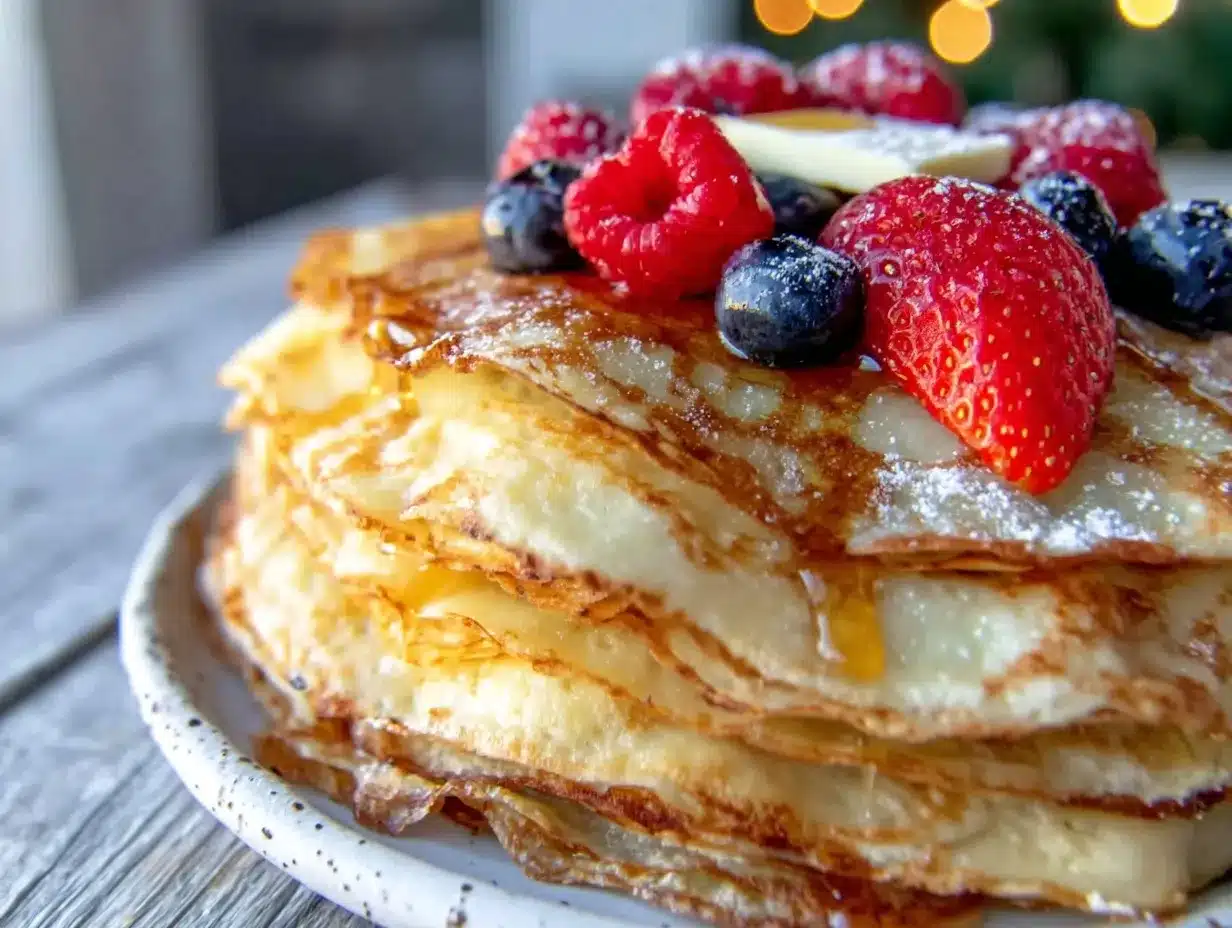
These crêpes are best served warm, right off the pan. You can stack them on a plate, cover loosely with foil or a towel to keep them soft, and then bring them to the table. Presentation-wise, a simple dusting of powdered sugar or a drizzle of maple syrup is classic and always hits the spot.
For a more indulgent touch, serve with fresh fruit, whipped cream, or a dollop of yogurt. They also pair beautifully with a cup of strong coffee or freshly squeezed orange juice for a well-rounded breakfast.
If you have leftovers (and that does happen!), store cooled crêpes in an airtight container in the refrigerator for up to 3 days. To reheat, wrap a few in a damp paper towel and microwave for 20-30 seconds, or warm gently in a skillet over low heat.
Crêpes can also be frozen—place parchment paper between each crêpe and freeze in a zip-top bag for up to 2 months. Thaw overnight in the fridge before reheating. I find that freezing is great for busy mornings or unexpected guests.
Flavors tend to deepen slightly after resting, so some people actually prefer crêpes a few hours after making. Just reheat gently to preserve their softness.
Nutritional Information & Benefits
Each classic French crêpe (approximately 9 inches in diameter) contains roughly:
| Calories | 110-130 |
|---|---|
| Protein | 5 g |
| Carbohydrates | 15 g |
| Fat | 4-6 g |
| Fiber | 0.5 g |
Made with wholesome ingredients like eggs and milk, these crêpes provide a good source of protein and calcium. Using whole milk adds richness and essential fats, while the moderate flour amount keeps carbs balanced for a breakfast that sustains you without weighing you down.
For those mindful of dietary needs, swapping to gluten-free flour or dairy-free milk makes this recipe accessible without losing much in flavor or texture. Just watch for allergens like eggs if you have sensitivities.
From a wellness perspective, I appreciate this recipe’s simplicity—no processed additives, and you control every ingredient. It’s a reminder that comfort food and nourishment don’t have to be at odds.
Conclusion
Perfect thin and fluffy classic French crêpes are one of those recipes that feel special but are surprisingly approachable. Their delicate texture and subtle flavor make them a versatile base for both sweet and savory dishes. Whether you’re feeding a crowd or treating yourself to a quiet morning, these crêpes fit the bill.
Don’t be afraid to experiment by adding your favorite fillings or toppings—this recipe is a great starting point that invites your personal touch. I keep coming back to it because it’s reliable, quick, and honestly, a little bit magical when you get that perfect flip.
Give it a try and let me know how your crêpes turn out! Feel free to share your favorite fillings or any tweaks you made. Breakfast is better when shared, right?
Frequently Asked Questions
How thin should French crêpes be?
They should be paper-thin but still have some softness. When you swirl the batter in the pan, it should spread quickly into a thin layer without holes.
Can I make the batter ahead of time?
Yes! The batter actually benefits from resting. You can refrigerate it for up to 24 hours before cooking; just give it a gentle whisk before using.
What’s the best way to flip crêpes without tearing?
Use a thin, flexible spatula to loosen the edges first. Then, with a quick wrist motion, flip the crêpe. Confidence and practice make perfect here.
Can I freeze cooked crêpes?
Absolutely. Place parchment paper between each crêpe and freeze in an airtight bag for up to 2 months. Thaw overnight in the fridge before reheating.
What are some good savory fillings for crêpes?
Think sautéed mushrooms, cheese and ham, spinach with garlic, or even smoked salmon and cream cheese. They’re a versatile base for all kinds of flavors.
Pin This Recipe!

Perfect Thin and Fluffy Classic French Crêpes Recipe for Easy Breakfast

This recipe delivers delicate, paper-thin yet soft and airy classic French crêpes that are quick and easy to make, perfect for breakfast or brunch. The batter rests to ensure tender crêpes with a subtle vanilla and buttery flavor.
- Prep Time: 10 minutes
- Cook Time: 15 minutes
- Total Time: 40 minutes
- Yield: 8-10 crêpes 1x
- Category: Breakfast
- Cuisine: French
Ingredients
- 1 cup (120 g) all-purpose flour
- 2 large eggs, room temperature
- 1 1/4 cups (300 ml) whole milk
- 3 tablespoons unsalted butter, melted (plus extra for the pan)
- 1 tablespoon granulated sugar
- 1 teaspoon vanilla extract (optional)
- Pinch of salt
Instructions
- In a mixing bowl, whisk together 1 cup (120 g) all-purpose flour, 1 tablespoon granulated sugar, and a pinch of salt.
- In a separate bowl, beat 2 large eggs until smooth, then add 1 1/4 cups (300 ml) whole milk and 1 teaspoon vanilla extract. Whisk to combine.
- Gradually pour the wet mixture into the dry ingredients while whisking continuously to avoid lumps. Stir in 3 tablespoons melted unsalted butter. The batter should be thin and pourable; add a splash more milk if too thick.
- Cover the bowl with plastic wrap or a clean towel and let the batter rest at room temperature for at least 30 minutes.
- Heat a non-stick skillet over medium heat and brush lightly with melted butter.
- Use a ladle or 1/4 cup (60 ml) measuring cup to pour batter into the pan, tilting and swirling to spread thinly and evenly. Cook until edges lift easily and bottom is golden, about 1-2 minutes.
- Use a thin spatula to loosen edges, then flip the crêpe and cook the other side for 30 seconds to 1 minute until lightly browned.
- Transfer cooked crêpes to a plate and cover loosely with foil or a clean towel to keep warm and soft.
- Repeat cooking remaining batter, adding more butter as needed to prevent sticking.
Notes
Resting the batter for at least 30 minutes is crucial for tender crêpes. Use medium heat to avoid burning. Use a thin spatula and confident wrist motion to flip without tearing. Butter the pan lightly before each crêpe. Batter can be refrigerated up to 24 hours before cooking. Crêpes can be frozen with parchment paper between layers for up to 2 months.
Nutrition
- Serving Size: 1 crêpe (approximate
- Calories: 120
- Sugar: 2
- Sodium: 90
- Fat: 5
- Saturated Fat: 3
- Carbohydrates: 15
- Fiber: 0.5
- Protein: 5
Keywords: French crêpes, thin crêpes, fluffy crêpes, easy breakfast, classic crêpes, brunch recipe, crepe batter, homemade crêpes