“You’ve got to try this,” my coworker said, sliding a takeout box across the breakroom table, the aroma hitting me before I even lifted the lid. It was a busy Wednesday, and honestly, my lunch options felt uninspired—until that first bite of her homemade Pad Thai. There was this perfect dance of tangy, sweet, and nutty flavors that made me pause, mid-chew, and think, “I could never get this right at home.” Yet here I am, weeks later, with my own skillet sizzling away, recreating those Easy Authentic Thai Pad Thai Street Noodles that have become my weekday obsession.
What surprised me most was how approachable the recipe actually is. I’d always assumed Pad Thai was some elusive street food magic, something you only get from bustling night markets or authentic Thai joints. But cooking it yourself? It turns out, it’s just a few simple ingredients and a hot pan away from a bowl of pure comfort. And honestly, the smell of tamarind and peanuts roasting in my kitchen has become the little reset button I didn’t know I needed after a long day.
Now, I’m not usually one to fuss over complicated sauces or hunt down rare ingredients, but this recipe strikes that perfect balance between authentic flavor and kitchen-friendly prep. It’s that rare dish where you can feel a bit fancy without spending hours or trekking to specialty stores. Plus, it’s become my go-to when I want something satisfying and bright without the takeout guilt. There’s just something quietly reassuring about slurping those slightly chewy rice noodles coated in that perfect tamarind glaze, topped with crunchy peanuts and fresh lime. It feels like a little celebration in a bowl, every single time.
So if you’ve ever hesitated, thinking Pad Thai was too tricky or time-consuming, I promise this Easy Authentic Thai Pad Thai Street Noodles recipe will gently change your mind. It’s simple, it’s honest, and well, it tastes like a small victory on a plate.
Why You’ll Love This Recipe
From my own kitchen trials—trust me, I’ve made plenty of noodle mishaps—this Easy Authentic Thai Pad Thai Street Noodles recipe really nails the balance that makes this dish iconic. Here’s what sets it apart and why it’s become a favorite:
- Quick & Easy: Ready in about 30 minutes, it’s perfect for those hectic weeknight dinners or last-minute cravings.
- Simple Ingredients: No exotic shopping required—you probably have most of these staples already in your pantry or fridge.
- Perfect for Casual Gatherings: Whether it’s a solo meal or a small dinner party, this recipe pleases everyone with minimal fuss.
- Crowd-Pleaser: Kids, adults, picky eaters—everyone seems to love the tangy-sweet combo with a crunchy peanut finish.
- Unbelievably Delicious: The chewy noodles wrapped in the slightly smoky tamarind and fish sauce mix deliver that street food authenticity.
What really makes this version stand out is the little touches I’ve picked up from street vendors and Thai friends—like soaking rice noodles just right and tossing in fresh bean sprouts at the last moment for crunch. And yes, blending tamarind paste with a touch of palm sugar and lime juice gives it that perfect zing that’s not too sweet or sour. Honestly, it’s like the recipe takes you straight to a bustling Bangkok street stall, without leaving your kitchen.
It’s the kind of dish that makes you close your eyes after that first bite, savoring the mix of textures and flavors that just work together effortlessly. And if you’re thinking about impressing guests without the stress, this is your ticket. Plus, if you want to add a side of something hearty, try pairing it with crispy buffalo chicken like in my crispy buffalo chicken tater tot casserole—it’s a total crowd-pleaser combo.
What Ingredients You Will Need
This recipe uses simple, wholesome ingredients that come together to deliver bold flavor and satisfying texture without the fuss. Most are pantry staples or easy to find in any grocery store, though a couple of authentic touches bring the flavor home.
- Rice noodles: Flat, about ¼-inch wide, dried rice stick noodles (look for brands like A Taste of Thai for best texture). Soak in warm water until pliable.
- Tamarind paste: The star of the sauce, lending that signature tangy flavor. Choose a good-quality paste—avoid those with added sugar.
- Palm sugar: Adds subtle sweetness; brown sugar is a fine substitute if you can’t find palm sugar.
- Fish sauce: The salty, umami backbone. Use a reputable brand like Red Boat for that authentic depth.
- Garlic: Freshly minced, to add aromatic punch.
- Shallots: Thinly sliced for mild sweetness and texture.
- Eggs: Large, beaten to toss in and create that perfect silky coating.
- Firm tofu or shrimp: Tofu is great for vegetarians (pressed and cubed), shrimp adds a seafood note; both soak up the sauce beautifully.
- Bean sprouts: Added fresh at the end for crunch and brightness.
- Green onions: Chopped, for freshness and color.
- Roasted peanuts: Coarsely chopped, for that iconic crunch and nuttiness.
- Fresh lime wedges: For squeezing on top, balancing the flavors.
- Optional: Red chili flakes or fresh Thai chilis if you like a kick.
For a quick swap, if you want a gluten-free version, check if your fish sauce is certified gluten-free, and swap rice noodles for a similar gluten-free noodle. For a creamier twist, some folks add a touch of peanut butter to the sauce, but I keep it traditional to honor the street food roots.
Equipment Needed
- Large skillet or wok: A good, heavy-bottomed wok is ideal for even heat distribution and tossing those noodles without sticking. If you don’t have a wok, a large non-stick skillet works just fine.
- Mixing bowls: For soaking noodles and beating eggs.
- Wooden spoon or heatproof spatula: To stir-fry ingredients without scratching your pan.
- Measuring spoons and cups: Precision matters a bit for balancing the sauce flavors.
- Knife and cutting board: For prepping garlic, shallots, and green onions.
Personally, I prefer a carbon steel wok because it heats fast and adds a slight smoky char, but I’ve found my trusty non-stick skillet to be a fantastic budget-friendly option too. Just make sure your pan is hot before adding ingredients to avoid sticking. Also, a fine mesh strainer helps drain the noodles after soaking, which keeps things neat.
Preparation Method
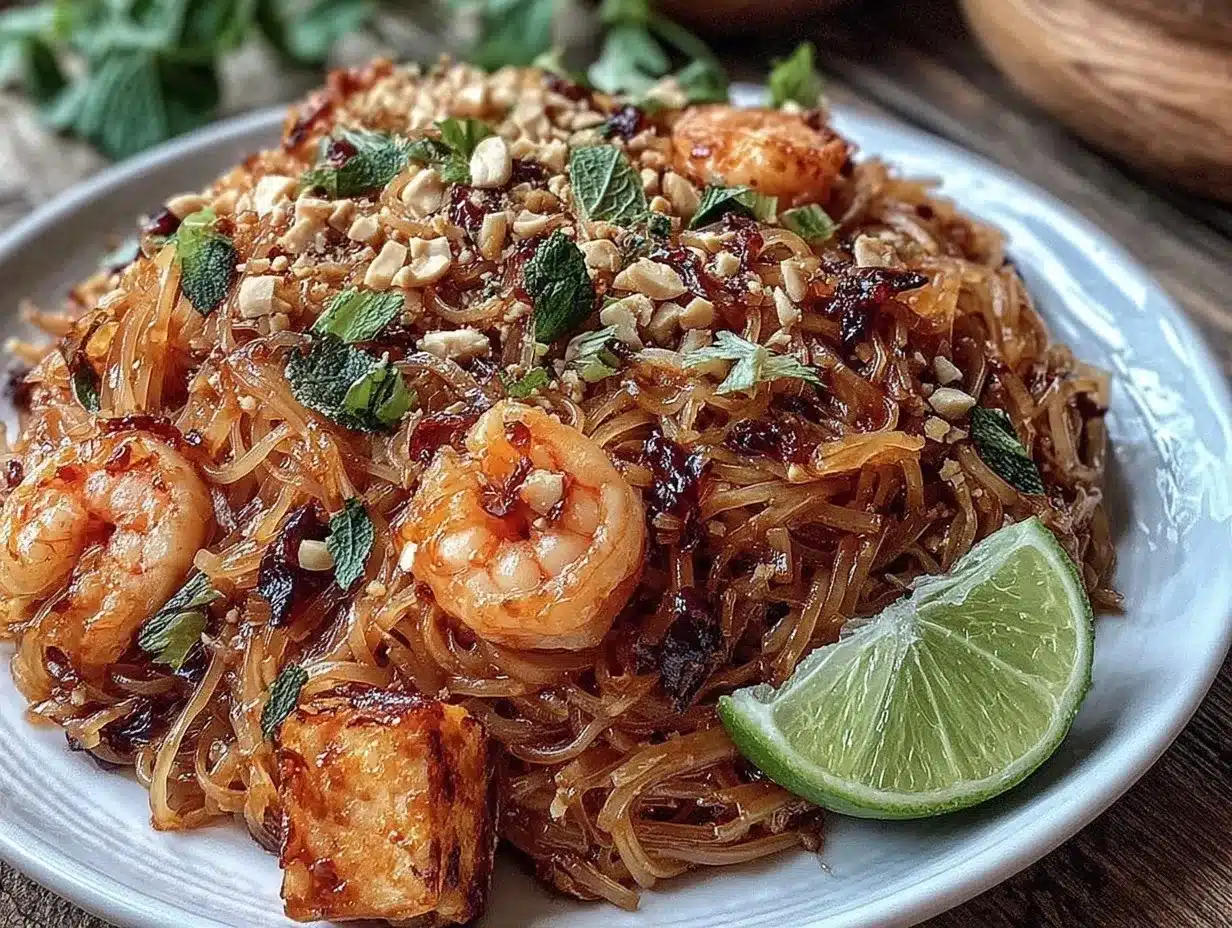
- Soak the rice noodles: Place 6 ounces (170 g) of dried flat rice noodles in a large bowl of warm water (about 110°F/43°C). Let them soak for 20-25 minutes until pliable but still slightly firm. Drain and set aside. (Pro tip: don’t soak too long or noodles become mushy in the pan!)
- Prepare the sauce: In a small bowl, whisk together 3 tablespoons tamarind paste, 2 tablespoons fish sauce, 1 tablespoon palm sugar (or brown sugar), and 1 tablespoon fresh lime juice. Make sure the sugar dissolves fully for a smooth, balanced sauce. Taste and adjust if needed—this sauce is the heart of the dish, so don’t rush it.
- Cook the protein: Heat 1 tablespoon vegetable oil in your wok or skillet over medium-high heat. Add 6 ounces (170 g) cubed firm tofu or peeled shrimp and cook until golden or just cooked through, about 3-4 minutes. Remove and set aside.
- Sauté aromatics: Add another tablespoon of oil if needed. Toss in 2 cloves minced garlic and 2 thinly sliced shallots. Stir-fry for about 30 seconds until fragrant but not browned.
- Cook the eggs: Push aromatics to the side, pour in 2 large beaten eggs, and scramble gently until just set but still soft. Mix with garlic and shallots.
- Add noodles and sauce: Toss in the drained noodles and pour the prepared sauce over top. Using tongs or spatula, toss everything together quickly, coating the noodles evenly. Stir-fry for 2-3 minutes until noodles are tender and have absorbed the sauce. (If noodles stick, add a splash of water.)
- Combine protein and veggies: Return tofu or shrimp to the pan. Add 1 cup (100 g) fresh bean sprouts and 2 chopped green onions. Toss just enough to warm them without wilting the sprouts.
- Finish and serve: Transfer to plates. Sprinkle generously with ¼ cup (30 g) chopped roasted peanuts and add lime wedges on the side. Optionally, scatter chili flakes for heat.
When done right, the noodles should feel silky but not soggy, with a balanced tang from tamarind, a hint of sweetness, and that unmistakable savory punch from fish sauce. The peanuts add crunch while the sprouts keep it fresh.
Cooking Tips & Techniques
Getting Pad Thai just right isn’t rocket science, but there are a few tricks I’ve learned the hard way. First off, don’t skip soaking the rice noodles properly. If they’re too firm, they won’t absorb the sauce well; too soft, and they turn mushy fast. The noodles should still have a bite when you toss them in the pan.
Heat is your best friend here. Your wok or pan should be hot enough to sizzle when ingredients hit it. This helps develop subtle smoky notes, which is part of the authentic street flavor. Also, don’t overcrowd the pan; cook in batches if needed to keep everything crisp and prevent steaming.
When making the sauce, balance is key. Tamarind paste can be quite tart, so adjusting the sugar and lime juice to your taste is important—taste as you go. And yes, fish sauce might smell strong, but it mellows beautifully when cooked and adds depth that soy sauce just can’t match.
Finally, timing matters. Add crunchy ingredients like bean sprouts and green onions at the very end so they stay fresh and crisp. I’ve messed this up before, and soggy bean sprouts are just sad.
For a quick weekday dinner, multitasking helps. While soaking noodles, prep your protein and sauce. You can even chop peanuts and aromatics in advance. That way, once your pan is hot, you’re just a few steps away from that perfect plate.
Variations & Adaptations
This recipe is flexible enough to suit different diets and flavor preferences. Here are some ideas to make it your own:
- Vegetarian or vegan: Skip shrimp and use tofu or tempeh. Swap fish sauce for soy sauce or a vegan fish sauce alternative. Add extra veggies like bell peppers or snap peas.
- Protein swaps: Try chicken strips, sliced beef, or even thinly sliced pork belly for a meaty punch.
- Spice it up: Add fresh Thai bird chilis or sprinkle chili flakes to taste. For a smoky twist, a dash of smoked paprika adds depth.
- Low-carb option: Use zucchini noodles or shirataki noodles instead of rice noodles. Adjust sauce quantities slightly as these noodles absorb less.
- Seasonal twists: In summer, toss in fresh mango slices or pineapple for a tropical touch. In cooler months, sauté some kale or spinach into the mix.
Personally, I once made a batch with crispy bacon bits stirred in—yes, it’s not traditional, but that smoky crunch was a hit at a game day party. It pairs surprisingly well with the bright tamarind flavors, somewhat like a riff on my crispy BBQ bacon tater tot casserole.
Serving & Storage Suggestions
Pad Thai tastes best fresh and hot, right off the stove. Serve it with lime wedges on the side—squeezing fresh lime juice right before eating makes a world of difference. For presentation, scatter extra chopped peanuts and fresh cilantro leaves on top. A small bowl of crushed chili flakes or chili oil allows guests to add heat as they like.
This dish pairs beautifully with light, crisp sides like a simple cucumber salad or steamed greens. If you want a full meal, a side of crispy spring rolls or even a fresh Thai papaya salad complements the noodles perfectly.
Leftovers keep well in the fridge for up to 2 days in an airtight container. When reheating, add a splash of water and toss gently in a hot skillet to revive the noodles’ texture. Avoid microwaving too long or they can get gummy. Flavors deepen slightly after resting, so leftovers can be even more satisfying.
Nutritional Information & Benefits
One serving of this Easy Authentic Thai Pad Thai Street Noodles (about 1½ cups or 300 grams) provides approximately:
| Calories | 350-400 kcal |
|---|---|
| Protein | 18-22 grams (depending on protein choice) |
| Carbohydrates | 45-50 grams |
| Fat | 10-12 grams |
| Fiber | 3-4 grams |
Key ingredients like tamarind are rich in antioxidants and vitamin C, while peanuts add heart-healthy fats and protein. Using fresh bean sprouts and green onions adds fiber and vitamins. This recipe is naturally gluten-free when using certified rice noodles and fish sauce, and can be adapted for vegan diets as noted.
From a wellness perspective, this dish strikes a nice balance between carbs for energy and protein for satiety, without loading up on heavy oils or processed ingredients. Plus, the bright lime and fresh sprouts add a refreshing, light contrast to the rich sauce.
Conclusion
This Easy Authentic Thai Pad Thai Street Noodles recipe is a real keeper—the kind of dish that feels special but doesn’t demand hours of prep or obscure ingredients. It’s approachable, flavorful, and hits that sweet spot between comfort and excitement. Whether you stick to the classic or add your own spin, the recipe invites you to make it your own kitchen staple.
I love how it brings a little bit of Bangkok’s vibrant street food scene right to my table, especially on busy nights when I want something quick yet satisfying. It’s also a fun way to impress friends without stress—just like some of my favorite crowd-pleasers, such as the crispy cheesy tater tot ranch bake, which shares that same no-fuss-yet-delicious vibe.
Give it a try, tweak it your way, and don’t forget to drop a comment sharing your favorite versions or tips. Cooking should be as joyful as eating!
FAQs About Easy Authentic Thai Pad Thai Street Noodles
1. Can I make Pad Thai without tamarind paste?
You can substitute tamarind paste with a mix of lime juice and a bit of brown sugar combined with a small splash of vinegar, but the flavor won’t be quite as authentic. Tamarind is key for that signature tang.
2. How do I prevent rice noodles from sticking together?
Soak them just until pliable, not too soft. Toss with a little oil after draining and stir-fry quickly over high heat. Adding a splash of water during cooking can help loosen them if needed.
3. Is Pad Thai gluten-free?
Yes, when made with gluten-free fish sauce and rice noodles, it’s naturally gluten-free. Check labels to be sure.
4. Can I prepare Pad Thai ahead of time?
It’s best fresh, but you can prep ingredients and soak noodles in advance. For leftovers, reheat gently in a skillet with a splash of water to keep noodles from drying out.
5. What’s the best protein option for Pad Thai?
Shrimp and tofu are classic, but chicken, beef, or pork work well too. Choose based on preference and dietary needs.
Pin This Recipe!
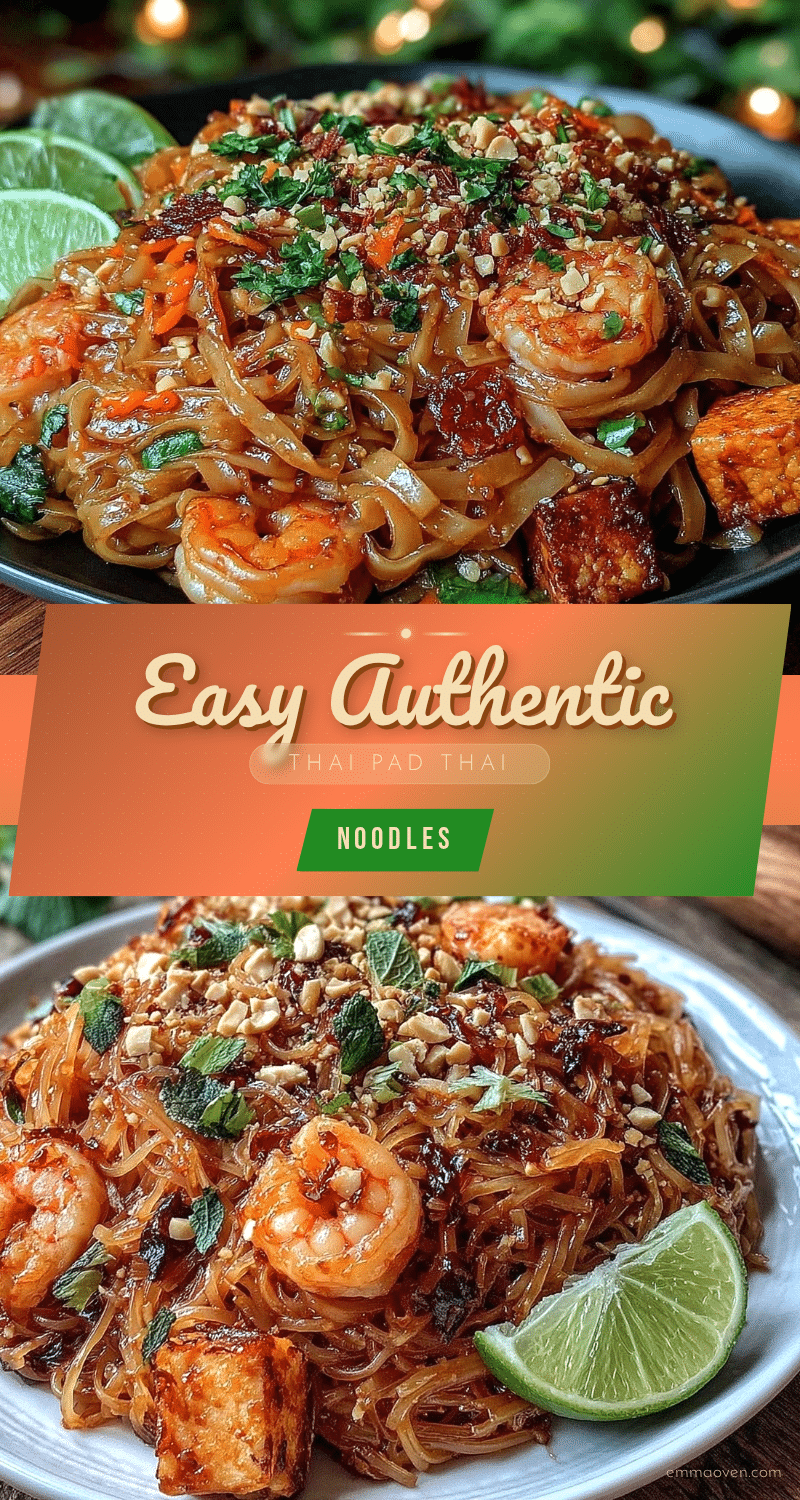
Easy Authentic Thai Pad Thai Street Noodles Recipe for Perfect Flavor
A quick and approachable recipe for authentic Thai Pad Thai noodles that balances tangy tamarind, sweet palm sugar, and savory fish sauce with crunchy peanuts and fresh lime.
- Prep Time: 10 minutes
- Cook Time: 20 minutes
- Total Time: 30 minutes
- Yield: 2 servings 1x
- Category: Main Course
- Cuisine: Thai
Ingredients
- 6 ounces dried flat rice stick noodles (about 1/4-inch wide), soaked in warm water until pliable
- 3 tablespoons tamarind paste
- 2 tablespoons fish sauce
- 1 tablespoon palm sugar (or brown sugar)
- 1 tablespoon fresh lime juice
- 1 tablespoon vegetable oil
- 6 ounces firm tofu (pressed and cubed) or peeled shrimp
- 2 cloves garlic, minced
- 2 shallots, thinly sliced
- 2 large eggs, beaten
- 1 cup fresh bean sprouts (about 100 g)
- 2 green onions, chopped
- 1/4 cup roasted peanuts, coarsely chopped (about 30 g)
- Fresh lime wedges for serving
- Optional: red chili flakes or fresh Thai chilis
Instructions
- Soak the rice noodles in a large bowl of warm water (about 110°F/43°C) for 20-25 minutes until pliable but still slightly firm. Drain and set aside.
- In a small bowl, whisk together tamarind paste, fish sauce, palm sugar, and fresh lime juice until sugar dissolves. Taste and adjust as needed.
- Heat 1 tablespoon vegetable oil in a wok or large skillet over medium-high heat. Add tofu or shrimp and cook until golden or just cooked through, about 3-4 minutes. Remove and set aside.
- Add another tablespoon of oil if needed. Stir-fry minced garlic and sliced shallots for about 30 seconds until fragrant but not browned.
- Push aromatics to the side, pour in beaten eggs, and scramble gently until just set but still soft. Mix with garlic and shallots.
- Add drained noodles and pour the prepared sauce over them. Toss quickly to coat noodles evenly and stir-fry for 2-3 minutes until noodles are tender and have absorbed the sauce. Add a splash of water if noodles stick.
- Return tofu or shrimp to the pan. Add bean sprouts and chopped green onions. Toss just enough to warm them without wilting the sprouts.
- Transfer to plates. Sprinkle with chopped roasted peanuts and serve with lime wedges. Optionally, scatter chili flakes for heat.
Notes
Do not soak noodles too long to avoid mushiness. Use a hot pan to develop subtle smoky notes. Add crunchy ingredients like bean sprouts and green onions at the end to keep them fresh. Adjust tamarind, sugar, and lime juice balance to taste. For vegan version, substitute fish sauce with soy sauce or vegan alternative. Reheat leftovers gently with a splash of water to maintain texture.
Nutrition
- Serving Size: About 1½ cups (300 g
- Calories: 350400
- Sugar: 57
- Sodium: 8001000
- Fat: 1012
- Saturated Fat: 23
- Carbohydrates: 4550
- Fiber: 34
- Protein: 1822
Keywords: Pad Thai, Thai noodles, tamarind paste, street food, easy dinner, authentic Thai recipe, tofu Pad Thai, shrimp Pad Thai, gluten-free, quick meal