“Hey, you gotta try this karaage I made last night—it’s honestly the best fried chicken I’ve had in ages,” my coworker texted me right as I was wrapping up a long, exhausting day. I was skeptical at first; fried chicken is fried chicken, right? But the way she described this Japanese karaage—the crunch, the flavor, the juicy bite hidden beneath that crisp shell—made me curious enough to give it a go the very next evening.
I wasn’t expecting much. Just a quick dinner hack to satisfy my hunger and maybe impress a couple friends if it turned out alright. Instead, I ended up making karaage three nights in a row, experimenting with tweaks, and finally nailing a recipe that’s now my go-to for crunchy, juicy fried chicken with that unmistakable Japanese twist. It’s funny how something so simple has become this little comforting ritual after crazy workdays or spontaneous get-togethers.
The secret is in the marinade and the double coating method. It’s not just about frying chicken; it’s about layering flavors and textures that make you close your eyes after that first bite. Honestly, it’s the kind of crispy Japanese karaage fried chicken recipe you’ll want to keep in your back pocket for whenever the craving hits. Plus, it pairs amazingly with everything from a quick salad to the cheesy tater tot casseroles I love making on lazy weekends.
So, here’s the story behind my easy homemade crunchy delight—no fancy equipment, no complicated steps, just straightforward, tasty karaage that feels like a warm hug on a plate whenever you need it.
Why You’ll Love This Crispy Japanese Karaage Fried Chicken Recipe
This recipe is the result of a couple weeks of testing and tweaking, which means it’s been thoroughly vetted for both flavor and ease. I’m sharing it because it’s truly one of those simple pleasures that makes you forget about takeout forever.
- Quick & Easy: Comes together in about 30 minutes, making it perfect for busy weeknights or last-minute cravings when you want something fast but satisfying.
- Simple Ingredients: No need to hunt down exotic items; most of the ingredients are pantry staples or easy to find, like soy sauce, ginger, and garlic.
- Perfect for Parties or Family Dinners: Whether you’re hosting a casual get-together or just feeding the family, karaage always disappears fast.
- Crowd-Pleaser: Kids and adults alike can’t get enough of that crispy crunch paired with juicy chicken inside.
- Unbelievably Delicious: The marinade gives a perfect balance of savory, tangy, and umami, while the double coating locks in moisture and creates that signature crunch.
- Unique But Familiar: Unlike typical fried chicken recipes, this one uses potato starch for coating (which I swear makes all the difference) and a soy-ginger marinade that’s a little tangy, a little sweet, and totally addictive.
This isn’t just another fried chicken recipe; it’s the one I’ve made after discovering how much better homemade can taste without extra fuss. Honestly, it’s a bit like the crispy buffalo chicken tater tot casserole I love—comfort food with flair but simple enough to whip up any day.
What Ingredients You Will Need
This crispy Japanese karaage fried chicken recipe uses simple, wholesome ingredients to deliver bold flavor and satisfying texture without the fuss. Most are pantry staples, which means no surprise grocery runs.
- Chicken thighs: Boneless, skinless, cut into bite-sized pieces (dark meat stays juicy and tender, trust me).
- Soy sauce: For the marinade; I recommend a naturally brewed brand like Kikkoman for the best balance of saltiness and umami.
- Sake: Japanese cooking wine, adds depth and tenderizes the chicken (if unavailable, dry sherry or white wine works in a pinch).
- Grated fresh ginger: About 1 tablespoon for a bright, zesty kick.
- Minced garlic: One or two cloves for savory warmth.
- Sesame oil: Just a teaspoon to round out the marinade with nutty notes.
- Sugar: A pinch to balance out the salty and tangy flavors.
- Potato starch: For the coating; this is the secret to that unbeatable crispiness (you can substitute cornstarch, but it won’t be quite the same).
- All-purpose flour: Used in combination with potato starch to create a perfect crunchy crust.
- Vegetable oil: For frying (something neutral like canola or sunflower oil works best).
Optional but highly recommended:
- Lemon wedges: For serving, adds that fresh zing that cuts through the fried goodness.
- Shichimi togarashi (Japanese seven-spice): If you want a little heat and extra flavor punch.
Equipment Needed
- Mixing bowls: At least two—one for the marinade, one for the coating mix. I use medium-sized glass bowls for easy cleanup and no lingering smells.
- Sharp knife and cutting board: For cutting the chicken into bite-sized pieces. A good, sharp knife makes this step quick and safe.
- Deep frying pan or heavy-bottomed pot: To hold enough oil for frying. A cast iron skillet or a deep stainless steel pan works great for even heat retention.
- Cooking thermometer: Optional but helpful to keep your oil at the ideal 340°F-350°F (170°C-175°C) for perfect frying.
- Wire rack: For draining the fried chicken to keep it crispy (paper towels work too, but the rack helps avoid sogginess).
- Tongs or slotted spoon: For safely lowering and removing chicken from hot oil.
If you don’t have a frying thermometer, keep a close eye on the oil temperature by testing with a small piece of batter—it should sizzle immediately but not burn. For budget-friendly options, any heavy pan you already own can do the trick, and just be cautious with oil temperature.
Preparation Method
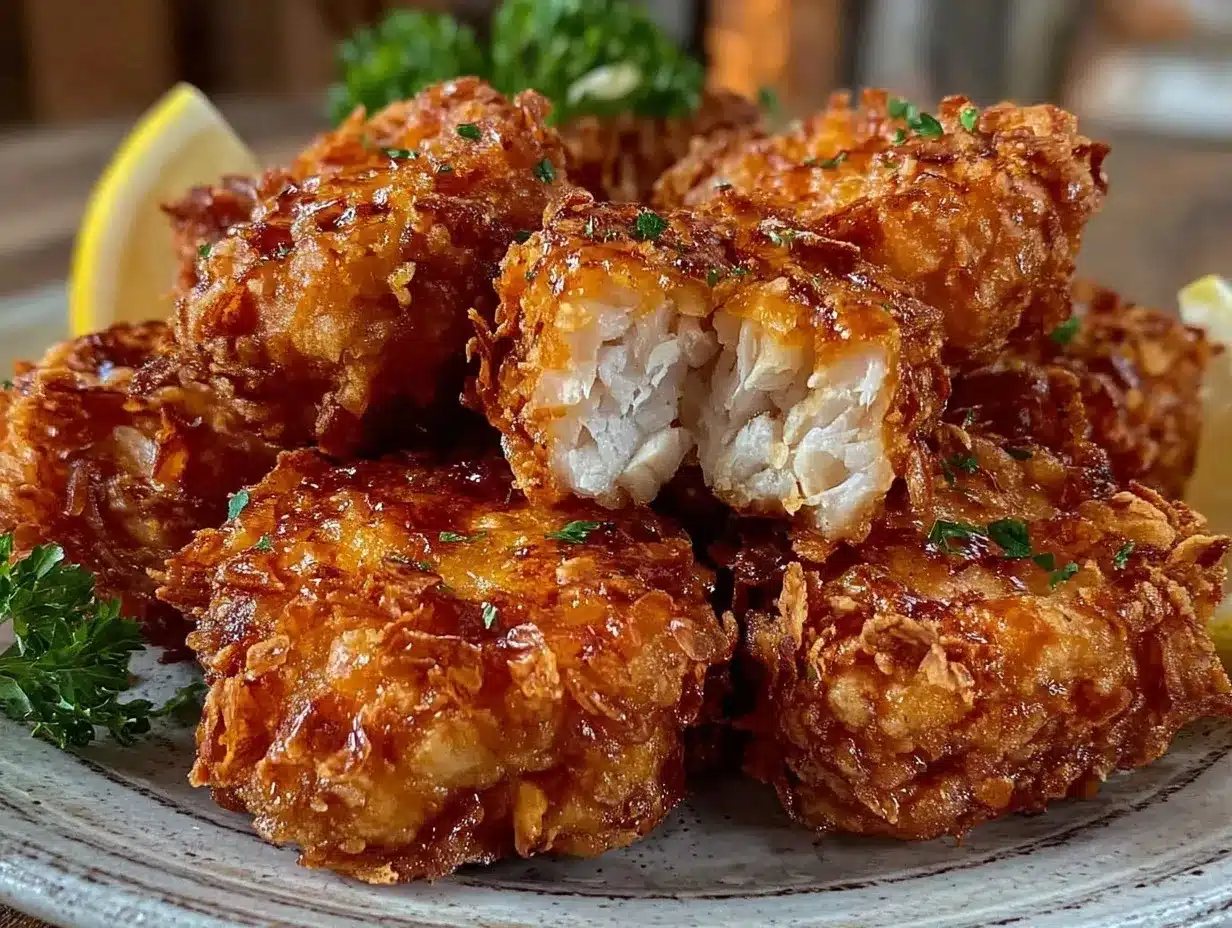
- Prep the chicken: Cut 1.5 pounds (about 700 grams) of boneless, skinless chicken thighs into 1.5-inch bite-sized chunks. This size gives a perfect balance between crispy edges and juicy interior. (Approximate: 10 minutes)
- Make the marinade: In a bowl, mix 3 tablespoons soy sauce, 2 tablespoons sake, 1 tablespoon grated fresh ginger, 2 minced garlic cloves, 1 teaspoon sesame oil, and 1 teaspoon sugar. Stir until sugar dissolves. (Approximate: 5 minutes)
- Marinate the chicken: Add the chicken pieces to the marinade, stir to coat evenly, cover with plastic wrap, and refrigerate for at least 20 minutes—30 is ideal for deeper flavor. (Tip: Don’t skip this step; it’s what gives karaage its signature taste.)
- Prepare the coating: In a shallow bowl, combine ½ cup (65g) potato starch and ¼ cup (30g) all-purpose flour. The potato starch is key to that extra crunch. (Approximate: 2 minutes)
- Coat the chicken: Remove chicken from marinade, letting excess drip off, then dredge pieces in the starch and flour mixture, pressing gently so the coating sticks well but doesn’t clump. (Approximate: 5 minutes)
- Heat the oil: Pour vegetable oil into a deep pan to a depth of about 2 inches (5 cm). Heat to 340°F-350°F (170°C-175°C). Use a thermometer if you have one. (Approximate: 10 minutes)
- First fry: Fry the chicken pieces in batches (don’t overcrowd) for about 4 minutes until they turn a light golden color. Remove and drain on a wire rack. This step cooks the chicken through without over-browning. (Approximate: 20 minutes total)
- Rest and cool: Let the chicken rest for 5 minutes. This resting helps the coating set and keeps the inside juicy.
- Second fry: Return the chicken to the hot oil for a second fry, about 2 minutes, until deep golden and extra crispy. The double frying locks in crunch and juiciness. (Approximate: 10 minutes)
- Drain and serve: Drain chicken on a wire rack, sprinkle with a pinch of salt or shichimi togarashi if desired, and serve hot with lemon wedges on the side.
Quick tip: Keep an eye on oil temperature during frying; if it drops too low, the chicken will absorb oil and get greasy. If it’s too hot, the coating will burn before the inside cooks.
Cooking Tips & Techniques
The real magic of this crispy Japanese karaage fried chicken lies in the balance between the marinade and the frying technique. Here’s what I learned from trial and error:
- Marinate long enough: At least 20 minutes, but up to an hour is great if you have time. The soy sauce and sake tenderize the chicken and infuse it with flavor.
- Use dark meat: Thighs stay juicy and tender better than breasts, which can dry out during frying.
- Potato starch over flour: This is the golden rule for that signature karaage crunch. Cornstarch works okay, but potato starch gives a lighter, crispier crust.
- Double frying: The first fry cooks the chicken; the second fry crisps it up beautifully. Don’t skip this step even if you’re short on time—it’s worth it!
- Oil temperature: Keep it steady around 340°F-350°F (170°C-175°C). Too hot and the coating burns, too cool and the chicken becomes greasy.
- Don’t overcrowd the pan: Fry in small batches so the oil temperature stays consistent and the chicken crisps evenly.
- Drain properly: Use a wire rack instead of paper towels when possible to avoid soggy bottoms.
I remember the first time I tried frying karaage without a double fry—such a sad, soggy disappointment. Since then, I’ve never skipped the second round. Also, switching from all flour to a potato starch and flour combo was a game-changer. It’s a small detail but it makes a huge difference.
Variations & Adaptations
You can make this crispy Japanese karaage fried chicken your own with a few tweaks:
- Spicy Karaage: Add 1 teaspoon of chili paste or cayenne pepper to the marinade for a nice kick. You can also sprinkle shichimi togarashi over the fried chicken.
- Gluten-Free: Use tamari or a gluten-free soy sauce and swap all-purpose flour for more potato starch or a gluten-free flour blend.
- Air Fryer Version: For a lighter option, after marinating and coating, spray the chicken lightly with oil and air fry at 400°F (200°C) for 15-20 minutes, flipping halfway. The texture won’t be exactly the same, but still delicious.
- Herb-Infused: Toss in some finely chopped fresh herbs like shiso or parsley into the coating mix or sprinkle atop after frying for an aromatic twist.
- My personal favorite: I sometimes add a splash of yuzu juice to the marinade for a subtle citrus brightness that balances the richness perfectly.
Each variation keeps the essence of karaage while letting you customize it to your taste or dietary needs. If you want to pair it with something hearty, I often turn to the crispy BBQ bacon tater tot casserole—a perfect combo for game day or casual dinners.
Serving & Storage Suggestions
This crispy Japanese karaage fried chicken is best served hot and fresh out of the fryer, but it holds up surprisingly well if you need to prepare ahead.
- Serving temperature: Serve immediately with lemon wedges for squeezing over the top. The acidity cuts through the richness beautifully.
- Side dishes: It pairs well with simple steamed rice, a crisp cucumber salad, or even alongside the easy cheesy tater tot breakfast casserole for a fun brunch twist.
- Storage: Keep leftover karaage in an airtight container in the refrigerator for up to 3 days.
- Reheating: Reheat in a 375°F (190°C) oven or toaster oven for about 8-10 minutes to restore crispiness. Avoid microwaving if possible, as it tends to make the coating soggy.
- Flavor development: The karaage flavor deepens after resting overnight in the fridge, but the coating will lose some crunch, so a quick re-crisp in the oven is key.
Nutritional Information & Benefits
This homemade crispy Japanese karaage fried chicken recipe offers a satisfying balance of protein and flavor without unnecessary fillers. Here’s an estimate per serving (based on 4 servings):
| Calories | 350-400 kcal |
|---|---|
| Protein | 28g |
| Fat | 22g |
| Carbohydrates | 10g |
The chicken thighs provide a good source of iron and zinc, while the ginger and garlic add antioxidants and anti-inflammatory benefits. Using potato starch instead of heavy batter keeps the coating lighter and less greasy.
For those mindful of gluten, swapping soy sauce for tamari and flour for gluten-free options makes this recipe accessible. It’s a straightforward dish that balances indulgence with wholesome ingredients.
Conclusion
This crispy Japanese karaage fried chicken recipe has become a staple in my kitchen—not just because it tastes incredible but because it’s reliable, easy, and adaptable. Whether you’re cooking for family, impressing friends, or just treating yourself after a long day, it delivers crunchy, juicy satisfaction every time.
Don’t hesitate to play with the marinade or coating to suit your tastes. Maybe you’ll add a little extra garlic or swap in some spice. That’s the beauty of this recipe—it’s a crunchy canvas for your kitchen creativity.
I hope you find as much joy in making and eating this karaage as I do. If you try it out, I’d love to hear how you customize it or what dishes you pair it with—feel free to leave a comment below!
FAQs about Crispy Japanese Karaage Fried Chicken
What cut of chicken is best for karaage?
Boneless, skinless chicken thighs are ideal because they stay juicy and tender during frying. You can use breasts, but they tend to dry out.
Can I make karaage ahead of time?
Yes, you can marinate the chicken a few hours ahead and fry just before serving. Leftover karaage reheated in the oven stays tasty but is best fresh.
What if I don’t have potato starch?
Cornstarch is a decent substitute, but potato starch gives the best crunch. If not, a mix of all-purpose flour and cornstarch can work.
How do I keep the karaage crispy after frying?
Drain on a wire rack rather than paper towels to avoid sogginess. Reheat in the oven at 375°F (190°C) if needed to restore crispness.
Is karaage gluten-free?
Traditional soy sauce contains gluten, but you can use tamari or gluten-free soy sauce and swap flour for gluten-free starch to make it safe for gluten-free diets.
Pin This Recipe!
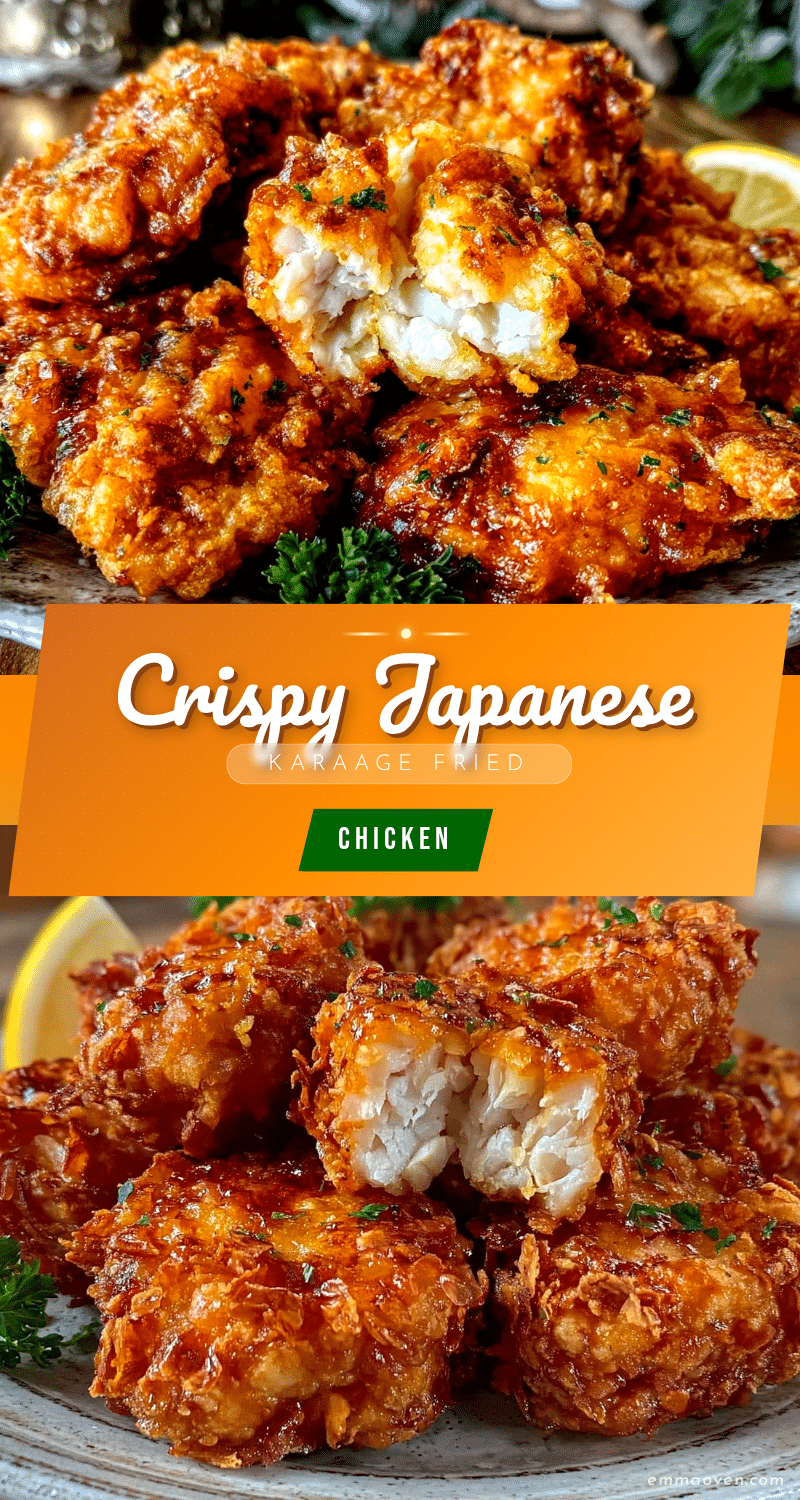
Crispy Japanese Karaage Fried Chicken Recipe Easy Homemade Crunchy Delight

A simple and authentic Japanese karaage fried chicken recipe featuring a flavorful soy-ginger marinade and a double coating method for unbeatable crunch and juicy interior.
- Prep Time: 15 minutes
- Cook Time: 30 minutes
- Total Time: 45 minutes
- Yield: 4 servings 1x
- Category: Main Course
- Cuisine: Japanese
Ingredients
- 1.5 pounds boneless, skinless chicken thighs, cut into 1.5-inch bite-sized pieces
- 3 tablespoons soy sauce
- 2 tablespoons sake (or dry sherry/white wine as substitute)
- 1 tablespoon grated fresh ginger
- 2 cloves garlic, minced
- 1 teaspoon sesame oil
- 1 teaspoon sugar
- ½ cup (65g) potato starch
- ¼ cup (30g) all-purpose flour
- Vegetable oil for frying (canola or sunflower oil recommended)
- Optional: lemon wedges for serving
- Optional: shichimi togarashi (Japanese seven-spice) for seasoning
Instructions
- Cut chicken thighs into 1.5-inch bite-sized chunks (about 10 minutes).
- In a bowl, mix soy sauce, sake, grated ginger, minced garlic, sesame oil, and sugar until sugar dissolves (about 5 minutes).
- Add chicken pieces to the marinade, stir to coat evenly, cover, and refrigerate for at least 20 minutes (30 minutes ideal).
- In a shallow bowl, combine potato starch and all-purpose flour (about 2 minutes).
- Remove chicken from marinade, letting excess drip off, then dredge pieces in the starch and flour mixture, pressing gently to coat (about 5 minutes).
- Pour vegetable oil into a deep pan to a depth of about 2 inches and heat to 340°F-350°F (170°C-175°C) (about 10 minutes).
- Fry chicken pieces in batches for about 4 minutes until light golden. Remove and drain on a wire rack (about 20 minutes total).
- Let chicken rest for 5 minutes to set coating and keep inside juicy.
- Return chicken to hot oil for a second fry, about 2 minutes, until deep golden and extra crispy (about 10 minutes).
- Drain chicken on a wire rack, sprinkle with salt or shichimi togarashi if desired, and serve hot with lemon wedges.
Notes
Maintain oil temperature between 340°F-350°F to avoid greasy or burnt coating. Double frying is essential for signature crispiness. Use potato starch for best crunch; cornstarch is a substitute but less crispy. Marinate at least 20 minutes for flavor. Drain on wire rack to avoid sogginess. Reheat in oven at 375°F for 8-10 minutes to restore crispiness.
Nutrition
- Serving Size: Approximately 4-5 pi
- Calories: 375
- Sugar: 1
- Sodium: 700
- Fat: 22
- Saturated Fat: 4
- Carbohydrates: 10
- Fiber: 0.5
- Protein: 28
Keywords: karaage, Japanese fried chicken, crispy fried chicken, soy-ginger marinade, double fried chicken, potato starch coating, easy dinner, homemade karaage