Introduction
“You’re not really a pie person until you’ve had a slice of classic old fashioned rhubarb custard pie,” my neighbor once said during a casual backyard chat. I remember eyeing that ruby-red slice suspiciously—rhubarb felt like one of those tricky ingredients, tart and a bit intimidating. But the moment I took a bite of that pie, with its silky custard nestled in a buttery, flaky crust, something shifted. Honestly, it was this neat balance of tang and sweetness that caught me off guard.
That recipe wasn’t the result of some fancy culinary plan. It came about one spring afternoon when I had a surplus of rhubarb from a friend’s garden and not much else planned for dessert. I mixed up a custard quickly, slapped it in a homemade crust, and waited nervously while it baked. The kitchen filled with this warm, inviting aroma that made me forget the hectic day I’d had. It was simple, charming, and just a little bit nostalgic—like a quiet nod to the kind of old-school baking that sticks with you.
Since then, I’ve made this rhubarb custard pie more times than I can count—sometimes swapping crusts or tweaking the sugar, but never losing sight of that cozy, flaky buttery base that holds everything together. If you’ve ever been unsure about rhubarb or custard pies, this recipe might just change your mind. There’s something quietly comforting about it, like a soft blanket after a long day.
Why You’ll Love This Recipe
This classic old fashioned rhubarb custard pie is the kind of recipe I keep coming back to, and here’s why you might want to bookmark it too:
- Quick & Easy: It comes together in under an hour, less time than most complicated desserts, making it perfect for those spontaneous sweet cravings.
- Simple Ingredients: No exotic or hard-to-find items here—just rhubarb, eggs, cream, sugar, and butter. You probably have most of these in your kitchen already.
- Perfect for Seasonal Gatherings: Rhubarb’s tartness shines in spring and early summer, making this pie ideal for family dinners, potlucks, or even a relaxed weekend brunch.
- Crowd-Pleaser: Kids and adults alike love this pie. It manages to be both nostalgic and fresh, a real crowd favorite.
- Unbelievably Delicious: The custard’s creamy texture paired with the flaky butter crust is pure magic. Plus, the subtle tang of rhubarb keeps it from being too sweet.
What sets this recipe apart? It’s all in the crust and the custard’s delicate balance. The flaky butter crust is made with just the right amount of chilling and folding to get those tender layers. The custard itself is smooth and not overly dense, which lets the rhubarb’s natural brightness shine without overwhelming the dish. I’ve even swapped in some almond extract once, and the subtle nuttiness gave it a surprising twist.
Honestly, this pie feels like a comforting handshake from classic American baking, but with a freshness that keeps you coming back for more. It’s not just dessert; it’s a little moment of calm and sweetness in the middle of a busy day.
What Ingredients You Will Need
This classic old fashioned rhubarb custard pie is made with straightforward ingredients that work together to create a harmony of textures and flavors. The rhubarb brings tartness, the custard adds creaminess, and the flaky butter crust ties it all up in a golden package. Here’s what you’ll want to gather:
- For the Flaky Butter Crust:
- 2 ½ cups (320g) all-purpose flour (I like King Arthur for reliable texture)
- 1 cup (227g) unsalted butter, frozen and cubed (cold butter is key for flakiness)
- 1 tsp salt
- 6-8 tbsp ice water (add gradually, just enough to bring dough together)
- For the Rhubarb Custard Filling:
- 4 cups (about 500g) rhubarb, chopped into 1/2-inch pieces (fresh is best; frozen can work if thawed and drained)
- 1 ½ cups (300g) granulated sugar (adjust based on tartness of rhubarb)
- 3 large eggs, room temperature
- 1 ¼ cups (300ml) heavy cream or half-and-half (for richness)
- 1 tsp vanilla extract (pure, no imitation)
- 2 tbsp all-purpose flour (helps thicken the custard)
- Pinch of salt
Optional but nice to have:
- 1 tbsp almond extract (for a subtle nutty undertone)
- Turbinado sugar for sprinkling on top (adds a little crunch and sparkle)
When picking rhubarb, go for firm stalks that snap easily. Avoid any that look limp or bruised. If you want a gluten-free crust, you can substitute a gluten-free flour blend, but results may vary slightly on texture.
Equipment Needed
For this pie, having the right tools makes the process more enjoyable and the results better. Here’s what you’ll want on hand:
- 9-inch (23 cm) pie dish – glass or ceramic works well for even baking
- Mixing bowls – one large for the crust dough, another for custard mixing
- Pastry cutter or food processor – to cut the butter into flour for that perfect flaky crust (a fork can work in a pinch)
- Rolling pin – for rolling out the pie dough evenly
- Measuring cups and spoons – accuracy helps, especially with flour and sugar
- Whisk – for blending eggs and custard ingredients smoothly
- Sharp knife – to chop rhubarb
- Cooling rack – to let the pie cool properly after baking
If you don’t have a pastry cutter, I’ve made this crust successfully with just fingertips, keeping the butter as cold as possible. A food processor speeds things up but isn’t mandatory. For rolling, a silicone mat or parchment paper underneath can help with cleanup and sticking issues.
Preparation Method
- Make the Flaky Butter Crust: In a large bowl, combine 2 ½ cups flour and 1 tsp salt. Add the frozen cubed butter. Using a pastry cutter or your fingers, work the butter into the flour until the mixture resembles coarse crumbs with some pea-sized bits of butter remaining. This chunkiness is what creates the flakiness. Slowly add ice water, one tablespoon at a time, mixing gently until the dough just comes together. Avoid overworking.
- Divide the dough into two disks, wrap in plastic wrap, and refrigerate for at least 30 minutes. This chilling step is crucial for easy rolling and flaky layers.
- Prep the Filling: While the dough chills, rinse rhubarb stalks and chop into ½ inch pieces. In a mixing bowl, whisk together 3 large eggs, 1 ½ cups granulated sugar, 1 ¼ cups heavy cream, 1 tsp vanilla, 2 tbsp flour, and a pinch of salt until smooth. If using almond extract, add it here.
- Roll Out the Bottom Crust: On a floured surface, roll out one dough disk into a 12-inch circle. Gently transfer it to your 9-inch pie dish, pressing it in without stretching. Trim excess dough, leaving about 1 inch overhang.
- Add Rhubarb & Custard: Spread the chopped rhubarb evenly over the pie crust. Pour the custard mixture over the rhubarb, letting it settle naturally.
- Top Crust: Roll out the second dough disk into a similar 12-inch circle. You can lay it whole on top, cut slits for steam release, or create a lattice pattern if you’re feeling fancy. Trim and crimp edges to seal.
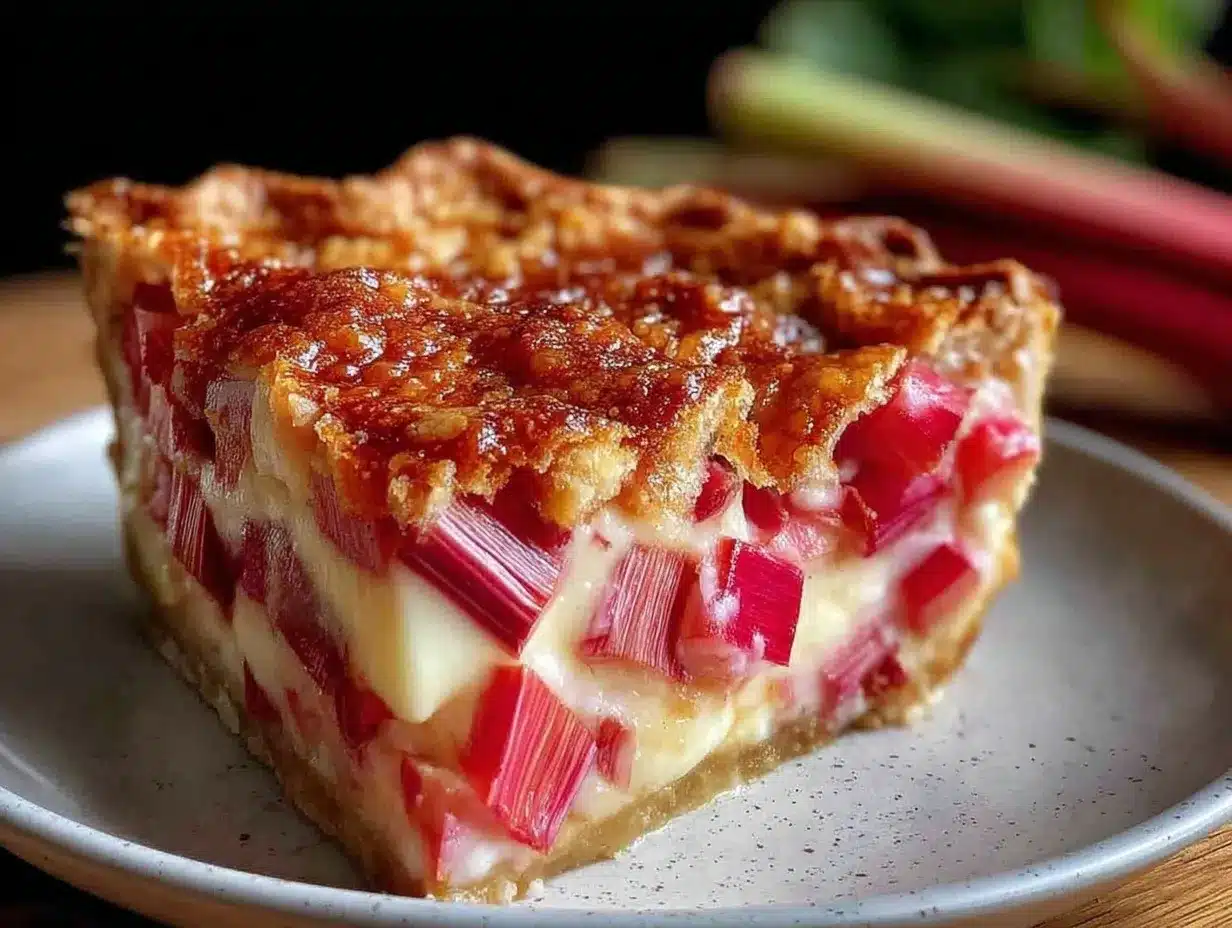
- Bake: Preheat oven to 375°F (190°C). Place pie on the middle rack. Bake for 50-60 minutes, or until the custard is set but still slightly jiggly in the center. The crust should be golden brown. If edges brown too quickly, cover them with foil.
- Cool: Let the pie cool on a wire rack for at least 2 hours before slicing. This allows the custard to firm up fully.
Watch for bubbling custard near the edges—that’s a good sign your pie is almost done. If the crust isn’t browning evenly, rotating the pie halfway through baking helps. And always remember: patience with cooling is key to neat slices.
Cooking Tips & Techniques
The trickiest part of this classic old fashioned rhubarb custard pie is balancing the custard’s texture while ensuring the crust stays flaky and crisp. Here are some tips I’ve learned the hard way:
- Keep butter cold: For the crust, the colder the butter, the flakier the crust. Overly warm butter will blend too much with the flour, making a dense base.
- Don’t overwork dough: Mix just until it holds together. Over-kneading develops gluten and toughens the crust.
- Chill dough before rolling: This not only firms up butter but relaxes gluten strands, making rolling easier.
- Drain rhubarb if using frozen: Excess moisture can make the custard watery.
- Watch the baking time: Custard should be mostly set but with a slight jiggle in the center. Overbaking causes curdling or cracking.
- Use a glass pie dish: It helps you see the crust’s bottom color so you can avoid burning.
- Edge protection: Cover crust edges with foil partway through baking to prevent burning.
When I first tried this recipe, I baked the pie too long and ended up with dry custard. Lesson learned: patience and checking early make all the difference. Also, multitasking by prepping the crust while rhubarb chills saves time without rushing.
Variations & Adaptations
This recipe is wonderfully adaptable, so feel free to tweak it based on your pantry or preferences:
- Gluten-Free Option: Swap all-purpose flour for a gluten-free blend in the crust. Add a bit more butter or a teaspoon of xanthan gum for structure.
- Sweetener Swap: Use honey or maple syrup in place of granulated sugar for a different depth of sweetness. Reduce the liquid slightly if substituting.
- Seasonal Fruit Mix: Add fresh strawberries or raspberries to the rhubarb for a bright, fruity twist. This combo brings a lovely color variation too.
- Vegan Adaptation: Replace butter with vegan margarine or coconut oil in the crust. Use a plant-based cream (like cashew cream) and a chia egg substitute for the custard.
- Spiced Up: Add a pinch of cinnamon or cardamom to the custard for a warm spice note that pairs beautifully with rhubarb.
Once, I tried a lattice crust with a splash of orange zest in the custard. It added such a fresh zing that I ended up making the pie twice that week! You can also experiment with different crust shapes—mini pies or tartlets work great for individual servings.
Serving & Storage Suggestions
Serve this rhubarb custard pie slightly warm or at room temperature—both ways bring out the custard’s creamy texture. A dollop of whipped cream or a scoop of vanilla ice cream on the side is the classic finishing touch.
Pair it with light, herbal teas or a simple black coffee to balance the pie’s richness. For spring or early summer gatherings, it also makes a charming dessert after a meal of fresh garden salads or grilled chicken.
To store, cover the pie loosely with foil or plastic wrap and keep refrigerated for up to 3 days. The custard firms up nicely but can become denser. If freezing, wrap the whole pie tightly and freeze for up to 2 months. Thaw overnight in the fridge.
Reheat slices gently in a low oven (300°F/150°C) for about 10 minutes to bring back a bit of warmth without melting the custard completely. Flavors mellow and meld beautifully after a day, so leftovers can taste even better.
Nutritional Information & Benefits
Each serving of this classic old fashioned rhubarb custard pie provides a comforting balance of calories and nutrients. Rhubarb itself is low in calories, high in fiber, and packed with vitamin K and antioxidants. The custard adds protein from eggs and calcium from cream, though it does carry a moderate amount of fat and sugar.
For those watching carbs or sugar, reducing the granulated sugar slightly or swapping in a natural sweetener can help. The pie is naturally gluten-containing unless you make a gluten-free crust.
From a wellness viewpoint, this pie offers a satisfying treat without excess additives—a kind of homemade comfort that feels nourishing in moderation. It’s a gentle reminder that desserts can be both nostalgic and wholesome.
Conclusion
This classic old fashioned rhubarb custard pie with flaky butter crust is a recipe that’s stuck around in my kitchen because it truly delivers on flavor, texture, and simplicity. It’s a dessert that feels like a warm hug—the kind that’s perfect for sharing or savoring quietly on your own.
Don’t hesitate to make this recipe your own, whether by adding fruit variations, trying a lattice crust, or dialing the sweetness to suit your taste. I’ve found it pairs beautifully alongside savory dishes too, like the hearty casseroles you might enjoy on a cozy night in.
Honestly, I love how this pie brings a bit of old-fashioned charm into a busy modern kitchen. If you decide to try it, I’d love to hear what twists you add or how it fits into your favorite meals. There’s something special about a pie that invites a little experimentation and a lot of comfort.
FAQs About Classic Old Fashioned Rhubarb Custard Pie
Can I use frozen rhubarb instead of fresh?
Yes, but be sure to thaw it completely and drain excess moisture before adding to the pie. This prevents a watery filling.
How do I prevent the crust from getting soggy?
Chilling the dough well and baking the pie on a middle rack helps. You can also brush the crust with a thin layer of beaten egg before adding filling to create a moisture barrier.
Can I make the pie ahead of time?
Absolutely. Bake it fully, then store covered in the fridge. It tastes great the next day and can be gently reheated.
What if I don’t have heavy cream?
Half-and-half or whole milk can work but the custard will be less rich and creamy. You might want to reduce the sugar slightly.
How do I get a perfectly flaky crust every time?
Keep your butter and water very cold, handle the dough minimally, and chill before rolling. This keeps the butter in solid pieces that create those flaky layers when baked.
For a comforting breakfast treat that’s a bit different but just as satisfying, you might want to try the easy cheesy tater tot breakfast casserole or the crispy BBQ bacon tater tot casserole—both hearty dishes that complement the nostalgic vibe of classic homestyle cooking.
Pin This Recipe!
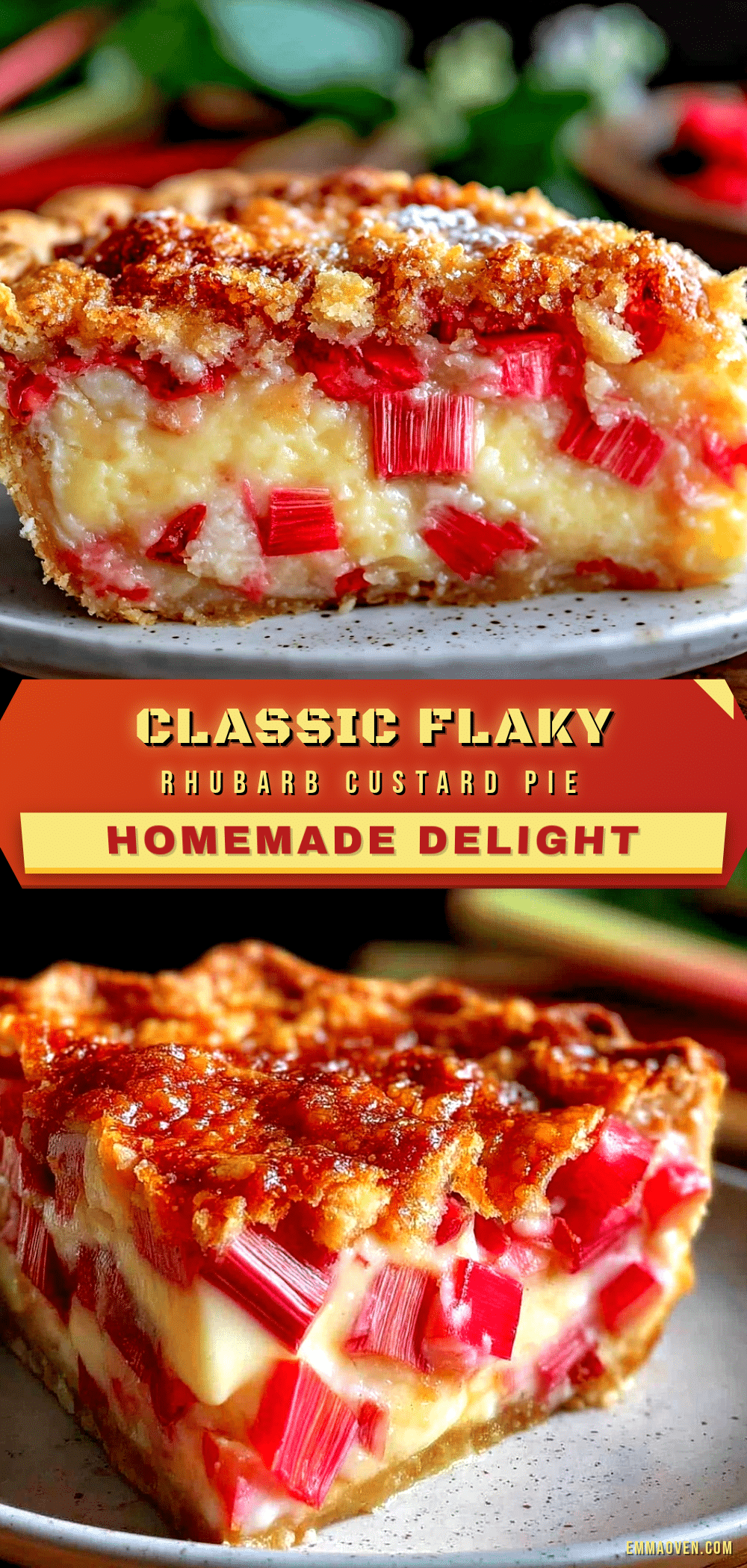
Classic Old Fashioned Rhubarb Custard Pie
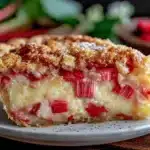
A nostalgic and comforting pie featuring tart rhubarb and silky custard nestled in a flaky, buttery crust. Perfect for spring and early summer gatherings.
- Prep Time: 40 minutes
- Cook Time: 50-60 minutes
- Total Time: 1 hour 30 minutes
- Yield: 8 servings 1x
- Category: Dessert
- Cuisine: American
Ingredients
- 2 ½ cups (320g) all-purpose flour
- 1 cup (227g) unsalted butter, frozen and cubed
- 1 tsp salt
- 6–8 tbsp ice water
- 4 cups (about 500g) rhubarb, chopped into ½-inch pieces
- 1 ½ cups (300g) granulated sugar
- 3 large eggs, room temperature
- 1 ¼ cups (300ml) heavy cream or half-and-half
- 1 tsp vanilla extract
- 2 tbsp all-purpose flour
- Pinch of salt
- Optional: 1 tbsp almond extract
- Optional: Turbinado sugar for sprinkling on top
Instructions
- In a large bowl, combine 2 ½ cups flour and 1 tsp salt. Add the frozen cubed butter. Using a pastry cutter or your fingers, work the butter into the flour until the mixture resembles coarse crumbs with some pea-sized bits of butter remaining.
- Slowly add ice water, one tablespoon at a time, mixing gently until the dough just comes together. Avoid overworking.
- Divide the dough into two disks, wrap in plastic wrap, and refrigerate for at least 30 minutes.
- Rinse rhubarb stalks and chop into ½ inch pieces.
- In a mixing bowl, whisk together 3 large eggs, 1 ½ cups granulated sugar, 1 ¼ cups heavy cream, 1 tsp vanilla, 2 tbsp flour, and a pinch of salt until smooth. Add almond extract if using.
- On a floured surface, roll out one dough disk into a 12-inch circle. Gently transfer it to a 9-inch pie dish, pressing it in without stretching. Trim excess dough, leaving about 1 inch overhang.
- Spread the chopped rhubarb evenly over the pie crust. Pour the custard mixture over the rhubarb, letting it settle naturally.
- Roll out the second dough disk into a 12-inch circle. Lay it whole on top, cut slits for steam release, or create a lattice pattern. Trim and crimp edges to seal.
- Preheat oven to 375°F (190°C). Place pie on the middle rack. Bake for 50-60 minutes, or until the custard is set but still slightly jiggly in the center. Cover edges with foil if browning too quickly.
- Let the pie cool on a wire rack for at least 2 hours before slicing.
Notes
Keep butter cold for a flaky crust. Do not overwork dough. Chill dough before rolling. Drain frozen rhubarb to avoid watery filling. Cover crust edges with foil if browning too fast. Let pie cool fully before slicing for best custard texture.
Nutrition
- Serving Size: 1 slice (1/8 of pie)
- Calories: 350
- Sugar: 22
- Sodium: 220
- Fat: 22
- Saturated Fat: 13
- Carbohydrates: 35
- Fiber: 2
- Protein: 5
Keywords: rhubarb custard pie, old fashioned pie, flaky butter crust, classic pie recipe, spring dessert, homemade pie