“You really have to try this zucchini noodle pad thai,” my friend texted me one hectic Tuesday afternoon. I was knee-deep in meal planning misery—staring blankly at the fridge, wondering how to make dinner both quick and something that wouldn’t leave me feeling heavy. Honestly, I was skeptical. Pad Thai? On zucchini noodles? And with almond butter sauce? It sounded like a recipe cobbled together in a wellness blog fantasy.
But curiosity won over, and that night, I whipped it up. The kitchen smelled amazing—nutty and fresh, a little zing from lime and tamarind. The noodles had that satisfying slurp without the usual carb overload. The creamy almond butter sauce tied everything together, rich yet light, like a secret indulgence without the guilt. I found myself making it again and again that week, tweaking it here and there, just to see if it could get any better. Spoiler: it did.
What stuck with me wasn’t just the flavors but how it felt—like comfort food that didn’t weigh me down, perfect for those nights when you want something healthy but crave that sauce-drizzled goodness. This fresh Whole30 zucchini noodle pad thai with creamy almond butter sauce became my go-to reset meal, a little quiet victory in the chaos of the week.
Why You’ll Love This Recipe
This recipe isn’t just a quick fix—it’s one I’ve tested multiple times to get the balance just right. Here’s why it’s become a staple in my kitchen:
- Quick & Easy: Ready in under 30 minutes, making it perfect for busy weeknights or when you want a nourishing meal without the fuss.
- Simple Ingredients: Most you probably already have on hand—almond butter, tamarind paste, fresh veggies, and a few pantry staples.
- Perfect for Whole30: This recipe meets Whole30 guidelines without feeling restrictive, which means you can enjoy it during your reset or anytime you want a wholesome meal.
- Crowd-Pleaser: Even people who usually shy away from zucchini noodles or almond butter sauce have asked for seconds (and trust me, that surprised me too!).
- Unbelievably Delicious: The creamy almond butter sauce brings a rich, nutty flavor that’s balanced by fresh lime and tamarind, making each bite exciting and satisfying.
What sets this apart from other pad thai recipes? It’s the sauce, honestly. Instead of the usual peanut or heavy soy-based sauces, the almond butter creates a luscious creaminess that feels indulgent but is completely Whole30-friendly. Plus, swapping out rice noodles for zucchini keeps it light and fresh—perfect for those warm evenings or post-workout meals.
This dish is the kind that sneaks up on you with flavor and leaves you feeling good afterward. It’s my little rebel meal when I want something healthy but refuse to sacrifice taste or texture. If you’re curious to try a fresh take on classic pad thai, this recipe might just make you rethink what a Whole30 dinner can be.
What Ingredients You Will Need
This recipe uses simple, wholesome ingredients to deliver bold flavor and satisfying texture without the fuss. Most of these are pantry staples or easy to find fresh produce, which means no last-minute grocery runs.
- Zucchini (4 medium-sized): Spiralized into noodles (zoodles). I like firm, fresh zucchini with minimal seeds for best texture.
- Almond butter (1/4 cup): Smooth and unsweetened; I prefer Barney Almond Butter for its creamy consistency.
- Tamarind paste (2 tablespoons): Adds that authentic tangy-sour depth. Look for pure tamarind paste without added sugar.
- Coconut aminos (3 tablespoons): A Whole30-friendly soy sauce substitute, giving a salty umami punch.
- Fresh lime juice (2 tablespoons): Brightens the sauce with acidity and freshness.
- Garlic (2 cloves): Minced, for that punch of aroma.
- Ginger (1 teaspoon): Freshly grated, adds warmth and zing.
- Green onions (3 stalks): Thinly sliced for garnish and mild oniony crunch.
- Carrot (1 medium): Julienned for color and subtle sweetness.
- Red bell pepper (1 small): Sliced thinly; adds a crisp, sweet bite.
- Cooked shrimp or chicken (optional, 8 oz): For protein; you can skip for a vegan version or swap with tofu (not Whole30).
- Crushed red pepper flakes (1/4 teaspoon): For a little heat—optional but recommended.
- Fresh cilantro (a handful): Chopped, for garnish and herbal brightness.
- Sesame seeds (1 tablespoon): Toasted, optional for crunch and nutty flavor.
- Avocado oil or olive oil (2 tablespoons): For sautéing.
If you want to switch things up, almond butter can be swapped for cashew butter, but it’ll change the flavor slightly. For a different noodle base, try spiralized sweet potatoes for a heartier feel. Tamarind paste can sometimes be tricky to find, but Asian markets usually carry it, and it’s worth the hunt for authentic tang.
Equipment Needed
- Spiralizer: Essential for turning zucchini into noodles. I use a handheld spiralizer for quick prep, but a countertop model works great too.
- Large skillet or wok: For sautéing the veggies and protein. A nonstick pan helps keep the noodles from sticking.
- Mixing bowls: For whisking the almond butter sauce and prepping ingredients.
- Measuring spoons and cups: Accurate measurements make this sauce shine every time.
- Sharp knife and cutting board: For slicing veggies thinly and evenly.
If you don’t have a spiralizer, you can buy pre-spiralized zucchini noodles in many grocery stores, but fresh spiralized zucchini gives the best texture. When I first tried this recipe, I used a julienne peeler—it worked in a pinch but didn’t quite capture that perfect noodle feel.
Keeping your spiralizer blades sharp is key for clean noodles, so I recommend rinsing and drying immediately after use to avoid rust. You can also use a large wooden spoon to help toss the sauce evenly on the noodles once cooked.
Preparation Method
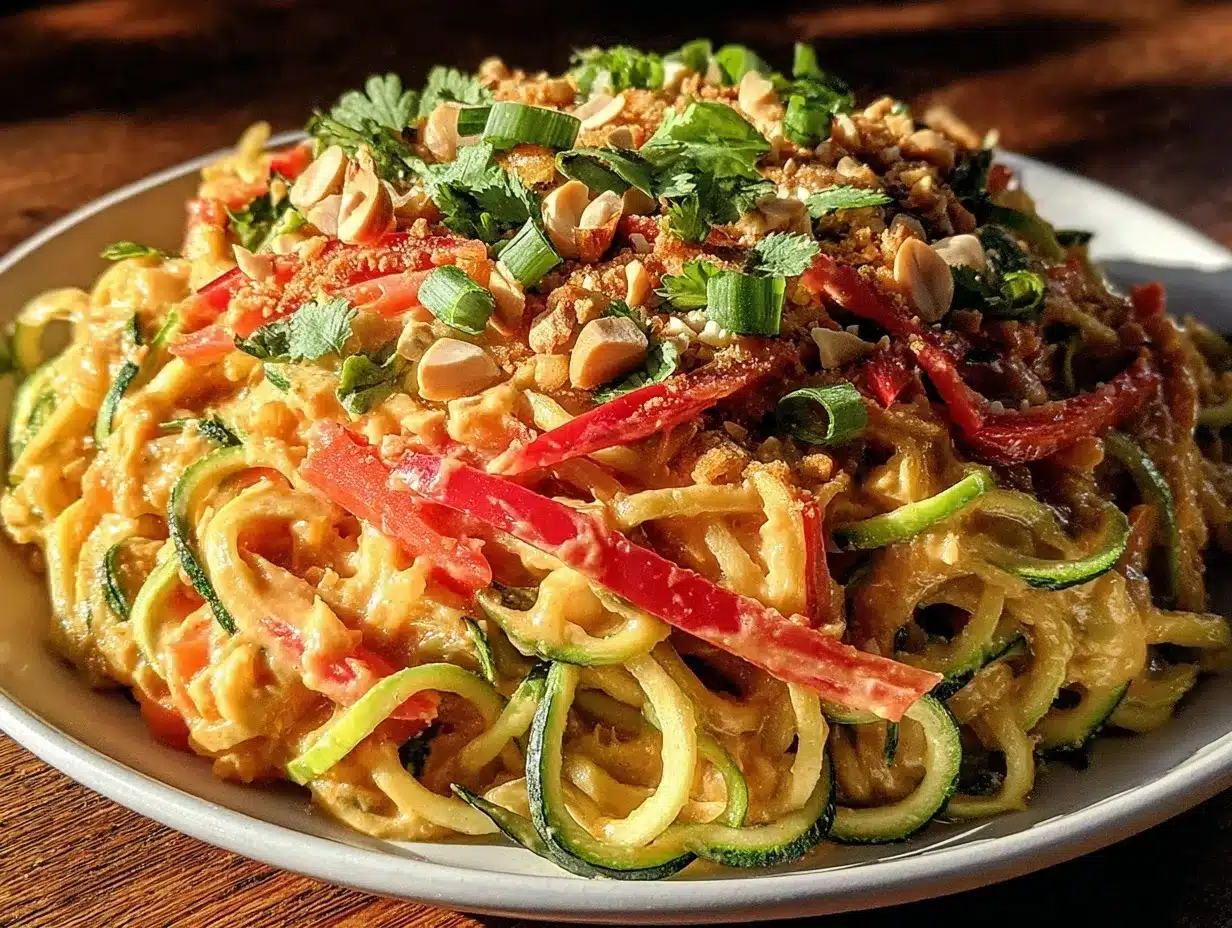
- Prepare the zucchini noodles: Using your spiralizer, create noodles from the 4 medium zucchinis. Place them in a colander, sprinkle lightly with salt, and let them sit for 10 minutes to draw out excess moisture. This prevents soggy noodles later. After 10 minutes, gently pat dry with paper towels.
- Make the almond butter sauce: In a medium bowl, whisk together 1/4 cup almond butter, 2 tablespoons tamarind paste, 3 tablespoons coconut aminos, 2 tablespoons fresh lime juice, minced garlic, grated ginger, and crushed red pepper flakes (if using). Adjust thickness with a splash of warm water if needed—it should be creamy but pourable.
- Sauté the veggies and protein: Heat 2 tablespoons avocado oil in a large skillet over medium heat. Add the sliced red bell pepper and julienned carrot. Cook for 3-4 minutes until slightly tender but still crisp. If adding shrimp or chicken, push veggies to the side and cook protein until opaque and cooked through (about 3-5 minutes). Remove protein and veggies from the pan and set aside.
- Cook zucchini noodles: In the same pan, add a touch more oil if needed. Toss in the zucchini noodles and sauté for 2-3 minutes, stirring gently. You want to warm them through without making them mushy—look for a bright green color and slight softening.
- Combine everything: Return the cooked veggies and protein to the pan with the zucchini noodles. Pour the almond butter sauce over everything and toss gently to coat. Cook for another 1-2 minutes, allowing the sauce to warm and cling to the noodles.
- Finish and garnish: Remove from heat. Sprinkle with chopped green onions, fresh cilantro, and toasted sesame seeds. Serve immediately with extra lime wedges on the side.
If the sauce feels too thick during cooking, add a splash of water or lime juice to loosen it. Watch closely when sautéing zucchini noodles—their texture can shift quickly from perfectly tender to watery. Trust your eyes and give them just enough heat to soften without turning limp.
One trick I learned is to toss the sauce in off the heat first, then warm gently. It keeps the almond butter creamy and smooth, not clumpy or oily.
Cooking Tips & Techniques
Getting the sauce just right is the heart of this recipe. I’ve found that whisking the almond butter and tamarind paste first helps prevent lumps—adding the coconut aminos and lime juice gradually smooths the texture. If you’re worried about the sauce splitting, warm it gently rather than cooking it over high heat.
Zucchini noodles can release water quickly, so salting and draining them before cooking helps keep the final dish from getting soggy. Patting dry is key here—you don’t want extra moisture diluting that creamy sauce.
When cooking protein, avoid overcrowding the pan. Cooking shrimp or chicken in batches ensures they sear properly instead of steaming. Also, adding the veggies first gives them a chance to soften slightly but stay crisp, keeping the texture contrast in the dish.
Finally, timing matters. I usually prep the sauce and spiralize the zucchini while the protein cooks—that way, everything comes together seamlessly without waiting. Multitasking in the kitchen is my secret weapon for quick weeknight dinners.
Variations & Adaptations
This fresh Whole30 zucchini noodle pad thai is versatile and adapts well to different tastes and dietary needs:
- Protein swaps: Use tofu for a vegetarian version (not Whole30), or swap shrimp for thinly sliced chicken or beef. Leftover rotisserie chicken is a great shortcut.
- Veggie mix: Try adding snap peas, shredded cabbage, or bean sprouts for extra crunch and freshness.
- Spice level: Amp up the heat with more crushed red pepper or a drizzle of sriracha (if your Whole30 allows). Mild eaters can skip the heat altogether.
- Nut-free option: Substitute almond butter with sunflower seed butter for a nut allergy-friendly version.
- Seasonal twist: In summer, toss in fresh mango slices or pineapple chunks for a sweet contrast.
One variation I tried recently was swapping zucchini for spiralized cucumber right before serving—super refreshing on warm days but less suited for cooking. It’s a fun way to change things up when you want that crunch but keep it raw.
Serving & Storage Suggestions
This zucchini noodle pad thai is best enjoyed fresh and warm for that perfect balance of creamy sauce and crisp noodles. Serve it straight from the skillet, garnished with extra cilantro and lime wedges to brighten every bite.
Pair it with a light cucumber salad or a simple steamed vegetable side to keep the meal balanced and refreshing. If you want a heartier plate, a side of crispy BBQ bacon tater tot casserole offers a fun contrast for game day or casual gatherings.
To store leftovers, transfer to an airtight container and refrigerate up to 2 days. The zucchini noodles will soften over time, so reheat gently in a skillet with a splash of water or lime juice to revive the sauce and texture. Avoid microwaving directly as it can make the noodles mushy.
Flavors mellow and meld in the fridge, so some find it tastes even better the next day—just be mindful of texture changes. For best results, prepare sauce and noodles separately if you plan to meal prep ahead.
Nutritional Information & Benefits
This fresh Whole30 zucchini noodle pad thai is light but nutrient-dense. Here’s a rough estimate per serving (serves 4):
| Calories | 320 |
|---|---|
| Protein | 22g |
| Fat | 18g |
| Carbohydrates | 18g |
| Fiber | 5g |
Zucchini noodles are low in calories and carbs but high in fiber and vitamin C. Almond butter adds healthy fats and protein, while tamarind contributes antioxidants and aids digestion. Coconut aminos provide a soy-free umami punch without gluten, making this recipe suitable for gluten-free and paleo diets as well.
The balanced fat-protein-carb profile supports sustained energy without blood sugar spikes—perfect for a Whole30 reset or anyone wanting a wholesome, satisfying meal. Just watch out for nut allergies due to almond butter.
Conclusion
This fresh Whole30 zucchini noodle pad thai with creamy almond butter sauce has earned a permanent spot in my recipe repertoire. It’s the kind of dish that feels like a treat but doesn’t derail your healthy eating goals. I love how it brings together bold, vibrant flavors without complicated steps or hard-to-find ingredients.
Feel free to tweak the veggies, protein, or spice level to match your mood or pantry. It’s forgiving and flexible, which makes it easy to enjoy on a whim or plan ahead for busy nights. Plus, if you ever want to mix things up with some comforting sides, dishes like crispy bacon-wrapped jalapeño poppers work wonderfully alongside.
If you try this recipe, I’d love to hear how you made it your own—drop a comment or share your favorite variation! Here’s to fresh, tasty meals that fit your lifestyle without sacrificing flavor.
FAQs
Can I make this zucchini noodle pad thai vegan?
Yes! Skip the shrimp or chicken and use extra veggies or tofu (not Whole30) instead. Just double-check your almond butter and coconut aminos are vegan-friendly.
How do I prevent zucchini noodles from getting soggy?
Salt and drain the spiralized zucchini for 10 minutes before cooking, then pat dry with paper towels. Cook them quickly over medium heat without overcooking to keep a nice texture.
Is tamarind paste necessary for the sauce?
Tamarind paste adds the classic tangy flavor characteristic of pad thai. If you can’t find it, a mix of lime juice and a touch of apple cider vinegar can substitute but won’t be quite the same.
Can I prepare this recipe ahead of time?
You can prep the sauce and spiralize zucchini ahead, but toss the noodles with the sauce just before serving to maintain the best texture.
What can I serve with this zucchini noodle pad thai?
It pairs well with light sides like fresh cucumber salad or something indulgent like crispy buffalo chicken tater tot casserole for a crowd-pleasing combo.
Pin This Recipe!
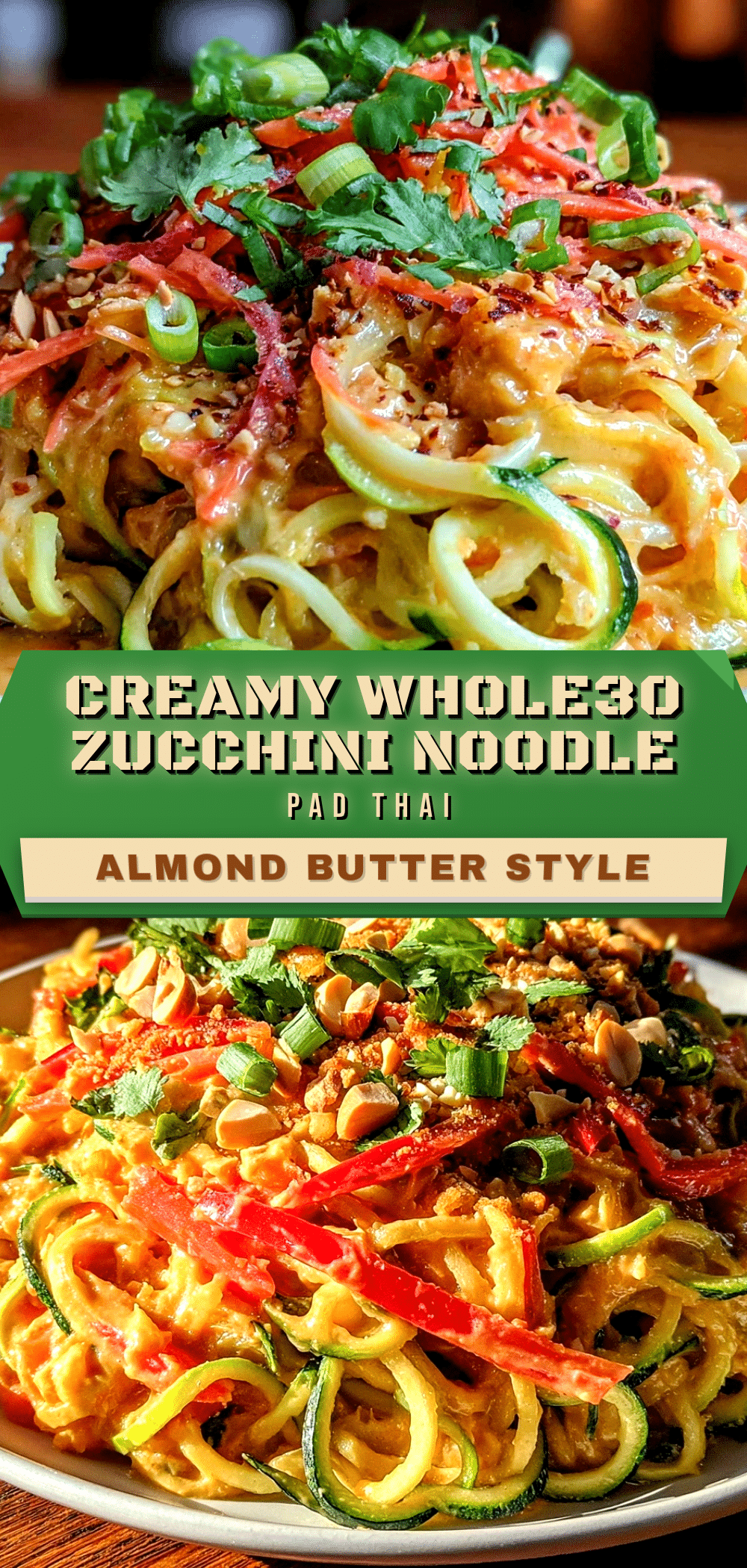
Fresh Whole30 Zucchini Noodle Pad Thai with Creamy Almond Butter Sauce
A light and wholesome Whole30-friendly zucchini noodle pad thai featuring a creamy almond butter sauce that delivers bold, nutty flavors without the usual carb overload.
- Prep Time: 15 minutes
- Cook Time: 15 minutes
- Total Time: 30 minutes
- Yield: 4 servings 1x
- Category: Main Course
- Cuisine: Thai-inspired
Ingredients
- 4 medium-sized zucchinis, spiralized into noodles
- 1/4 cup smooth, unsweetened almond butter
- 2 tablespoons tamarind paste
- 3 tablespoons coconut aminos
- 2 tablespoons fresh lime juice
- 2 cloves garlic, minced
- 1 teaspoon freshly grated ginger
- 3 stalks green onions, thinly sliced
- 1 medium carrot, julienned
- 1 small red bell pepper, thinly sliced
- 8 oz cooked shrimp or chicken (optional)
- 1/4 teaspoon crushed red pepper flakes (optional)
- A handful fresh cilantro, chopped
- 1 tablespoon toasted sesame seeds (optional)
- 2 tablespoons avocado oil or olive oil
Instructions
- Prepare the zucchini noodles using a spiralizer. Place noodles in a colander, sprinkle lightly with salt, and let sit for 10 minutes to draw out excess moisture. Pat dry with paper towels.
- In a medium bowl, whisk together almond butter, tamarind paste, coconut aminos, fresh lime juice, minced garlic, grated ginger, and crushed red pepper flakes if using. Adjust thickness with a splash of warm water if needed.
- Heat avocado oil in a large skillet over medium heat. Add sliced red bell pepper and julienned carrot; cook for 3-4 minutes until slightly tender but still crisp.
- If using shrimp or chicken, push veggies to the side and cook protein until opaque and cooked through, about 3-5 minutes. Remove protein and veggies from pan and set aside.
- Add a touch more oil if needed to the pan. Toss in zucchini noodles and sauté for 2-3 minutes, stirring gently until bright green and slightly softened.
- Return cooked veggies and protein to the pan with zucchini noodles. Pour almond butter sauce over everything and toss gently to coat. Cook for another 1-2 minutes to warm the sauce.
- Remove from heat. Garnish with chopped green onions, fresh cilantro, and toasted sesame seeds. Serve immediately with extra lime wedges.
Notes
Salt and drain zucchini noodles before cooking to prevent sogginess. Whisk almond butter and tamarind paste first to avoid lumps. Warm sauce gently off heat to keep creamy texture. Avoid overcrowding pan when cooking protein. Reheat leftovers gently in skillet with splash of water or lime juice to maintain texture.
Nutrition
- Serving Size: 1 serving (approxima
- Calories: 320
- Fat: 18
- Carbohydrates: 18
- Fiber: 5
- Protein: 22
Keywords: Whole30, zucchini noodles, pad thai, almond butter sauce, gluten-free, paleo, healthy dinner, low carb, dairy-free