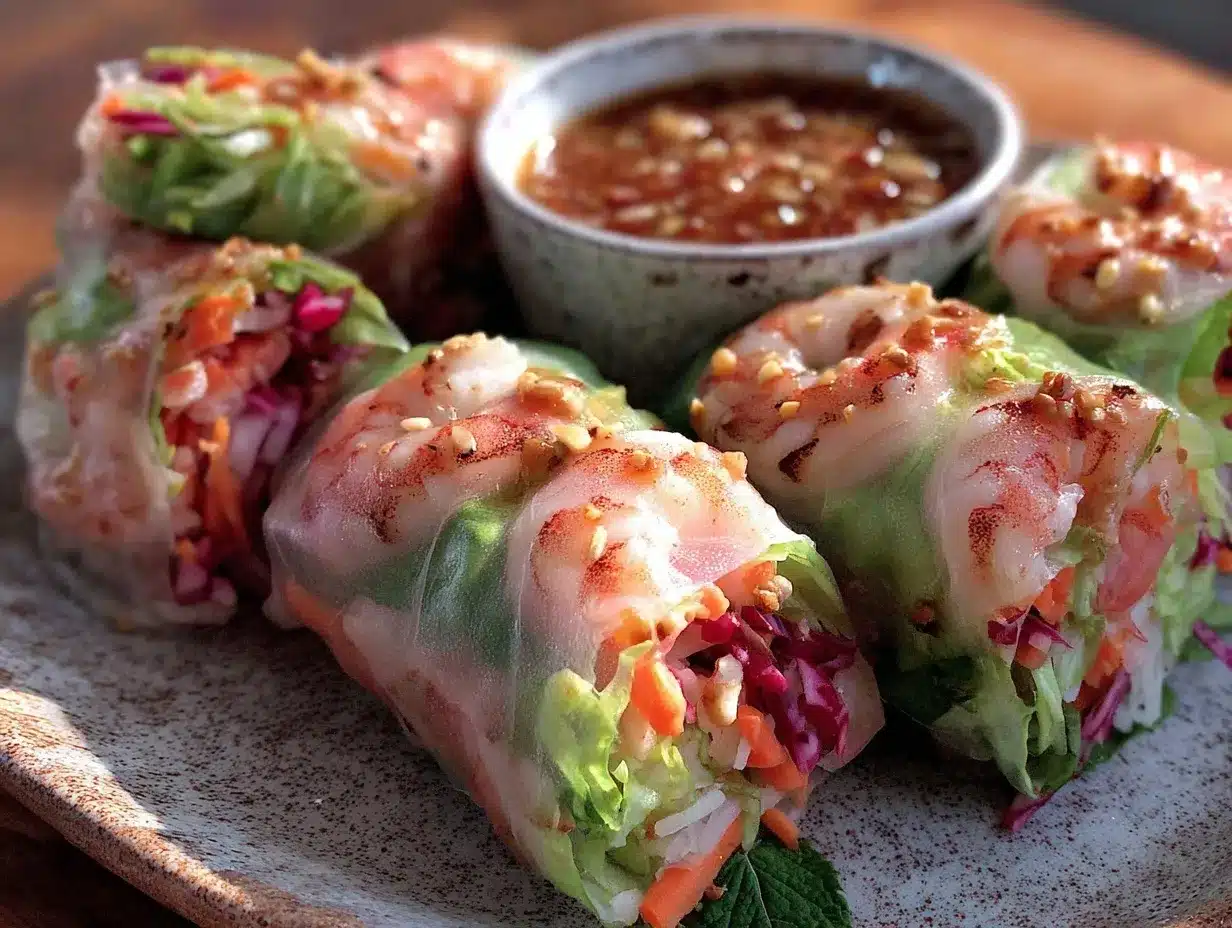
“You’ve got to try these spring rolls,” my coworker said, sliding a translucent, tightly wrapped roll across the conference table. I eyed it skeptically—fresh, uncooked, almost fragile-looking. Honestly, I wasn’t sure if I was ready to swap my usual fried snacks for something so… delicate. But one bite of that crisp, herb-packed bundle paired with the rich, nutty hoisin-peanut sauce changed everything.
That day, I found myself hooked on fresh Vietnamese spring rolls with hoisin-peanut dipping sauce. The colors, the balance of textures, and the unexpected punch of flavor felt like a breath of fresh air in my usual lunch routine. I started making them almost obsessively—sometimes more than twice a week—tweaking the filling, perfecting the dipping sauce ratio, and learning how to roll them just right without tearing the rice paper.
It’s funny how such a simple recipe felt like a secret handshake to a whole new world of fresh, healthy, and vibrant food. These rolls quickly became my go-to when I needed a reset from heavy meals or when I wanted to impress friends without breaking a sweat. The way the fresh herbs and crunchy veggies meet tender shrimp (or tofu for those nights I’m feeling plant-based) wrapped in delicate rice paper is something you have to experience to believe.
Despite the initial hesitation, this recipe stuck with me because it’s honest and satisfying in a way that doesn’t feel like a compromise. It’s food that refreshes the soul and nourishes the body, with a dipping sauce that somehow makes everything taste like a celebration. So, if you’re curious about fresh Vietnamese spring rolls with hoisin-peanut dipping sauce, I promise this recipe will make you a believer too.
Why You’ll Love This Fresh Vietnamese Spring Rolls Recipe
After countless attempts in my kitchen (and some amusing failures—I’m looking at you, sticky rice paper), this recipe has settled into a reliable favorite. Here’s why I think you’ll love making and eating these fresh Vietnamese spring rolls:
- Quick & Easy: From prep to plate in under 30 minutes, these rolls are perfect for those busy evenings or when you want a light meal without fuss.
- Simple Ingredients: No need to hunt for weird or exotic items. Most ingredients are pantry staples or easy to find at your local grocery store.
- Perfect for Entertaining: These rolls make for a fun interactive appetizer or a light main dish at brunches, potlucks, or casual dinners.
- Crowd-Pleaser: Kids and adults alike love the crisp veggies, fresh herbs, and that irresistible hoisin-peanut sauce—always a hit when friends come over.
- Unbelievably Delicious: The contrast of textures—soft rice paper, crunchy veggies, tender protein—combined with the savory-sweet dipping sauce is pure magic.
What sets this recipe apart? It’s the balance and freshness that feels intentional, not thrown together. For example, blending creamy peanut butter with hoisin sauce and a squeeze of lime creates a dipping sauce that’s tangy and rich without being overpowering. Plus, I swear by soaking my rice paper just long enough so it’s pliable but not mushy, a little trick I picked up after too many ruined rolls.
This recipe isn’t just food; it’s a little ritual that turns a simple meal into something memorable and satisfying, whether you’re winding down after a long day or hosting a casual get-together. If you’ve enjoyed recipes like the crispy buffalo chicken tater tot casserole or the savory BBQ pulled pork sliders, you’ll appreciate the fresh, light alternative these rolls bring to the table.
What Ingredients You Will Need
This fresh Vietnamese spring rolls recipe uses simple, wholesome ingredients to deliver bold flavor and satisfying texture without the fuss. Most are pantry staples or easy to find at any grocery store, and many can be swapped to suit dietary needs or what you have on hand.
- Rice Paper Wrappers: Thin, translucent sheets available in the Asian foods aisle. Look for brands like Banh Trang for best texture.
- Protein Options: Cooked shrimp (tails removed), shredded cooked chicken, or firm tofu (pressed and sliced). I usually go with shrimp for that classic taste.
- Fresh Herbs: Mint leaves, cilantro, and Thai basil. These herbs bring bright, fresh notes essential for authentic flavor.
- Vegetables:
- Julienned carrots
- Cucumber strips (seeded to avoid sogginess)
- Bean sprouts for crunch
- Butter lettuce or green leaf lettuce leaves for wrapping inside
- Rice Vermicelli Noodles: Thin rice noodles, cooked and cooled. Adds a lovely chewiness and helps bulk up the rolls.
- For the Hoisin-Peanut Dipping Sauce:
- Hoisin sauce (try Lee Kum Kee for a rich, balanced flavor)
- Creamy peanut butter (natural, no sugar added preferred)
- Fresh lime juice to brighten the sauce
- Garlic, minced
- Crushed roasted peanuts for garnish
- Optional: a dash of sriracha for heat
For substitutions, you can swap rice vermicelli noodles with spiralized zucchini for a low-carb twist or use tamari instead of hoisin sauce for a gluten-free sauce. If fresh herbs are scarce, dried won’t do—this recipe really shines with fresh aromatics.
Equipment Needed
- Large shallow dish or pie plate: For soaking the rice paper sheets quickly and evenly. I find this easier than dipping in a bowl.
- Sharp knife and cutting board: For prepping veggies and proteins precisely.
- Mixing bowls: For combining the dipping sauce ingredients and holding prepped fillings separately.
- Pot for boiling noodles: A small saucepan works well to cook the rice vermicelli.
- Serving plate or tray: To arrange the finished rolls without sticking.
If you’re short on space, a clean cutting board and a large shallow bowl can double up for soaking and prepping. For the dipping sauce, a small whisk or fork is handy but not essential—you can stir by hand. These are all budget-friendly tools that I’m guessing you already have tucked away in your kitchen.
Preparation Method
- Prepare the noodles: Boil 2 ounces (about 56 g) of rice vermicelli noodles for 3-4 minutes until tender but not mushy. Drain and rinse with cold water to stop cooking. Set aside.
- Prep the protein: If using shrimp, boil or steam about 12 medium shrimp until pink and opaque (about 2-3 minutes). Slice in half lengthwise for easier rolling. For tofu, press to remove excess moisture, then slice into strips. Chicken should be shredded finely.
- Wash and slice veggies and herbs: Julienne 1 medium carrot and 1/2 cucumber (seeded). Rinse a handful each of fresh mint, cilantro, and Thai basil leaves and pat dry. Prepare about 1 cup (30 g) bean sprouts and several leaves of butter lettuce.
- Make the dipping sauce: In a small bowl, whisk together 3 tablespoons hoisin sauce, 2 tablespoons creamy peanut butter, 1 teaspoon fresh lime juice, and 1 minced garlic clove. Add a splash of water if needed to thin. Top with crushed roasted peanuts and sriracha to taste.
- Soak the rice paper: Fill a shallow dish with warm water. Submerge one rice paper sheet for 10-15 seconds, until just pliable (it will continue softening outside the water). Lay flat on a clean surface or cutting board.
- Assemble the rolls: Place a lettuce leaf near the bottom of the rice paper. Add a small handful of noodles, a few carrot and cucumber strips, bean sprouts, herbs, and 3-4 shrimp halves or tofu strips. Fold the sides over the filling, then roll tightly from bottom to top. It may take a couple tries to get the hang of rolling without tearing.
- Serve immediately: Arrange the rolls on a plate and serve with the hoisin-peanut dipping sauce on the side. They’re best fresh but can be covered with a damp cloth and refrigerated for up to 4 hours before eating.
Pro tip: Avoid overfilling, or the rice paper will tear. Also, wet your hands slightly when handling the rice paper to keep it from sticking to your fingers.
Cooking Tips & Techniques
Rolling fresh Vietnamese spring rolls can seem tricky at first, but a few tricks really help get it right every time. First, the rice paper soaking time is crucial—too short and it’ll crack when rolling, too long and it becomes slimy and tears easily. I usually count 10-15 seconds in warm water, then lay it out quickly.
When layering fillings, placing a crisp lettuce leaf first helps protect the delicate rice paper from tearing and adds a nice crunch. Also, try to keep the filling ingredients uniform in size for even bites. Balance is key—you want enough filling to be satisfying but not so much that it bursts open.
Another tip I learned the hard way: prepare all ingredients before you start dipping and rolling. Rice paper dries fast once softened, so being organized prevents a sticky mess and frustration.
Finally, don’t skimp on the dipping sauce! The hoisin-peanut combo is the soul of this dish. Adjust the lime and garlic to your taste, and add sriracha if you like a little kick. This sauce is similar in spirit to the tangy and creamy dips I love in recipes like creamy buffalo chicken 7-layer dip, bringing rich flavor that keeps you coming back for more.
Variations & Adaptations
Fresh Vietnamese spring rolls are versatile and easy to tweak to suit any taste or dietary need. Here are a few ideas I’ve tried and loved:
- Vegetarian/Vegan: Replace shrimp with marinated tofu or extra crunchy veggies like bell pepper strips and avocado. Use tamari instead of hoisin sauce for a gluten-free vegan dipping sauce.
- Seasonal Veggies: In summer, add fresh mango or thinly sliced jicama for a sweet crunch. In cooler months, swap in sautéed mushrooms or roasted sweet potatoes for heartiness.
- Spicy Twist: Add finely chopped fresh chili to the filling or mix chili paste into the dipping sauce for extra heat.
- Low-Carb: Skip the rice vermicelli noodles and add extra greens or shredded cabbage instead.
- Alternative Proteins: Try grilled chicken strips, thinly sliced beef, or even smoked salmon for a different flavor profile.
One personal favorite variation swaps shrimp for leftover shredded BBQ pulled pork for a smoky, unexpected twist that pairs beautifully with the hoisin-peanut sauce.
Serving & Storage Suggestions
These fresh Vietnamese spring rolls are best served immediately while the rice paper is tender and the veggies remain crisp. I like to plate them with a small bowl of hoisin-peanut dipping sauce on the side, garnished with crushed peanuts and a wedge of lime for squeezing.
They pair wonderfully with light, refreshing drinks like iced jasmine tea or a crisp white wine. For a fuller meal, serve alongside dishes like crispy garlic chicken or even the easy cheesy tater tot breakfast casserole for a comforting, balanced spread.
If you have leftovers, wrap them tightly in plastic wrap with a damp paper towel to keep the rice paper from drying out and refrigerate. They’ll last up to 24 hours but might lose their delicate texture. Reheating isn’t recommended since these are meant to be fresh, but you can let them sit at room temperature for 10 minutes before eating if chilled.
Flavors develop subtly as the sauce mingles with the fillings, but the fresh herbs really shine only when eaten soon after assembling.
Nutritional Information & Benefits
Each fresh Vietnamese spring roll is a light, nutrient-dense bite, roughly containing:
| Calories | 80-120 kcal per roll (depending on protein choice) |
|---|---|
| Protein | 6-9 grams |
| Carbohydrates | 10-15 grams |
| Fat | 3-6 grams (mostly from peanut butter and protein) |
Key health benefits come from the fresh herbs and vegetables providing antioxidants and fiber, while lean protein supports muscle health. Rice paper is naturally gluten-free and low in calories, making this recipe friendly for gluten-sensitive diets. Using tofu or extra veggies keeps it vegan and low-fat.
This recipe is a great choice for anyone looking to enjoy a fresh, balanced meal without heaviness or excess oil. The hoisin-peanut sauce adds a dose of healthy fats and flavor without overwhelming the natural brightness of the filling.
Conclusion
Fresh Vietnamese spring rolls with hoisin-peanut dipping sauce are a fantastic way to bring vibrant flavors and fresh textures to your kitchen without complicated prep. This recipe stays close to tradition while offering flexibility to suit your pantry and preferences.
I love how it turns simple ingredients into a meal that feels both light and indulgent, perfect for those times when you want something nourishing but exciting. Whether you’re rolling for yourself or sharing with friends, these spring rolls always deliver a moment of joy.
Give this recipe a try, experiment with your favorite fillings, and let me know how you like to serve yours. Sharing your twists and tips always makes this kitchen space feel a little warmer.
FAQs About Fresh Vietnamese Spring Rolls
How long can I store fresh Vietnamese spring rolls?
Store rolls wrapped tightly in plastic wrap with a damp paper towel in the fridge for up to 24 hours. Best eaten fresh for optimal texture.
Can I make the hoisin-peanut dipping sauce ahead of time?
Yes, the sauce keeps well refrigerated for up to 3 days. Give it a good stir before serving.
What can I use instead of shrimp in these spring rolls?
Try tofu, shredded chicken, or thinly sliced beef. For a vegetarian option, add extra crunchy veggies and herbs.
How do I prevent the rice paper from tearing while rolling?
Soak rice paper just until pliable (10-15 seconds), don’t overfill the rolls, and fold gently but firmly.
Are these spring rolls gluten-free?
Yes, as long as you use gluten-free hoisin sauce or tamari in the dipping sauce and check ingredient labels carefully.
Pin This Recipe!
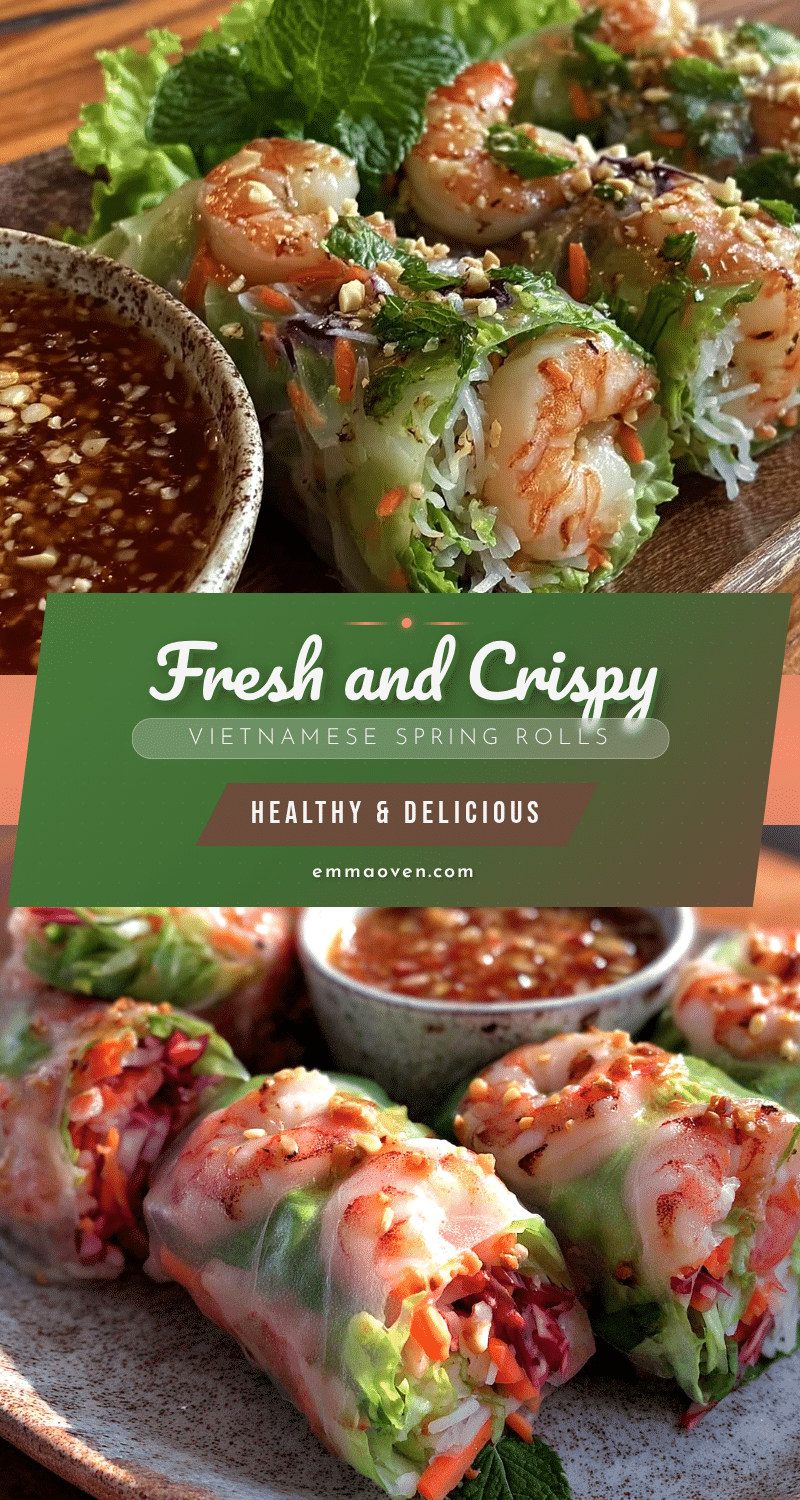
Fresh Vietnamese Spring Rolls Recipe with Easy Hoisin-Peanut Sauce
Fresh Vietnamese spring rolls packed with herbs, crunchy veggies, and tender shrimp or tofu, served with a rich and tangy hoisin-peanut dipping sauce. A quick, healthy, and vibrant meal perfect for any occasion.
- Prep Time: 15 minutes
- Cook Time: 10 minutes
- Total Time: 25 minutes
- Yield: 4 servings 1x
- Category: Main Course
- Cuisine: Vietnamese
Ingredients
- Rice paper wrappers
- 12 medium cooked shrimp (tails removed), halved lengthwise (or firm tofu pressed and sliced, or shredded cooked chicken)
- 1 medium carrot, julienned
- 1/2 cucumber, seeded and julienned
- 1 cup (about 30 g) bean sprouts
- Butter lettuce or green leaf lettuce leaves
- Handful each of fresh mint leaves, cilantro, and Thai basil
- 2 ounces (about 56 g) rice vermicelli noodles, cooked and cooled
- For the hoisin-peanut dipping sauce:
- 3 tablespoons hoisin sauce
- 2 tablespoons creamy peanut butter (natural, no sugar added preferred)
- 1 teaspoon fresh lime juice
- 1 garlic clove, minced
- Crushed roasted peanuts for garnish
- Optional: dash of sriracha for heat
Instructions
- Boil 2 ounces (about 56 g) of rice vermicelli noodles for 3-4 minutes until tender but not mushy. Drain and rinse with cold water to stop cooking. Set aside.
- If using shrimp, boil or steam about 12 medium shrimp until pink and opaque (about 2-3 minutes). Slice in half lengthwise for easier rolling. For tofu, press to remove excess moisture, then slice into strips. Chicken should be shredded finely.
- Julienne 1 medium carrot and 1/2 cucumber (seeded). Rinse a handful each of fresh mint, cilantro, and Thai basil leaves and pat dry. Prepare about 1 cup (30 g) bean sprouts and several leaves of butter lettuce.
- In a small bowl, whisk together 3 tablespoons hoisin sauce, 2 tablespoons creamy peanut butter, 1 teaspoon fresh lime juice, and 1 minced garlic clove. Add a splash of water if needed to thin. Top with crushed roasted peanuts and sriracha to taste.
- Fill a shallow dish with warm water. Submerge one rice paper sheet for 10-15 seconds, until just pliable (it will continue softening outside the water). Lay flat on a clean surface or cutting board.
- Place a lettuce leaf near the bottom of the rice paper. Add a small handful of noodles, a few carrot and cucumber strips, bean sprouts, herbs, and 3-4 shrimp halves or tofu strips. Fold the sides over the filling, then roll tightly from bottom to top. It may take a couple tries to get the hang of rolling without tearing.
- Arrange the rolls on a plate and serve with the hoisin-peanut dipping sauce on the side. Serve immediately or cover with a damp cloth and refrigerate for up to 4 hours before eating.
Notes
Soak rice paper just until pliable (10-15 seconds) to avoid tearing. Wet hands slightly when handling rice paper to prevent sticking. Avoid overfilling rolls. Prepare all ingredients before assembling to prevent rice paper from drying out. The hoisin-peanut sauce can be made ahead and refrigerated for up to 3 days. Store assembled rolls wrapped tightly with a damp paper towel in the fridge for up to 24 hours; best eaten fresh.
Nutrition
- Serving Size: 1 spring roll
- Calories: 80120
- Sugar: 24
- Sodium: 200300
- Fat: 36
- Saturated Fat: 0.51
- Carbohydrates: 1015
- Fiber: 23
- Protein: 69
Keywords: Vietnamese spring rolls, fresh spring rolls, hoisin peanut sauce, healthy appetizer, shrimp spring rolls, tofu spring rolls, gluten-free, vegan option