Let me tell you, the moment the aroma of sizzling saffron-infused rice and buttery crust fills the kitchen, it’s hard not to get hooked. The first time I made this crispy Persian rice tahdig, I was instantly captivated by that golden crust—the kind of moment where you pause, take a deep breath, and just smile because you know you’re onto something truly special. When I was knee-high to a grasshopper, my grandma would prepare this dish for family gatherings, and the sound of her wooden spoon scraping the bottom of the pot was basically a dinner bell. Years ago, I stumbled upon this recipe trying to recreate that nostalgic crunch, and honestly, I wish I’d discovered it sooner.
My family couldn’t stop sneaking pieces off the cooling tahdig, and I can’t really blame them—there’s something dangerously easy and pure about the crispy texture paired with fluffy rice that feels like a warm hug. Whether you’re serving it for a cozy weekend dinner, a festive potluck, or brightening up your Pinterest recipe board with a golden-crisp sensation, this crispy Persian rice tahdig recipe is a total crowd-pleaser. I’ve tested it multiple times (in the name of research, of course), and it’s become a staple for family gatherings and gifting. Trust me, you’re going to want to bookmark this one.
Why You’ll Love This Crispy Persian Rice Tahdig Recipe
After countless kitchen experiments and family feedback, this recipe is a keeper for so many reasons. Here’s why it stands out:
- Quick & Easy: Comes together in about an hour, perfect for those days when you want something special without fussing all afternoon.
- Simple Ingredients: You probably already have everything you need—basmati rice, saffron, oil, and a few staple pantry items.
- Perfect for Any Occasion: Whether it’s a casual dinner, a holiday feast, or a potluck, tahdig steals the spotlight every time.
- Crowd-Pleaser: Kids, adults, picky eaters—everyone loves the crunch and the fluffy rice combo.
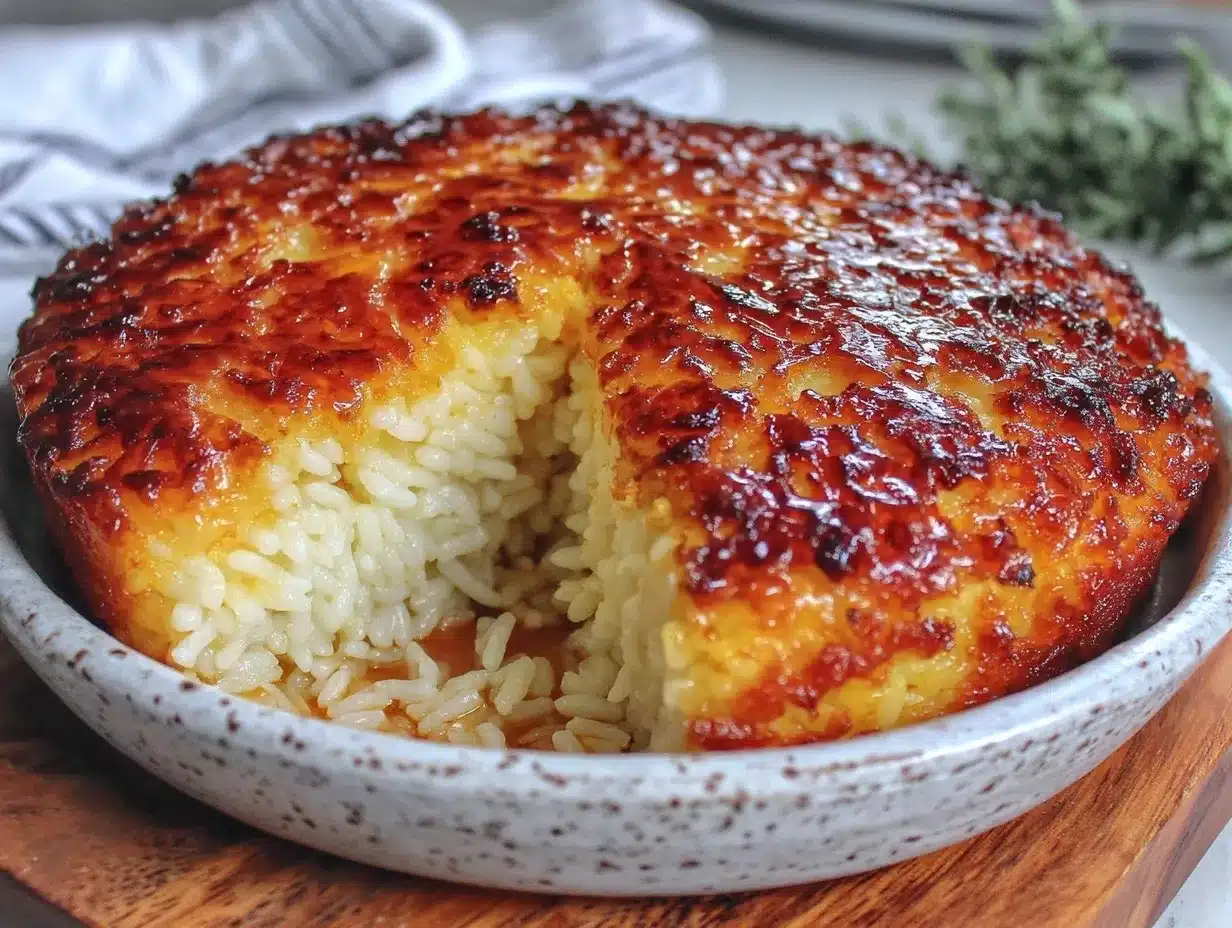
- Unbelievably Delicious: The golden crust is buttery, fragrant, and has just the right balance of crisp and tenderness you don’t find in everyday rice dishes.
This isn’t just another rice recipe. The secret lies in gently coaxing the crust to form without burning, and infusing the rice with saffron for that subtle floral aroma. The technique of parboiling the rice before layering it in the pot is key to achieving that perfect fluffy texture beneath the crunch. Honestly, this recipe feels like comfort food reimagined—simple but with soul. You’ll close your eyes after the first bite and know you nailed it.
What Ingredients You Will Need
This recipe uses simple, wholesome ingredients to deliver bold flavor and that satisfying crunch without the fuss. Most are pantry staples or easy to find in any grocery store.
- For the Rice:
- 2 cups basmati rice (about 400 grams), rinsed and soaked for at least 30 minutes (helps fluffiness)
- 4 cups water (for boiling)
- 1 teaspoon salt
- For the Tahdig (Crunchy Crust):
- 3 tablespoons vegetable oil (or sunflower oil for neutral flavor)
- 2 tablespoons unsalted butter, melted (adds richness)
- ¼ teaspoon saffron threads, crushed and steeped in 2 tablespoons hot water (for that golden color and aroma)
- Optional: ½ cup plain yogurt or thin potato slices can be used as a base for extra crispy tahdig
Ingredient Tips: I recommend using aged basmati rice like Tilda for best texture. For saffron, look for high-quality threads—even a little goes a long way. If you’re avoiding dairy, swap butter for extra oil or vegan butter alternatives. Using yogurt as a base is a personal favorite for some—it adds a tangy depth and makes the crunch even more addictive.
Equipment Needed
- Large bowl (for soaking rice)
- Fine mesh strainer (to rinse rice)
- Large pot with a tight-fitting lid (non-stick helps, but a heavy-bottomed pot works best to avoid burning)
- Wooden spoon or spatula (preferably flat and sturdy for scraping tahdig)
- Small bowl for steeping saffron
If you don’t have a non-stick pot, a heavy-duty stainless steel one works fine—just be extra careful with heat control. I once tried making tahdig in a cast iron pan, and while it worked, cleanup was a little more intense! For budget-friendly options, a good heavy-bottomed saucepan from your local store will do wonders.
Preparation Method
- Rinse and soak the rice: Rinse 2 cups of basmati rice under cold water until the water runs clear to remove excess starch. Then soak the rice in cold water for 30 to 60 minutes. This step helps grains cook evenly and get fluffy.
- Parboil the rice: Bring 4 cups of water to a boil in a large pot with 1 teaspoon salt. Drain the soaked rice and add it to the boiling water. Cook for about 6 to 7 minutes, or until grains are soft on the outside but still firm inside (al dente). Taste-testing here is key to avoid mushiness later.
- Drain the rice: Use a fine mesh strainer to drain the rice thoroughly. Let it sit for a few minutes to release excess moisture—this helps prevent soggy tahdig.
- Prepare the saffron: Crush ¼ teaspoon of saffron threads in a small bowl and add 2 tablespoons of hot water. Let it steep for 10 minutes to release that beautiful golden color and aroma.
- Make the tahdig base: In your cooking pot, combine 3 tablespoons vegetable oil with 2 tablespoons melted butter. Swirl to coat the bottom evenly. If using, spread a thin layer of plain yogurt or potato slices over the oil for a different crunch texture.
- Add the saffron water: Drizzle the saffron-infused water carefully over the oil and butter mixture, spreading gently with a spoon. This step creates the signature golden hue.
- Layer the rice: Spoon the drained rice gently over the saffron mixture, mounding it into a pyramid shape. This encourages steam circulation and even cooking. Avoid pressing it down too hard.
- Steam the rice: Using the lid, wrap a clean kitchen towel around it to catch condensation (prevents soggy rice). Place the lid tightly on the pot. Cook on medium-high heat for 5 minutes to start the crust, then reduce to low heat and cook for 30 to 40 minutes. Resist the urge to lift the lid early—this is where the magic happens.
- Check and serve: After cooking, turn off the heat and let the pot rest for 5 minutes. To check if your tahdig is perfectly crispy, gently insert a spatula at the edge. If it lifts with a satisfying crunch, you’re golden. To serve, invert the pot onto a large platter so the crispy tahdig is on top. If it sticks, a few gentle taps with the spatula usually help.
Pro tip: If the tahdig sticks a bit, don’t panic! Let the pot cool for a few minutes and try again. Patience is key here.
Cooking Tips & Techniques for Perfect Tahdig
Getting that perfect tahdig can be tricky but honestly, once you get the hang of it, it’s like second nature. Here’s what I’ve learned from experience:
- Don’t rush the soaking: Soaking rice helps with fluffiness and prevents clumping. I sometimes soak mine overnight when I’m prepping in advance.
- Control your heat: Starting with medium-high heat helps form the crust, but lowering to low is crucial to avoid burning. I once burned a batch by rushing this step—lesson learned!
- Use a heavy-bottomed pot: It distributes heat evenly and reduces hot spots that scorch the tahdig.
- The towel trick: Wrapping a kitchen towel around the lid traps steam and ensures the rice cooks perfectly without sogginess.
- Butter and oil combo: Butter adds richness, oil prevents burning. Don’t skip either for best flavor and texture.
- Test the crust gently: Use a flat wooden spatula to check; a gentle lift is all you need to confirm crispiness.
Honestly, the first few times might require some patience and adjustments, but once you nail it, you’ll be hooked for life.
Variations & Adaptations for Your Tahdig
One of the best things about crispy Persian rice tahdig is how versatile it is. Here are a few ways I’ve customized it over time:
- Potato Tahdig: Thinly sliced potatoes layer the bottom instead of oil and saffron. It’s a classic variation with a hearty, crispy bite.
- Yogurt Tahdig: Mix plain yogurt with the oil and spread a thin layer on the pot’s bottom. It gives a tangy flavor and extra crunch.
- Gluten-Free: Tahdig is naturally gluten-free since it’s just rice and basic ingredients.
- Herb-Infused: Add chopped fresh dill or parsley to the rice before cooking for a fresh twist.
- Veggie-Enhanced: Stir finely diced carrots or peas into the rice for a colorful, nutrient boost.
Personally, I love the potato tahdig on chilly evenings—it feels like a warm, crispy blanket on the plate. Try swapping saffron for turmeric if you’re in a pinch (though saffron’s aroma is unmatched).
Serving & Storage Suggestions
Serve your tahdig warm, ideally right after flipping it onto the platter. The golden crust is best enjoyed fresh and crispy, but leftovers can be kept for later.
- Serving: Pair tahdig with stews like ghormeh sabzi or chicken kabobs. A side of fresh herbs and yogurt (mast-o-khiar) balances richness beautifully.
- Storage: Store leftovers in an airtight container in the refrigerator for up to 3 days.
- Reheating: Reheat in a non-stick pan over low heat to restore crispiness. Avoid microwaving, which makes the crust soggy.
- Flavor development: The rice flavors mellow overnight, making leftover tahdig a tasty next-day treat.
I always find that reheated tahdig tastes just as good, if not better—perfect for a quick lunch or picnic snack.
Nutritional Information & Benefits
This crispy Persian rice tahdig recipe is a satisfying balance of carbs and fats, providing energy and comfort without unnecessary additives.
| Nutrient | Per Serving (approx.) |
|---|---|
| Calories | 320 kcal |
| Carbohydrates | 60 g |
| Fat | 8 g |
| Protein | 6 g |
| Fiber | 1.5 g |
Using basmati rice means a lower glycemic index compared to other white rices, helping with steadier blood sugar levels. Saffron, beyond its vibrant color, has antioxidant properties and a subtle mood-lifting aroma. If you’re mindful of dairy, using oil instead of butter keeps it vegan-friendly.
Conclusion
In the end, this crispy Persian rice tahdig recipe is more than just rice—it’s a golden-crunch sensation that brings family and friends together. You can easily customize it to fit your taste and dietary needs, making it a versatile addition to your cooking repertoire. I love this recipe because it’s simple, satisfying, and has a way of turning a humble pot of rice into something memorable.
Give it a try, and don’t hesitate to leave a comment sharing your twists or questions. Trust me, once you get that perfect tahdig, you’re going to want to make it again and again. Happy cooking!
FAQs About Crispy Persian Rice Tahdig
How do I prevent tahdig from sticking to the pot?
Use enough oil and butter to coat the bottom of a heavy-bottomed pot, and control your heat by starting medium-high then lowering to low. Wrapping a towel around the lid also helps steam the rice evenly, preventing sticking.
Can I make tahdig without saffron?
Yes! You can substitute turmeric for color, or simply skip saffron. The crunch will still be delicious but without the signature floral aroma.
Is tahdig gluten-free?
Absolutely. As long as you use plain rice without any added gluten-containing ingredients, tahdig is naturally gluten-free.
Can I use brown rice for tahdig?
Brown rice is trickier because it takes longer to cook and has less starch, which helps with the crust. If you try it, parboil longer and expect a different texture.
What’s the best way to serve tahdig?
Serve warm with Persian stews like ghormeh sabzi, grilled meats, or alongside fresh herbs and yogurt for a traditional touch.
Pin This Recipe!
Crispy Persian Rice Tahdig

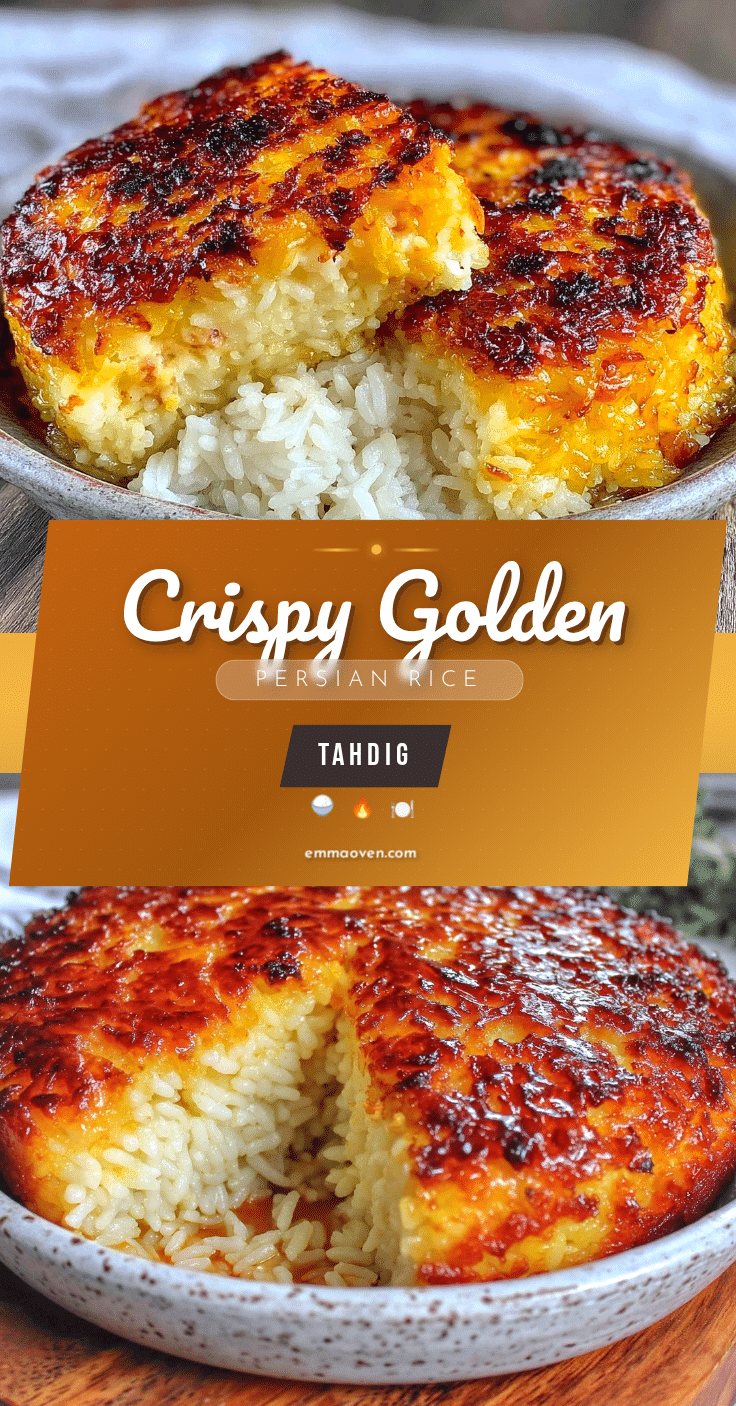
A traditional Persian rice dish featuring a perfect golden, crispy crust with fluffy saffron-infused basmati rice. This easy recipe delivers a crowd-pleasing, buttery crunch that’s perfect for any occasion.
- Prep Time: 40 minutes
- Cook Time: 40 minutes
- Total Time: 1 hour 20 minutes
- Yield: 4 servings 1x
- Category: Main Course
- Cuisine: Persian
Ingredients
- 2 cups basmati rice (about 400 grams), rinsed and soaked for at least 30 minutes
- 4 cups water (for boiling)
- 1 teaspoon salt
- 3 tablespoons vegetable oil (or sunflower oil)
- 2 tablespoons unsalted butter, melted
- ¼ teaspoon saffron threads, crushed and steeped in 2 tablespoons hot water
- Optional: ½ cup plain yogurt or thin potato slices for extra crispy tahdig
Instructions
- Rinse 2 cups of basmati rice under cold water until the water runs clear to remove excess starch. Soak the rice in cold water for 30 to 60 minutes.
- Bring 4 cups of water to a boil in a large pot with 1 teaspoon salt. Drain the soaked rice and add it to the boiling water. Cook for about 6 to 7 minutes, or until grains are soft on the outside but still firm inside (al dente).
- Drain the rice thoroughly using a fine mesh strainer and let it sit for a few minutes to release excess moisture.
- Crush ¼ teaspoon of saffron threads in a small bowl and add 2 tablespoons of hot water. Let steep for 10 minutes.
- In your cooking pot, combine 3 tablespoons vegetable oil with 2 tablespoons melted butter. Swirl to coat the bottom evenly. If using, spread a thin layer of plain yogurt or potato slices over the oil for a different crunch texture.
- Drizzle the saffron-infused water carefully over the oil and butter mixture, spreading gently with a spoon.
- Spoon the drained rice gently over the saffron mixture, mounding it into a pyramid shape without pressing down too hard.
- Wrap a clean kitchen towel around the lid to catch condensation and place the lid tightly on the pot. Cook on medium-high heat for 5 minutes to start the crust, then reduce to low heat and cook for 30 to 40 minutes.
- Turn off the heat and let the pot rest for 5 minutes. Gently insert a spatula at the edge to check if the tahdig is crispy. To serve, invert the pot onto a large platter so the crispy tahdig is on top.
Notes
Use a heavy-bottomed pot to avoid burning. Wrapping a kitchen towel around the lid helps trap steam and prevents soggy rice. If tahdig sticks, let the pot cool before trying to remove it. Butter and oil combo is key for flavor and texture. Optional yogurt or potato slices add extra crunch. Saffron can be substituted with turmeric if needed.
Nutrition
- Serving Size: 1 serving (approxima
- Calories: 320
- Sugar: 0.2
- Sodium: 400
- Fat: 8
- Saturated Fat: 3
- Carbohydrates: 60
- Fiber: 1.5
- Protein: 6
Keywords: Persian rice, tahdig, crispy rice, saffron rice, basmati rice, golden crust, Persian cuisine, easy rice recipe