There’s a moment in every home cook’s life when you realize the classic roast turkey, while beautiful, can be a little… predictable. You know the one. It’s good, it’s reliable, but it doesn’t make you stop mid-chew and just close your eyes. That’s where this brown butter sage turkey comes in. It’s the turkey that whispers, “I’ve got secrets,” and the cider gravy is the one spilling them all.
The first time I made this, I was testing a theory. Could you take the nutty, almost caramelized depth of brown butter and pair it with the sharp, woodsy hit of fresh sage without overwhelming the turkey itself? The answer was a resounding yes—but only if you let the butter do the heavy lifting. And the cider gravy? That was a happy accident. I had leftover apple cider from a weekend baking project, and pouring it into the pan drippings felt less like a recipe and more like fate. This perfect brown butter sage turkey with easy cider gravy isn’t just a holiday dish. It’s a Tuesday night rebellion against boring poultry.
Why You’ll Love This Recipe
This isn’t your grandmother’s turkey recipe—though she’d probably ask for the details after one bite. I’ve tested this method on three separate occasions (once with a 12-pound bird, once with just a bone-in breast, and once in a moment of panic when I realized I forgot to thaw the turkey properly—but that’s a story for another day). What came out each time was consistently juicy, deeply flavorful, and surprisingly forgiving.
- Simple Ingredients, Complex Flavor: You don’t need a specialty store run. Butter, fresh sage, apple cider, a good turkey, and a few pantry staples are all it takes. The magic happens in the technique, not the grocery list.
- Perfect for Special Occasions (or a Random Thursday): This turkey is show-stopping enough for Thanksgiving or Christmas dinner, but it’s also easy enough to make on a weekend when you just want the house to smell like a celebration.
- Stress-Free Gravy: The cider gravy is almost impossible to mess up. It’s built right into the roasting pan, so you’re not juggling a separate saucepan while trying to carve the bird.
- Crowd-Pleaser Approved: I’ve served this to picky eaters, herb skeptics, and even someone who swore they didn’t like turkey. All of them went back for seconds. The brown butter sage combination is that persuasive.
- Unbelievably Juicy Meat: The brown butter acts as a basting agent that locks in moisture while the sage infuses every layer. You won’t need a single drop of extra oil or broth.
This recipe is different because it treats the turkey like a canvas for flavor, not just a protein to be cooked. The brown butter technique adds a nutty richness that you can’t get from plain melted butter, and the cider gravy brings a subtle sweetness that cuts through the savory notes perfectly. It’s comfort food that feels sophisticated without requiring a culinary degree.
What Ingredients You Will Need
Every ingredient here has a job, and none of them are just taking up space. Let’s walk through what you need and why it matters for this perfect brown butter sage turkey with easy cider gravy.
- 1 whole turkey (10-12 pounds), thawed: I prefer a bird in this weight range because it cooks evenly and fits comfortably in a standard roasting pan. If you’re feeding a crowd, a 14-pounder works too—just adjust the cooking time. Look for a turkey that hasn’t been injected with broth or seasoning, so you control the flavor entirely.
- 1 cup unsalted butter (2 sticks): Unsalted is crucial here. You’ll be seasoning the turkey separately, and salted butter can throw off the balance. I use Kerrygold when I can find it—the higher fat content browns more evenly.
- 1/4 cup fresh sage leaves, chopped, plus 10-12 whole leaves for garnish: Fresh sage is non-negotiable. Dried sage just doesn’t have the same aromatic punch. The chopped leaves go into the brown butter, and the whole leaves are tucked under the skin for visual appeal and concentrated flavor.
- 2 cups apple cider (unfiltered is best): Unfiltered apple cider has more body and a deeper apple flavor than the filtered stuff. It also has natural sediment that helps thicken the gravy slightly. Avoid apple juice—it’s too sweet and thin.
- 1 large yellow onion, quartered: This goes inside the cavity to steam and perfume the meat from the inside out. You’re not eating this, so don’t worry about chopping it neatly.
- 4 cloves garlic, smashed: Smashed garlic releases more flavor than sliced. Tuck them into the cavity alongside the onion.
- 2 tablespoons olive oil: A light coating on the skin before seasoning helps the salt and pepper adhere and promotes browning.
- 2 teaspoons kosher salt: I prefer Diamond Crystal for its clean taste and easy-to-control grain size. You’ll use this both inside the cavity and on the skin.
- 1 teaspoon black pepper, freshly ground: Freshly ground pepper makes a noticeable difference. Pre-ground pepper can taste flat.
- 1/2 teaspoon garlic powder: Optional, but it adds a subtle savory layer that complements the sage without overpowering it.
- 2 tablespoons all-purpose flour (for gravy): This helps thicken the cider gravy to that perfect, spoon-coating consistency. If you’re gluten-free, you can substitute cornstarch—use 1 tablespoon mixed with 2 tablespoons cold water as a slurry.
- 1 cup low-sodium chicken or turkey broth: This thins out the gravy if it gets too thick and adds another layer of savory depth. Low-sodium is key so you don’t oversalt the final dish.
You might notice there’s no sugar in this recipe. The apple cider provides enough natural sweetness to balance the savory brown butter and sage. If you want a slightly sweeter gravy, you can add a tablespoon of maple syrup at the end, but I find it’s perfect as written.
Equipment Needed
You don’t need a professional kitchen to pull this off, but having the right tools makes the process smoother. Here’s what I use every time I make this perfect brown butter sage turkey with easy cider gravy.
- Roasting pan with a rack: A rack lifts the turkey off the bottom of the pan, allowing hot air to circulate underneath for even cooking. If you don’t have a rack, you can use chopped carrots and celery as a makeshift bed—they’ll flavor the drippings too.
- Small saucepan: For browning the butter. A light-colored pan is ideal so you can see the butter change color.
- Meat thermometer: This is your most important tool. An instant-read thermometer is fine, but a leave-in probe thermometer with an alarm is a game-changer. I’ve saved countless turkeys from drying out by using one.
- Basting brush or silicone brush: For applying the brown butter mixture. A silicone brush is easier to clean and doesn’t shed bristles.
- Chef’s knife and cutting board: For chopping the sage and quartering the onion. A sharp knife makes this step take about 30 seconds.
- Large measuring cup or fat separator: For collecting the pan drippings. A fat separator lets you pour off the flavorful juices while leaving the excess fat behind. If you don’t have one, a regular measuring cup and a spoon work fine—just skim the fat off the top.
- Whisk: For making the gravy smooth and lump-free. A flat whisk works best in a roasting pan.
- Aluminum foil: For tenting the turkey if the skin browns too quickly. It’s a simple fix that prevents a burnt exterior while the inside finishes cooking.
I’ve made this recipe with a cheap roasting pan from the grocery store and it turned out just fine. The thermometer is the only tool I’d actually splurge on—it takes the guesswork out of cooking poultry.
Preparation Method
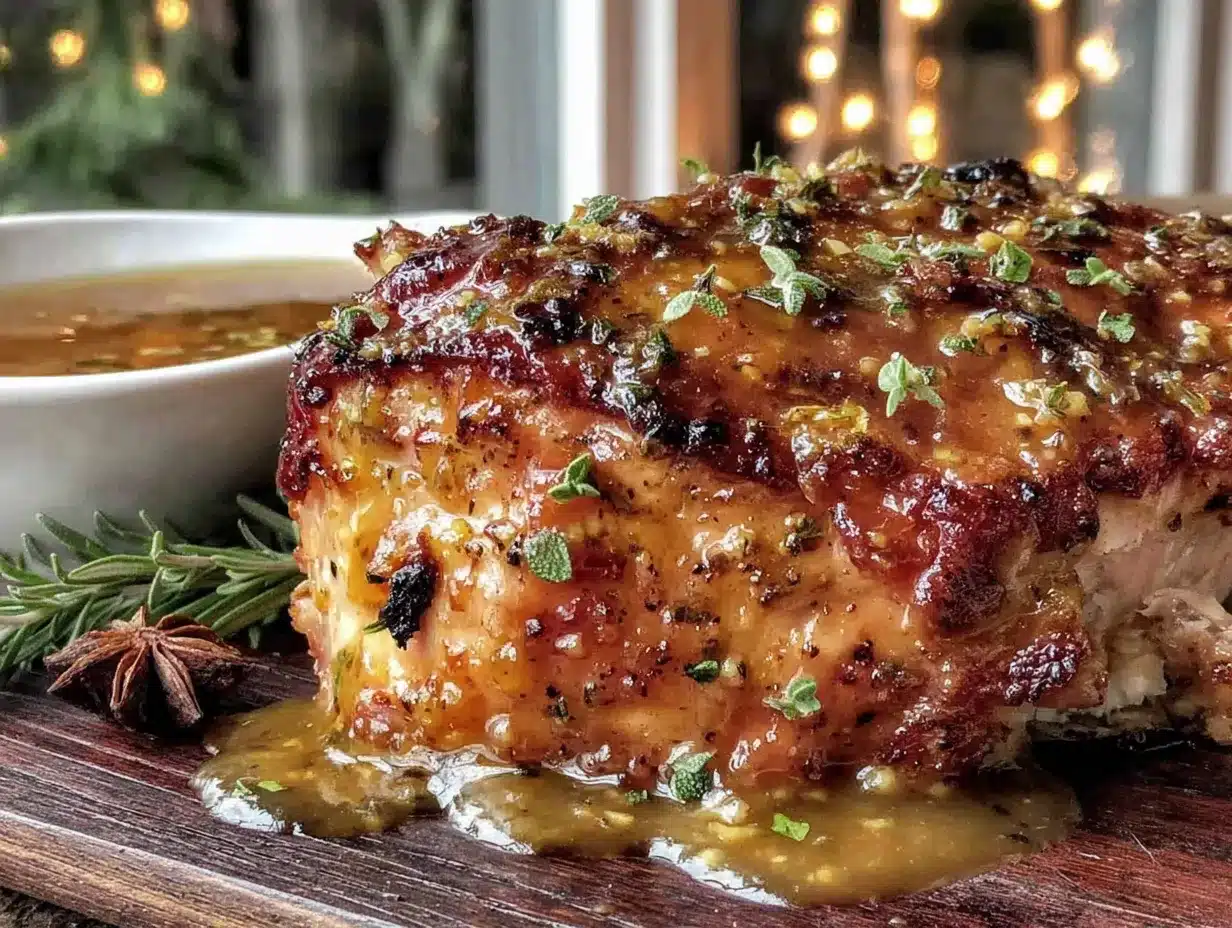
Let’s get into the actual cooking. This method is designed to be straightforward, but I’ve included every little trick I’ve learned from making this perfect brown butter sage turkey with easy cider gravy multiple times. Follow these steps, and you’ll have a bird that looks like it came from a magazine spread.
Step 1: Make the Brown Butter Sage Mixture
Place the 1 cup of unsalted butter in a small saucepan over medium heat. Let it melt completely, then continue cooking, swirling the pan occasionally. The butter will foam up, then subside, and you’ll see brown specks forming at the bottom. This takes about 5-7 minutes. Watch closely—it can go from perfect to burnt in seconds. When it smells nutty and the specks are a warm amber color, remove it from the heat immediately. Stir in the 1/4 cup of chopped fresh sage leaves. The residual heat will infuse the butter without burning the herbs. Set aside to cool slightly while you prepare the turkey.
Step 2: Prep the Turkey
Remove the turkey from its packaging and take out the giblets and neck (save them for stock if you’re ambitious). Pat the turkey completely dry with paper towels—inside and out. Moisture is the enemy of crispy skin, so be thorough. Let the turkey sit at room temperature for 30 minutes. This helps it cook more evenly.
Step 3: Season the Bird
Rub the 2 tablespoons of olive oil all over the turkey skin. Season generously with the 2 teaspoons of kosher salt and 1 teaspoon of black pepper, including the cavity. Sprinkle the 1/2 teaspoon of garlic powder over the skin as well. Place the quartered onion and smashed garlic cloves inside the cavity. Tuck the whole sage leaves under the skin of the breast and thighs—gently lift the skin with your fingers and slide the leaves in. This keeps the sage from burning while infusing the meat directly.
Step 4: Apply the Brown Butter
Using your basting brush, apply half of the brown butter sage mixture all over the turkey skin. Reserve the other half for basting during roasting. Don’t forget the wings and drumsticks—they need love too.
Step 5: Roast the Turkey
Preheat your oven to 425°F (220°C). Place the turkey on the rack in your roasting pan, breast side up. Pour 1 cup of the apple cider into the bottom of the pan (not over the turkey). Roast at 425°F for 30 minutes. This high heat jump-starts the browning process and gives you that gorgeous golden skin.
Step 6: Reduce Heat and Baste
After 30 minutes, reduce the oven temperature to 350°F (175°C). Baste the turkey with the remaining brown butter mixture. Add the second cup of apple cider to the pan. Continue roasting for about 1 hour and 45 minutes to 2 hours, depending on your turkey’s size. Baste every 30 minutes with the pan juices. If the skin starts getting too dark, tent the turkey loosely with aluminum foil.
Step 7: Check for Doneness
Your turkey is done when a meat thermometer inserted into the thickest part of the thigh (without touching bone) reads 165°F (74°C). The breast should read 160°F (71°C)—it will carry over to 165°F as it rests. Start checking at the 1-hour-45-minute mark. My 12-pound bird usually takes about 2 hours and 10 minutes total at the lower temperature.
Step 8: Rest the Turkey
Once done, transfer the turkey to a cutting board or platter. Let it rest for at least 20-25 minutes before carving. This is non-negotiable. Resting allows the juices to redistribute throughout the meat rather than running out onto your cutting board. Tent it loosely with foil to keep warm.
Step 9: Make the Cider Gravy
While the turkey rests, pour the pan drippings through a fine-mesh strainer into a large measuring cup or fat separator. Let it sit for a minute so the fat rises to the top. Skim off most of the fat, leaving about 2 tablespoons in the drippings. Return the strained drippings to the roasting pan (or a medium saucepan if your pan is too heavy). Place over medium heat. Whisk in the 2 tablespoons of all-purpose flour until smooth. Cook for 1 minute to get rid of the raw flour taste. Slowly pour in the 1 cup of chicken or turkey broth, whisking constantly. Let the gravy simmer for 3-5 minutes until it thickens to your liking. Taste and adjust seasoning with salt and pepper. If it’s too thick, add more broth. If it’s too thin, let it simmer a few more minutes.
At this point, you have a perfect brown butter sage turkey with easy cider gravy that’s ready to carve and serve. The aroma in your kitchen is going to make everyone wander in asking when dinner is ready.
Cooking Tips & Techniques
I’ve made this recipe enough times to know exactly where things can go sideways. Here are the lessons I learned the hard way so you don’t have to.
- Don’t skip the drying step: The first time I made this, I was in a hurry and didn’t pat the turkey dry thoroughly. The skin came out splotchy and soft instead of crispy. Take the extra 2 minutes.
- Brown butter patience: The first few times I made brown butter, I pulled it off the heat too early because I was nervous. The result was butter that tasted faintly nutty but not transformative. Let it go until you see those brown specks and smell that unmistakable aroma. It’s worth the wait.
- Basting frequency matters: I used to baste every 15 minutes because I thought more was better. All it did was open the oven door constantly, dropping the temperature and extending the cooking time. Every 30 minutes is perfect.
- The foil tent trick: If your turkey is browning beautifully but the breast hits 150°F while the thighs are still at 140°F, tent the breast with foil and let the thighs catch up. This prevents the breast from drying out while you wait for the dark meat to finish.
- Gravy lumps happen: If your cider gravy turns out lumpy, don’t panic. Pour it through a fine-mesh strainer into a clean saucepan and whisk vigorously. It will be silky smooth in seconds.
I once forgot to add the sage to the brown butter and only realized after I’d already basted the turkey. I ended up sprinkling dried sage over the skin, and honestly, it still tasted good—just not as good. Learn from my mistakes and add the sage while the butter is still warm.
Variations & Adaptations
One of the best things about this perfect brown butter sage turkey with easy cider gravy is how adaptable it is. Here are some variations I’ve tried and loved.
- Herb Swap: Not a fan of sage? Substitute fresh thyme or rosemary. Both pair beautifully with brown butter and apple cider. Use about 2 tablespoons of chopped thyme or 1 tablespoon of minced rosemary.
- Spicy Cider Gravy: Add a pinch of red pepper flakes or a small diced jalapeño to the pan drippings before making the gravy. The heat cuts through the richness and adds a surprising kick. I did this for a Friendsgiving and it was the first gravy to run out.
- Gluten-Free Version: Replace the all-purpose flour with 1 tablespoon of cornstarch mixed with 2 tablespoons of cold water. Whisk this slurry into the simmering gravy at the end. It thickens beautifully without any gluten.
- Smoked Turkey Twist: If you have a smoker, you can adapt this recipe for outdoor cooking. Use the same brown butter sage mixture, but smoke the turkey at 250°F (120°C) for about 30 minutes per pound. Add the apple cider to a spray bottle and mist the turkey every hour. The smoky flavor combined with the brown butter is next-level.
- Dairy-Free Option: Substitute the butter with a high-quality plant-based butter. I’ve used Miyoko’s European Style Cultured Vegan Butter with great results—it browns well and has a similar richness.
My personal favorite variation is adding a tablespoon of Dijon mustard to the cider gravy at the end. It adds a tangy brightness that cuts through the richness of the brown butter. Try it once, and you might never go back.
Serving & Storage Suggestions
This turkey deserves a proper presentation. Here’s how I serve and store mine.
Serving Temperature: Carve and serve the turkey warm, not piping hot. The resting period brings it to the perfect serving temperature where the meat is juicy but not steaming.
Presentation: Arrange the carved meat on a large platter. Drizzle a little of the cider gravy over the top and serve the rest in a gravy boat. Garnish with fresh sage leaves and a few thin apple slices for a pop of color. It looks stunning on a holiday table.
What to Serve With It: This turkey pairs beautifully with mashed potatoes (the gravy is a natural match), roasted Brussels sprouts, or a simple green salad. For a heartier meal, serve it alongside a creamy loaded baked potato dip with bacon as an appetizer—the flavors are surprisingly complementary. If you’re hosting a crowd, these crispy turkey club sliders make a great leftover lunch the next day.
Storage: Store leftover turkey in an airtight container in the refrigerator for up to 4 days. Keep the gravy in a separate container. The flavors actually deepen overnight as the herbs and cider meld together.
Reheating: The best way to reheat turkey without drying it out is to place slices in a baking dish, add a splash of chicken broth or leftover gravy, cover with foil, and warm in a 300°F (150°C) oven for 10-15 minutes. For the gravy, reheat it gently on the stovetop over low heat, whisking occasionally. If it thickens too much, thin it with a splash of broth or apple cider.
Freezer: You can freeze leftover turkey for up to 3 months. Slice or shred it, pack it in freezer-safe bags, and squeeze out as much air as possible. The gravy freezes well too—store it in a separate container. Thaw both in the refrigerator overnight before reheating.
Nutritional Information & Benefits
While this is a celebratory dish, it does have some redeeming nutritional qualities worth noting.
Estimated Values (per 6-ounce serving of turkey with 2 tablespoons gravy):
- Calories: 380
- Protein: 42g
- Fat: 22g
- Carbohydrates: 8g
- Fiber: 0g
- Sugar: 6g
- Sodium: 580mg
Health Benefits: Turkey is a lean source of high-quality protein, which supports muscle maintenance and repair. It’s also rich in B vitamins, particularly B6 and B12, which help with energy metabolism. Fresh sage is packed with antioxidants and has anti-inflammatory properties—so that herb crust is doing more than just tasting good. Apple cider contains polyphenols that support gut health, though the amount in the gravy is modest.
Dietary Considerations: This recipe is naturally gluten-free if you use the cornstarch slurry option for the gravy. It’s also low-carb, with most of the carbohydrates coming from the apple cider. If you’re watching your sodium, reduce the salt to 1 teaspoon and use unsalted broth for the gravy.
Potential Allergens: Contains dairy (butter) and gluten (flour in the gravy), both of which have substitution options listed above.
I’m not a nutritionist, but I’ve found that this turkey is satisfying enough that you don’t need huge portions. A modest serving paired with vegetables makes for a balanced, feel-good meal.
Frequently Asked Questions
Can I use dried sage instead of fresh?
You can, but I don’t recommend it for this recipe. Fresh sage has a softer, more aromatic flavor that blends seamlessly into the brown butter. Dried sage is more concentrated and can taste dusty or overpowering. If you’re in a pinch, use half the amount of dried sage and crush it between your fingers before adding it to the butter.
Do I have to use apple cider, or can I use apple juice?
Stick with apple cider if you can. Apple juice is thinner and sweeter, which can make the gravy taste one-dimensional. Cider has a more complex flavor with subtle tartness that balances the richness of the brown butter. In a real emergency, use a mix of apple juice and a splash of lemon juice.
How do I keep the turkey from drying out?
Three things: don’t overcook it (use that meat thermometer!), let it rest before carving, and baste regularly with the pan juices. The brown butter also helps seal in moisture. I’ve never had a dry bird with this method.
Can I make the gravy ahead of time?
Absolutely. Make the gravy up to 2 days in advance. Store it in an airtight container in the refrigerator. Reheat gently on the stovetop, adding a splash of broth or cider if it’s too thick. The flavor might even improve as it sits.
What if my gravy is too thin?
Let it simmer a few more minutes to reduce and concentrate. If it’s still thin, mix 1 tablespoon of cornstarch with 2 tablespoons of cold water and whisk it into the simmering gravy. It will thicken almost immediately.
Conclusion
This perfect brown butter sage turkey with easy cider gravy is one of those recipes that makes you feel like a kitchen rockstar without requiring hours of prep or a dozen complicated steps. The brown butter adds a nutty richness that plain butter just can’t match, and the cider gravy brings a subtle sweetness that ties everything together. It’s the kind of dish that makes people ask for the recipe before they’ve even finished their first plate.
I love this recipe because it respects the turkey itself while still pushing the flavor boundaries. You’re not masking the bird with heavy sauces or complicated rubs—you’re enhancing it. The sage and brown butter work with the natural taste of the poultry, not against it. And that gravy? It’s the kind you’ll want to put on everything, including the mashed potatoes, the stuffing, and maybe even a spoon.
Try this recipe for your next holiday gathering, or honestly, just for a weekend when you want the house to smell incredible. Play with the variations, make it your own, and don’t be afraid to double the gravy. If you make it, I’d love to hear how it turned out—drop a comment below or tag me in your photos. Happy cooking, and enjoy every last bite of that brown butter goodness.
Pin This Recipe!
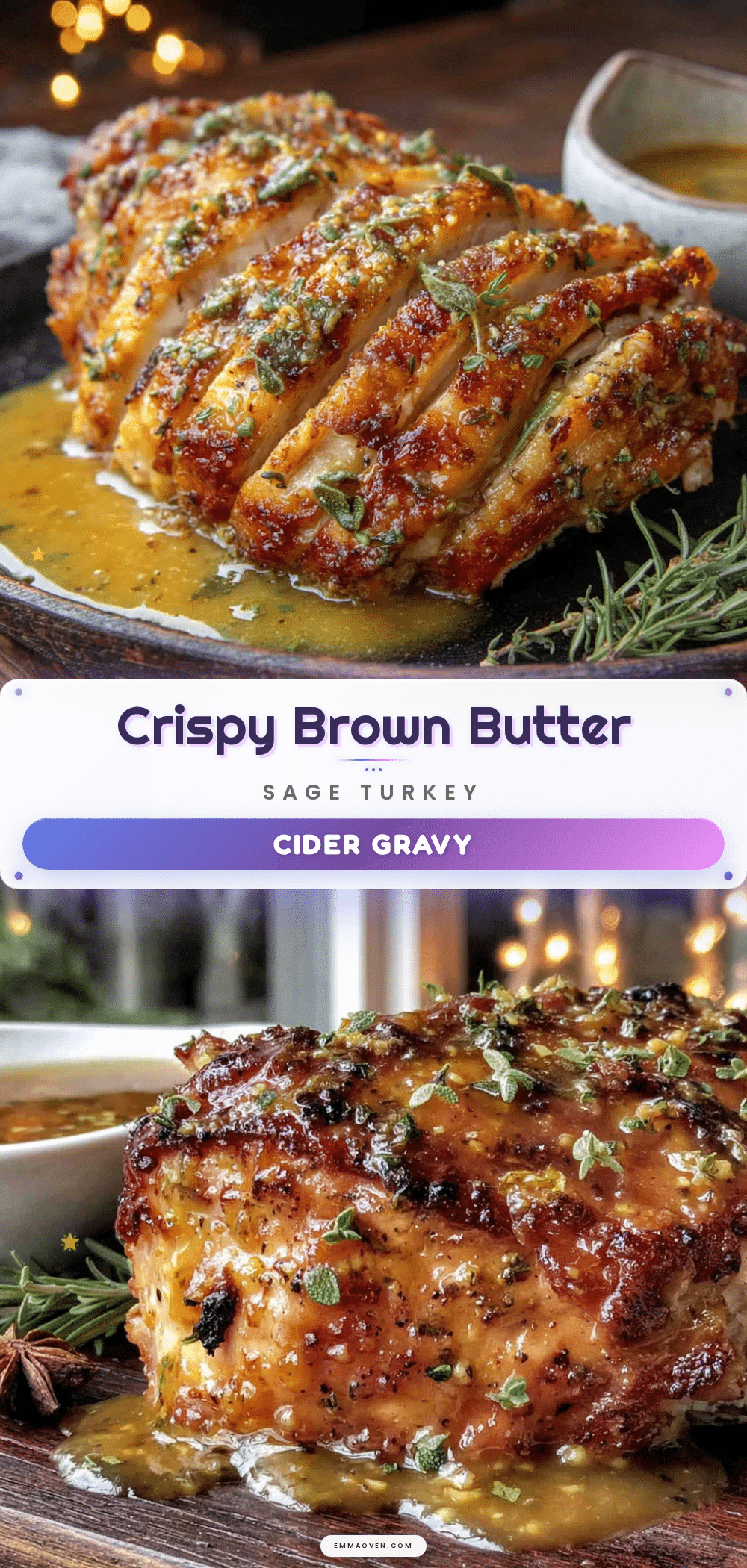
Perfect Brown Butter Sage Turkey with Easy Cider Gravy
This brown butter sage turkey is juicy, deeply flavorful, and paired with a simple cider gravy that’s almost impossible to mess up. It’s a show-stopping holiday dish that’s also easy enough for a weekend dinner.
- Prep Time: 30 minutes
- Cook Time: 2 hours 15 minutes
- Total Time: 2 hours 45 minutes
- Yield: 8 servings 1x
- Category: Main Course
- Cuisine: American
Ingredients
- 1 whole turkey (10–12 pounds), thawed
- 1 cup unsalted butter (2 sticks)
- 1/4 cup fresh sage leaves, chopped, plus 10-12 whole leaves for garnish
- 2 cups apple cider (unfiltered is best)
- 1 large yellow onion, quartered
- 4 cloves garlic, smashed
- 2 tablespoons olive oil
- 2 teaspoons kosher salt
- 1 teaspoon black pepper, freshly ground
- 1/2 teaspoon garlic powder
- 2 tablespoons all-purpose flour (for gravy)
- 1 cup low-sodium chicken or turkey broth
Instructions
- Make the Brown Butter Sage Mixture: Place 1 cup unsalted butter in a small saucepan over medium heat. Melt completely, then continue cooking, swirling occasionally, until the butter foams, subsides, and brown specks form at the bottom (about 5-7 minutes). Remove from heat immediately when it smells nutty and the specks are warm amber. Stir in 1/4 cup chopped fresh sage leaves. Set aside to cool slightly.
- Prep the Turkey: Remove turkey from packaging, take out giblets and neck. Pat completely dry with paper towels inside and out. Let sit at room temperature for 30 minutes.
- Season the Bird: Rub 2 tablespoons olive oil all over the turkey skin. Season generously with 2 teaspoons kosher salt, 1 teaspoon black pepper, and 1/2 teaspoon garlic powder, including the cavity. Place quartered onion and smashed garlic cloves inside the cavity. Tuck whole sage leaves under the skin of the breast and thighs.
- Apply the Brown Butter: Using a basting brush, apply half of the brown butter sage mixture all over the turkey skin. Reserve the other half for basting during roasting.
- Roast the Turkey: Preheat oven to 425°F (220°C). Place turkey on a rack in a roasting pan, breast side up. Pour 1 cup apple cider into the bottom of the pan. Roast at 425°F for 30 minutes.
- Reduce Heat and Baste: After 30 minutes, reduce oven temperature to 350°F (175°C). Baste turkey with remaining brown butter mixture. Add the second cup of apple cider to the pan. Continue roasting for about 1 hour 45 minutes to 2 hours, basting every 30 minutes with pan juices. Tent with foil if skin browns too quickly.
- Check for Doneness: Turkey is done when a meat thermometer inserted into the thickest part of the thigh (without touching bone) reads 165°F (74°C) and the breast reads 160°F (71°C). Start checking at 1 hour 45 minutes.
- Rest the Turkey: Transfer turkey to a cutting board or platter. Let rest for at least 20-25 minutes before carving. Tent loosely with foil to keep warm.
- Make the Cider Gravy: Pour pan drippings through a fine-mesh strainer into a large measuring cup or fat separator. Skim off most of the fat, leaving about 2 tablespoons. Return strained drippings to the roasting pan (or a medium saucepan) over medium heat. Whisk in 2 tablespoons all-purpose flour until smooth. Cook for 1 minute. Slowly pour in 1 cup chicken or turkey broth, whisking constantly. Simmer for 3-5 minutes until thickened. Season with salt and pepper to taste.
Notes
Don’t skip drying the turkey thoroughly for crispy skin. Brown butter can go from perfect to burnt quickly—watch closely. Baste every 30 minutes, not more often. If the breast browns too fast, tent with foil. For lumpy gravy, strain through a fine-mesh sieve. The turkey can be made with a 14-pound bird by adjusting cooking time.
Nutrition
- Serving Size: 6 ounces turkey with
- Calories: 380
- Sugar: 6
- Sodium: 580
- Fat: 22
- Saturated Fat: 12
- Carbohydrates: 8
- Protein: 42
Keywords: brown butter sage turkey, cider gravy, roast turkey, Thanksgiving turkey, holiday turkey, easy turkey recipe